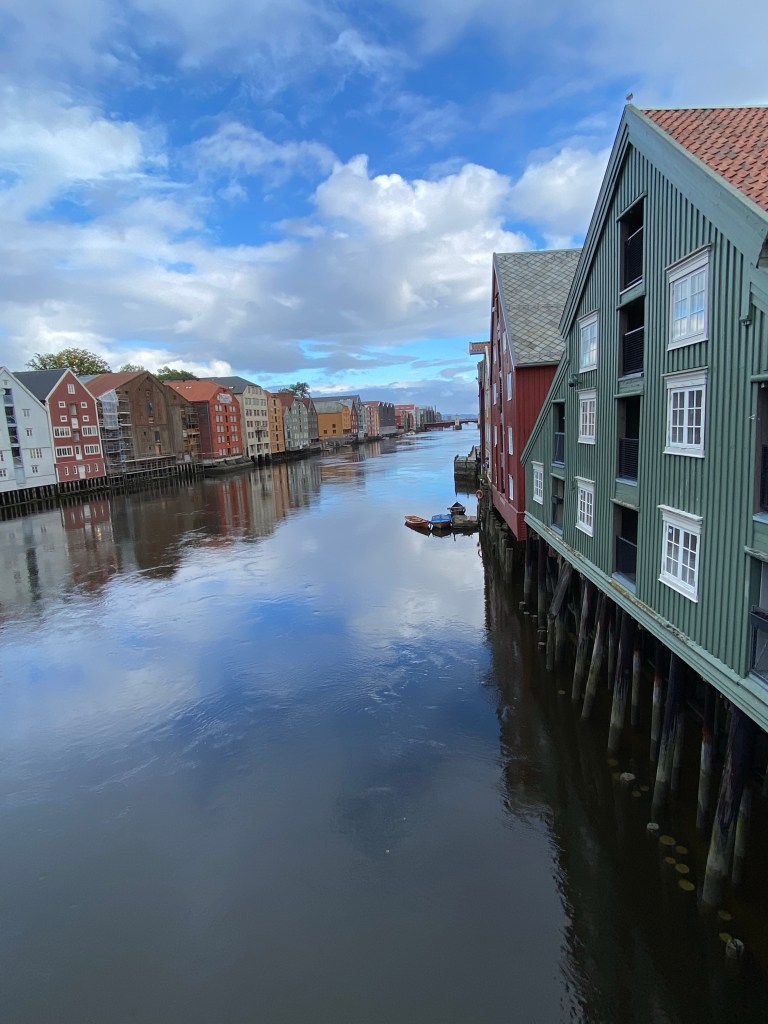
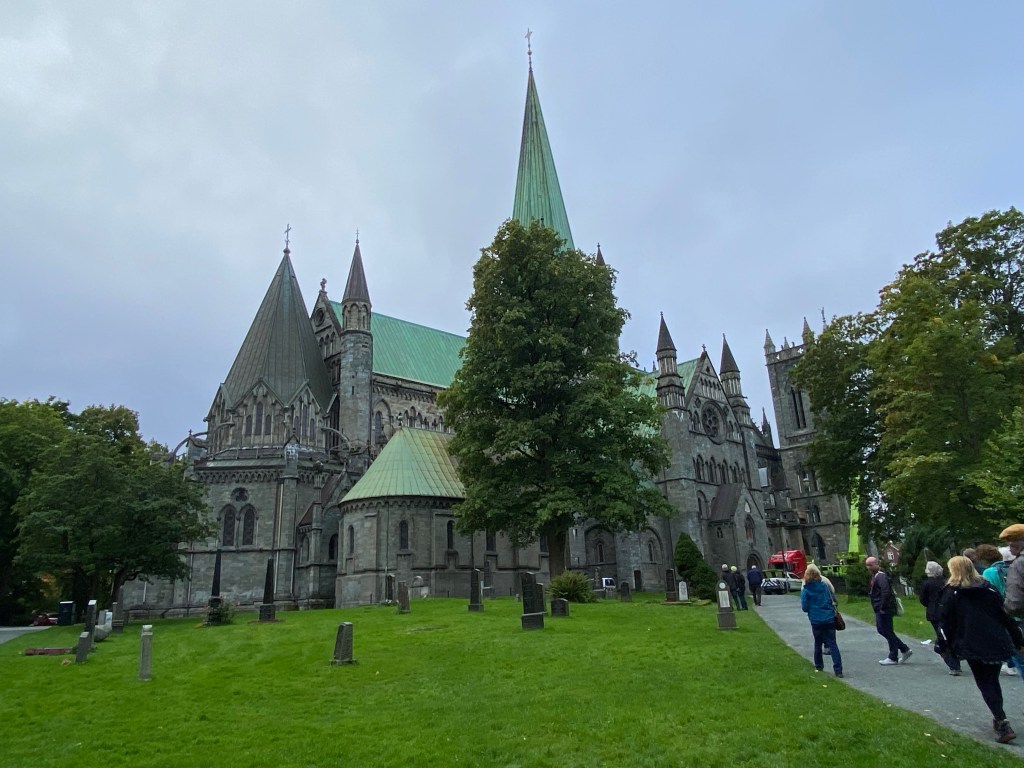
Trondheim was once the capital of Norway, its current population is 180,000. It was founded in 997 AD and is now a major university town and as well as having a major fishing industry. It is also an important pilgrimage site for followers of St Olaf, a Norwegian King and Catholic Martyr. We walked about the town with our trip leader and spent 30 minutes in Nidaros Carthedral. This church was originally built in 1000 AD but has been destroyed and rebuilt several times. It is a destination for St Olaf pilgrims.
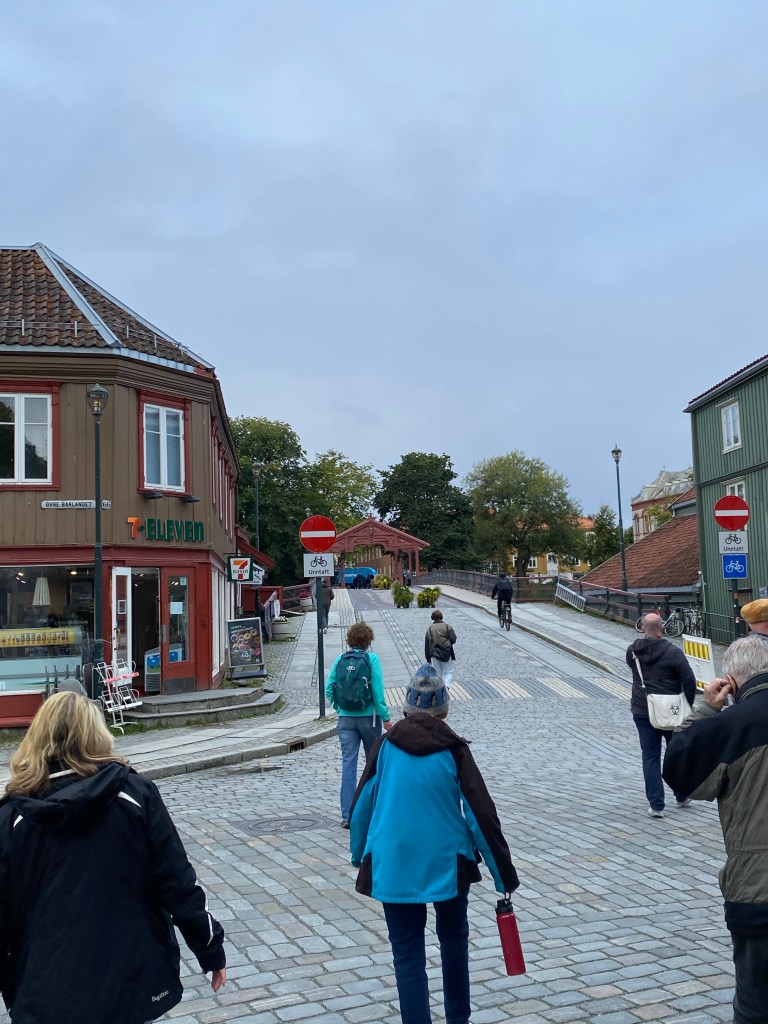
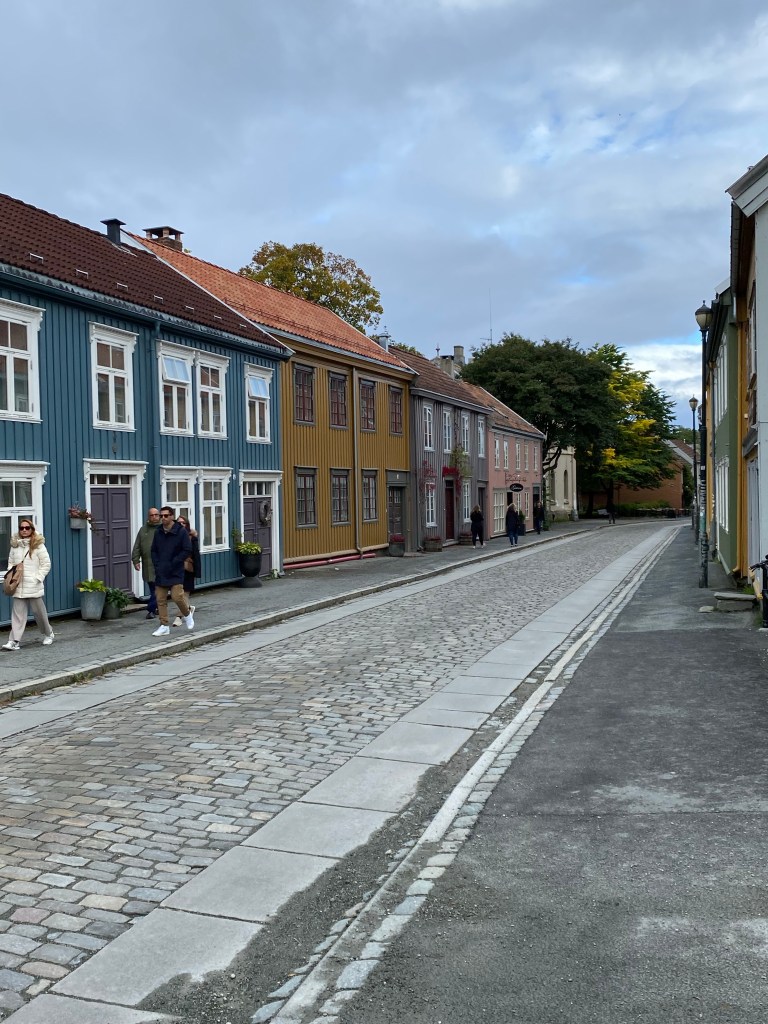
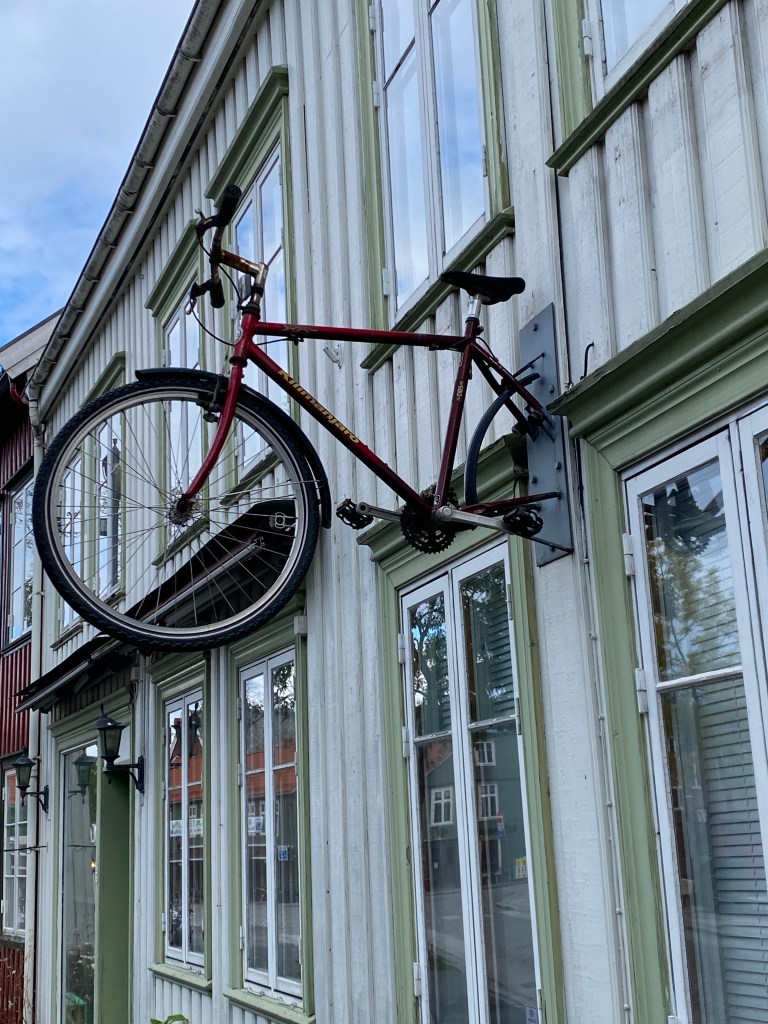
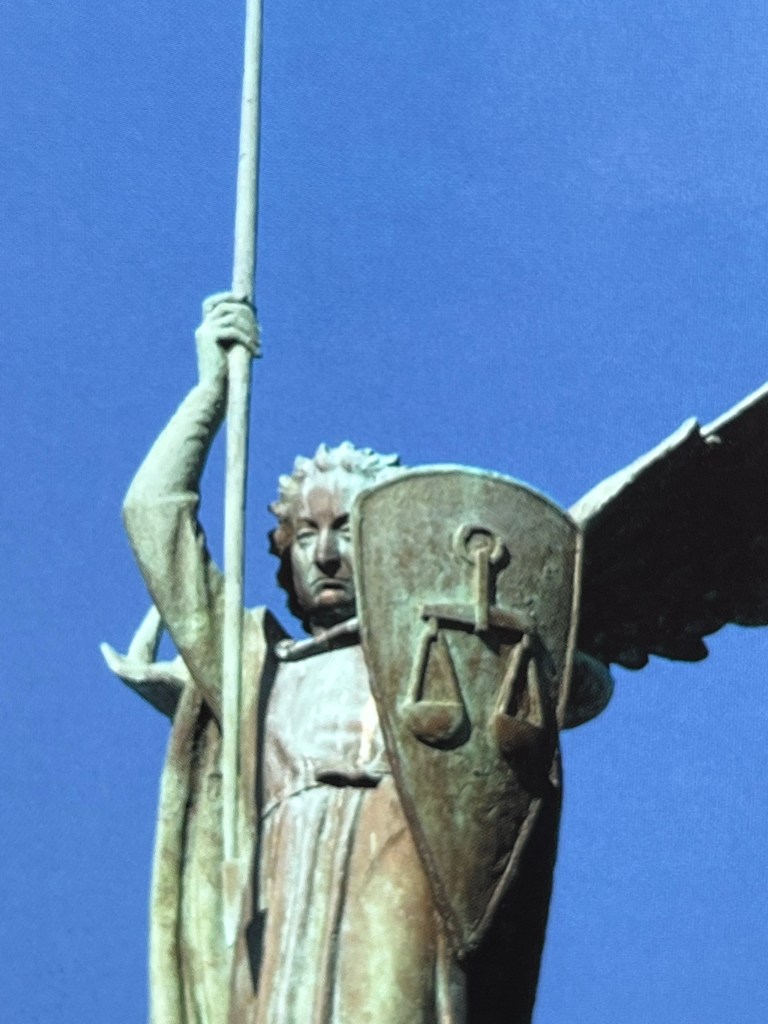
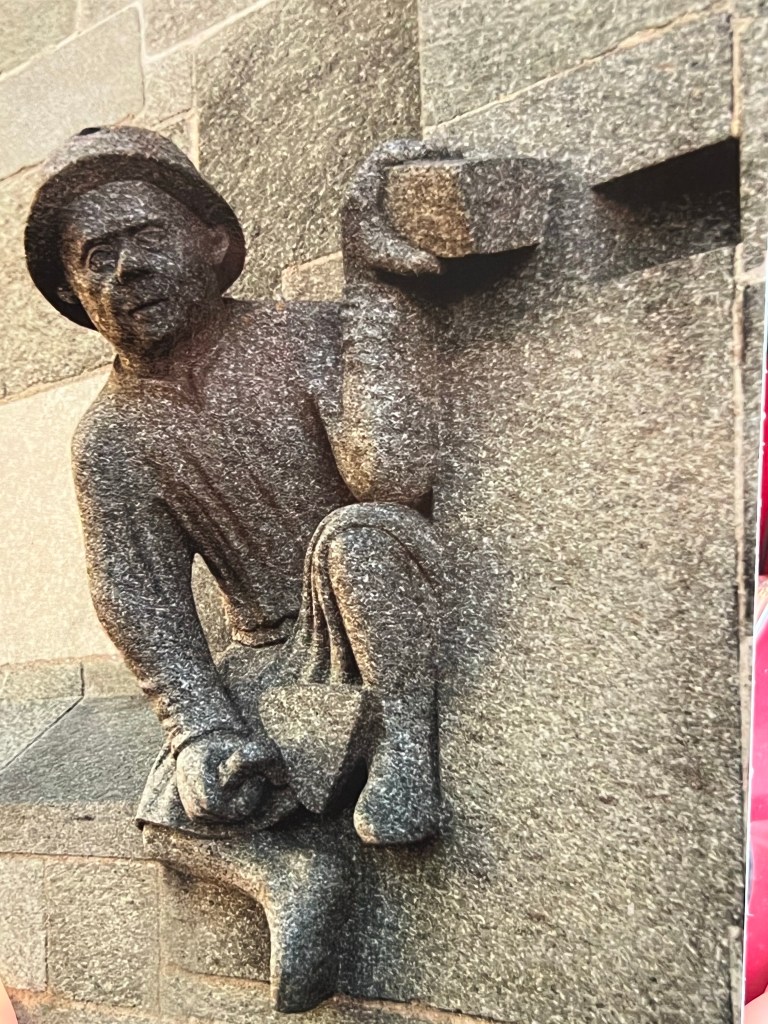
Walking into TrondheimA common theme thru out Norway; clean streets and well kept older homes and businesses.Many beautiful flower beds and it’s already late September with cool temps and fewer hours of daylight.The bicycle liftLots of bikes and lots of hills in Trondheim. This is an assist for a bike and rider. You sit on the bike and put your right foot on the slanted silver ramp. Then push a button, either slow or fast to help you up the hill! Several bike riders in Trondheim are riding electric bikes!Hills and bikes might not mix!Walking across a bridge near St Olaf’s cathedral.St Olaf’s Cathedral Beautiful church inside also.The organ was originally built in 1741 and has been extensively restored in the 1990s. The stained glass is beautiful too.The sculptures were started on the west side of the church in 1929. The sculptures were of historical and religious figures.The detail is amazing , the middle character is St Olaf as the kingThe sculptor took artistic freedom during a restoration of the church in recent history. Look close at the face….. it’s Bob Dylan, the musician. This sculpture is on the roof and the powers to be accepted the repair without a problem as the naked eye can’t discern the detail.This sculpture is hidden near the roof and is difficult to see. It’s a good luck charm. The story goes that an unfinished cathedral will never collapse and this sculpture has one more brick to install.
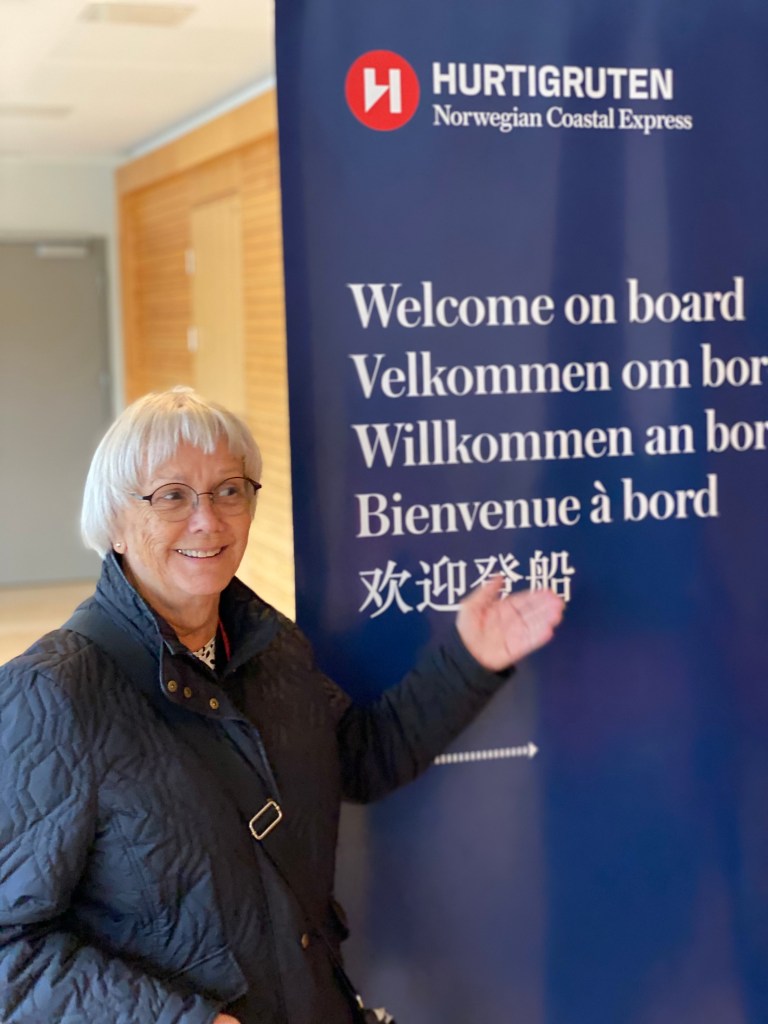
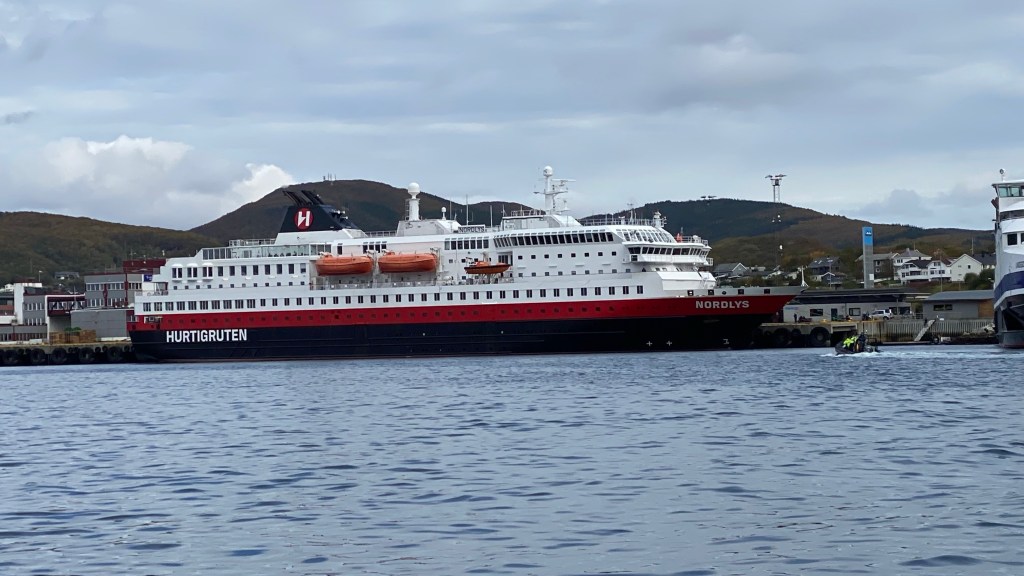
We finally board the Hurtigruten ship, The Nordlys( English translation, Northern Lights). It’s a commercial shipping, mail carrier, car ferry, passenger ship that has capacity for 471 people. It was down played to us …. Don’t expect it to be a typical cruise ship. There isn’t a theater. Casino, or swimming pool. However it is very comfortable, nice dining room with good food choices, a nice lounge with a full bar(7 different beers on tap). The cabins are comfortable with decent bathroom.
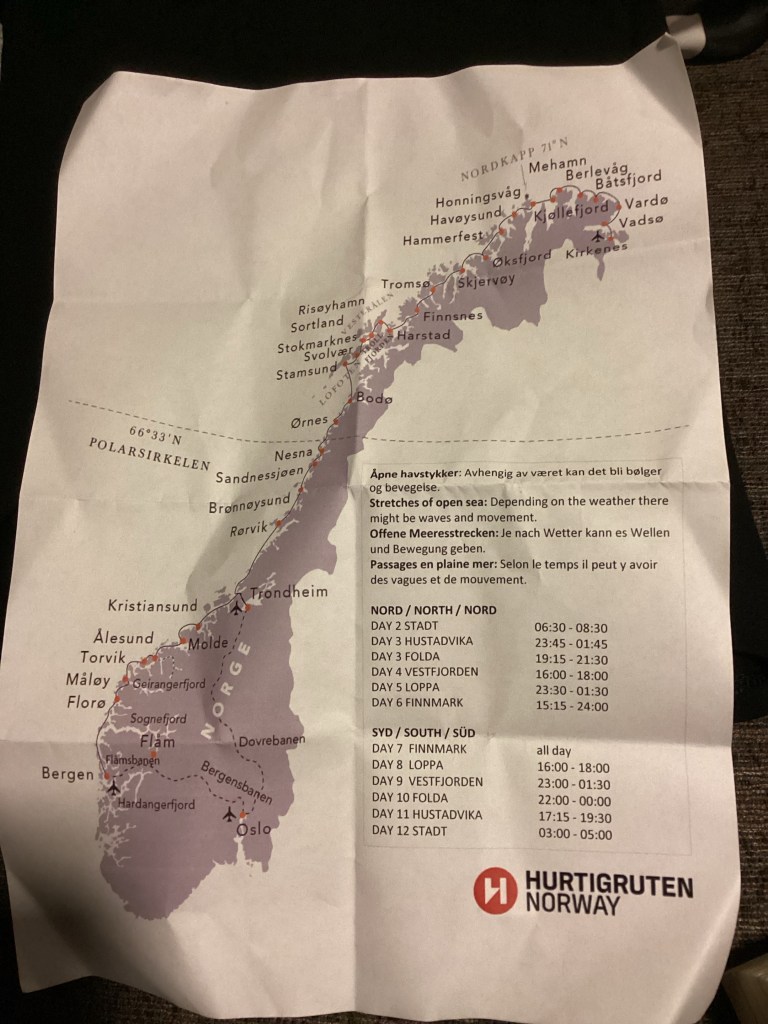
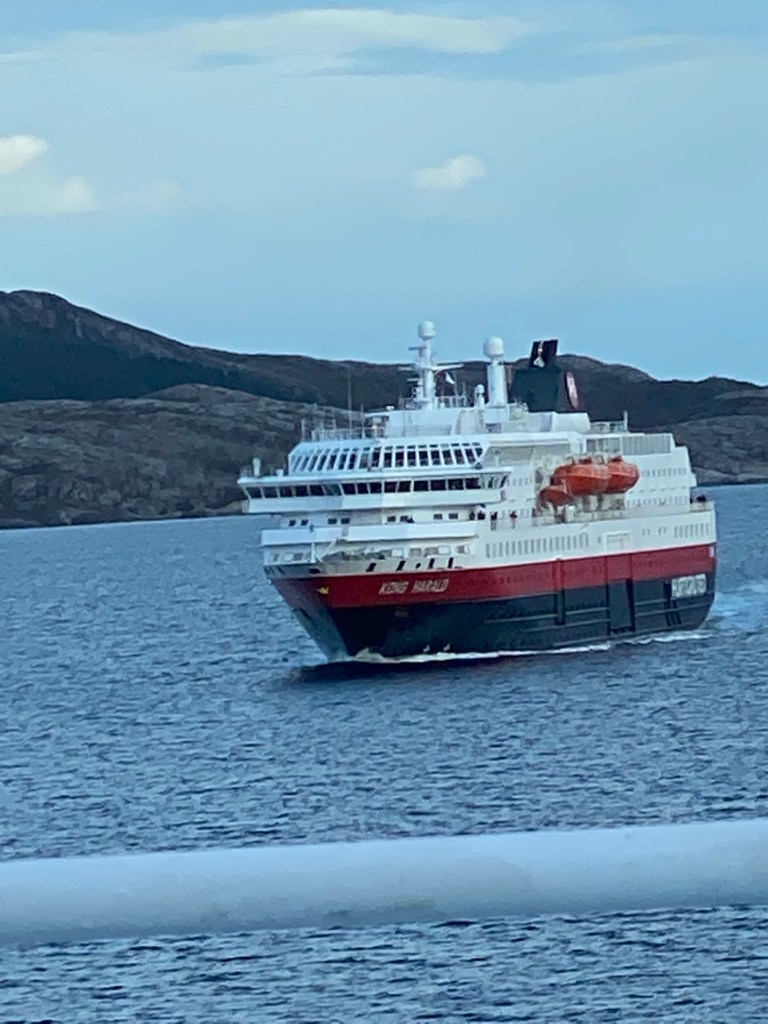
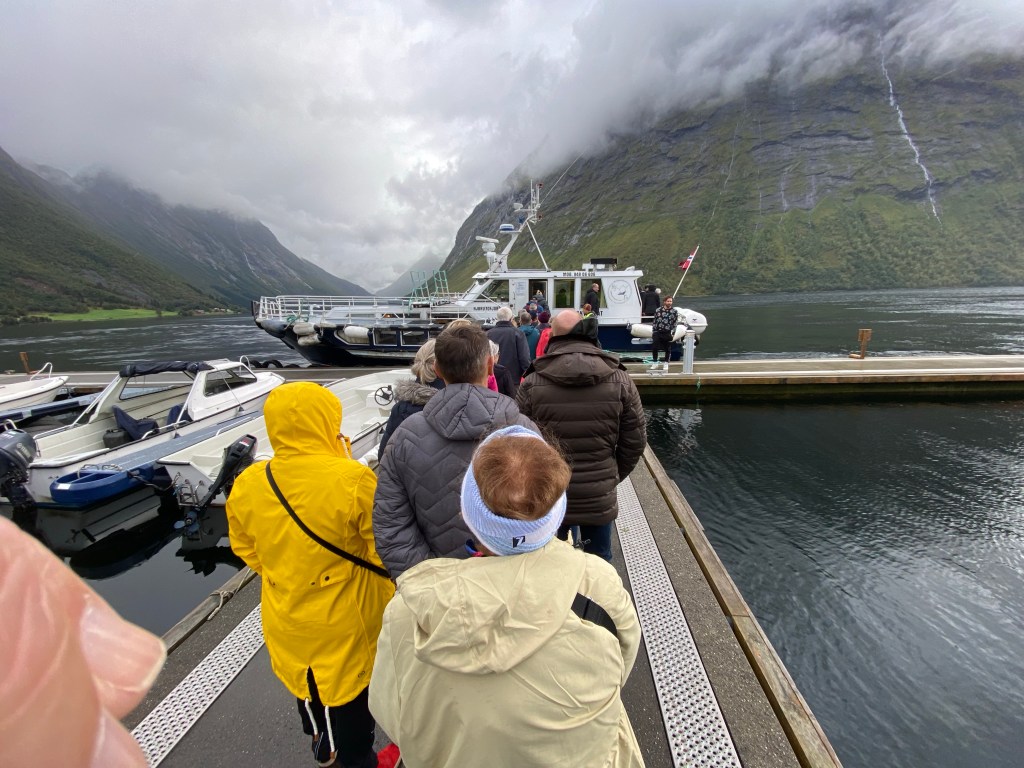
The fun beginsThe NordlysOur journey starts in Bergen and stops 31 times before getting to Kirkenes. We get off in 8 of these stops for walks about town, visits to museums; and a wild ride on a RIB boat!A sister ship heading the opposite direction. We travel most of the time in the fjords, we occasionally go out to the North Sea and then back to the fjords. The North Sea can be a bit rough. Further north we will be in and out of the Norwegian Sea. Non- drowsy Dramamine has kept Patty happy!Nice dining room and good food. Check out Patty’s plate vs my plate. I think Patty will lose some weight on this trip, I hope not to gain weight. We’ve been walking more than I do at home. One day we had 17,500 steps! I’ve enjoyed the fish for breakfast lunch and dinner! I probably don’t need my fish oil supplement on this trip!Our first stop, Urke, a small village of 53 people.Kayaking is popular. Not enough time to kayak, this was a 2 hour stop.Nice home in UrkeGetting on the tender to return to our shipWe’re on the tender heading back to our ship
It’s the second largest city in Norway and has a population of approx 285,000. It has the title, “rainiest city in Europe”…. Averages 89 inches of rainfall and rains approx 280 days per year.
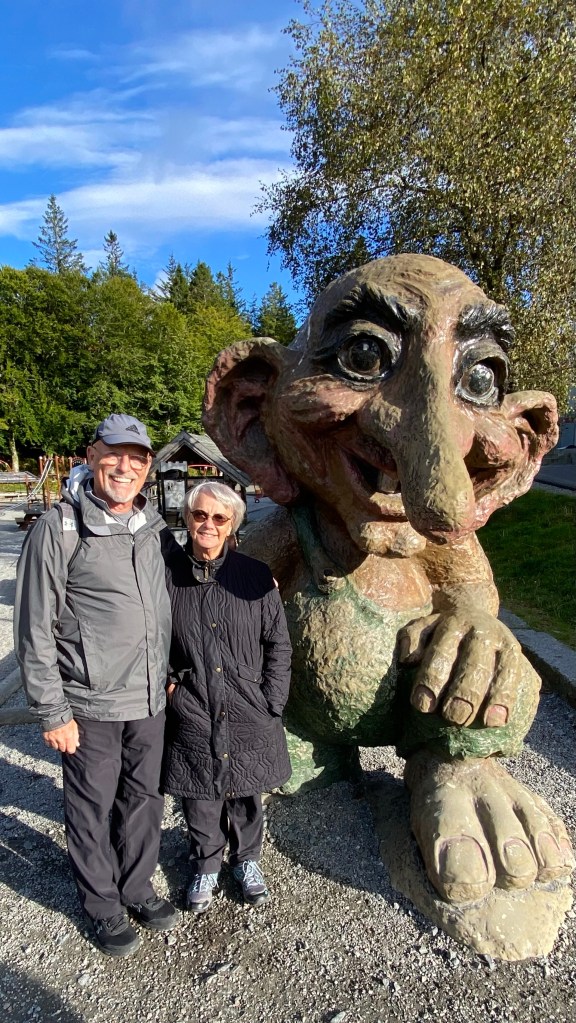
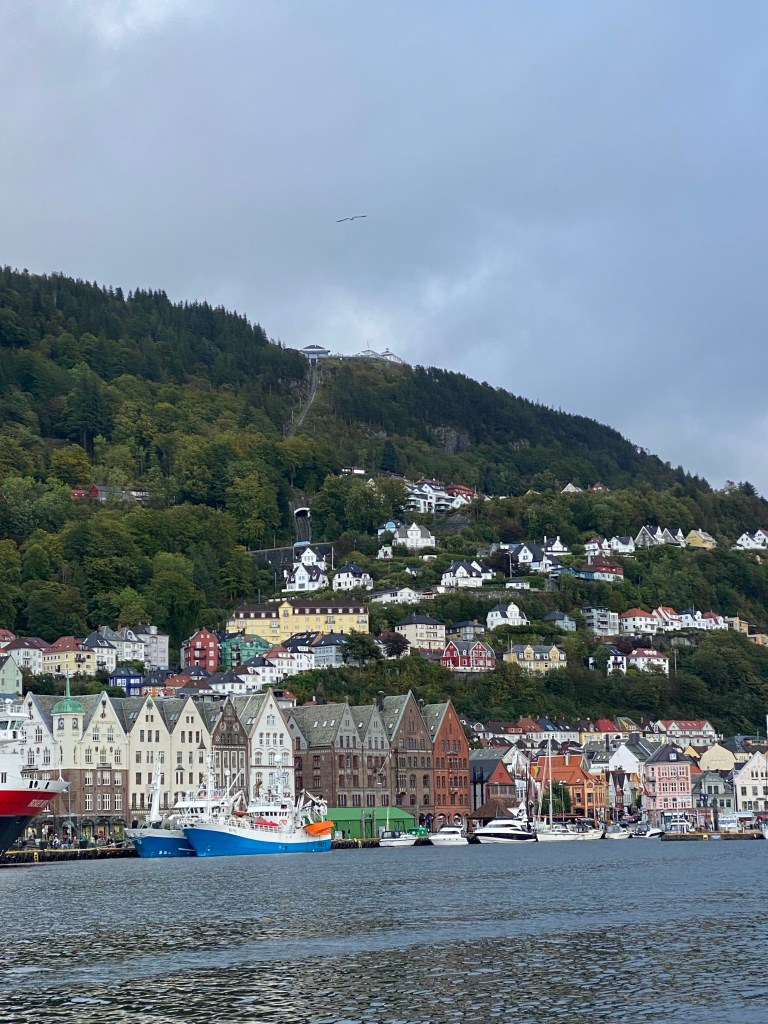
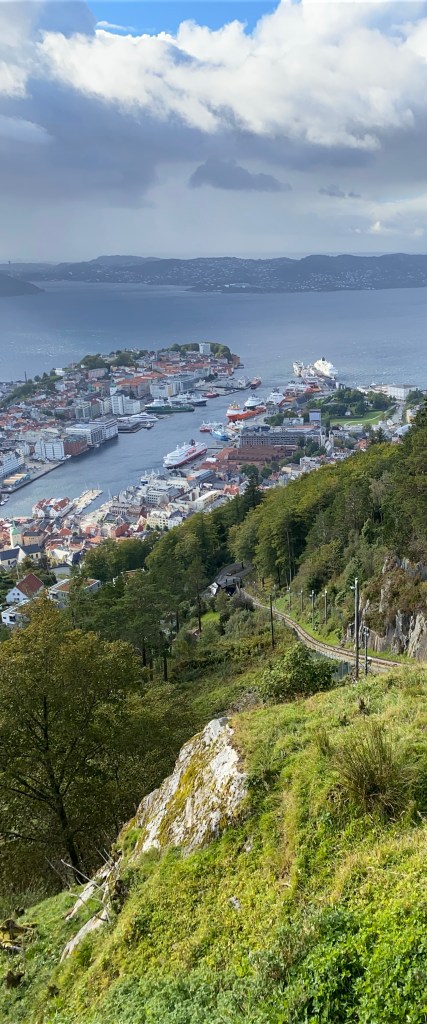
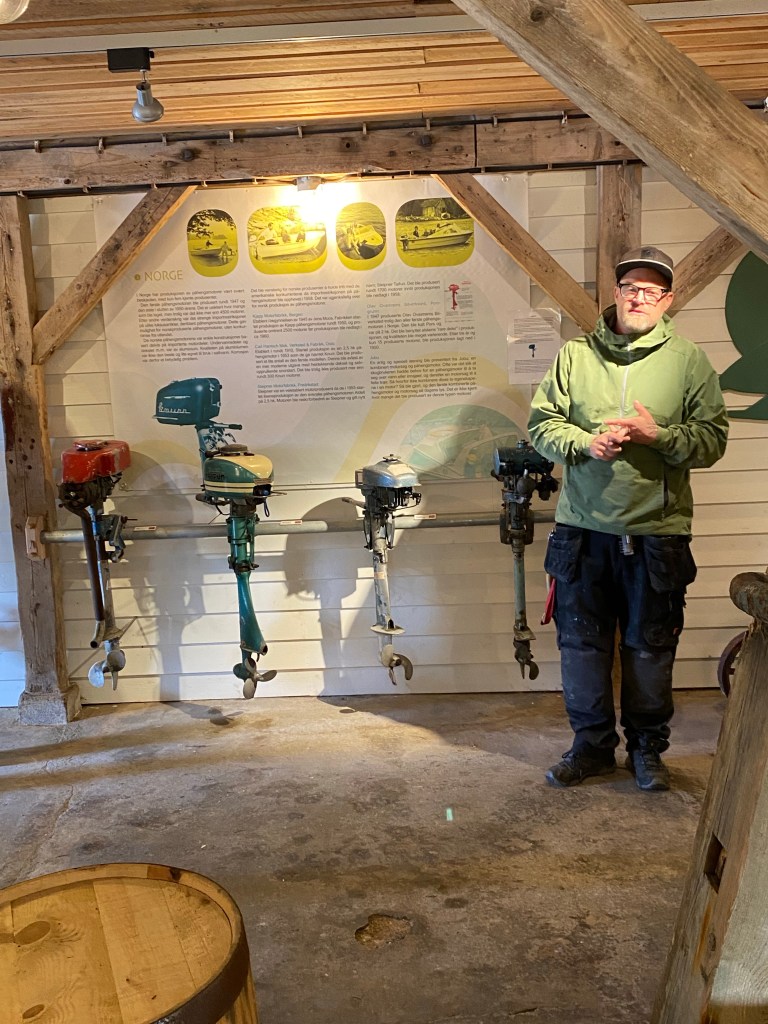
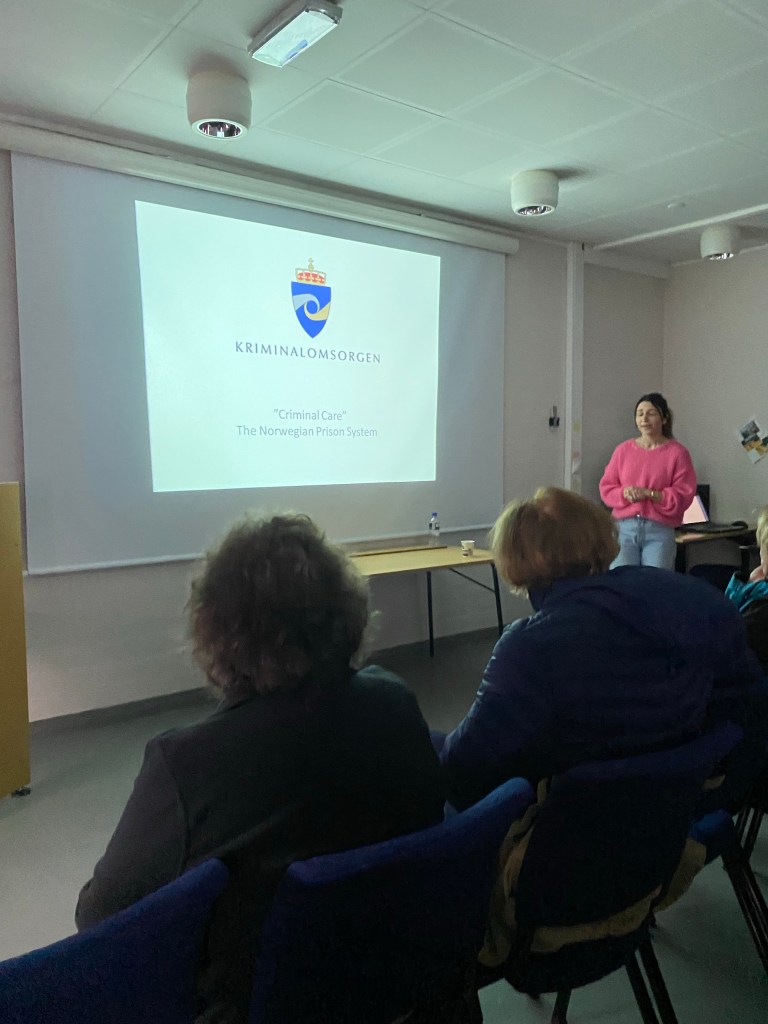
Our tour group from the top of the funicular overlooking BergenBergen in the background, a rare sunny day. We’ve been lucky with the weather. Heaviest rain has been at night or when we’ve had indoor plans or some of our bus rides.Our first troll encounterA walk with a local guide in an old part of Bergen. The guides name is Patrick and spoke perfect Midwest American English! Come to find out…. He is from Chicago and married a girl from London and they moved to Bergen a few years ago. In Europe, like the USA,Norway has trouble finding enough local people for the jobs that are available.Colorful and beautiful old homes A few old homes still preserved in downtown. Because all the construction was wood and the homes were built close together there were big fires that would burn large parts of the city every 50 years or so.Lots of hill side homes. The funicular can be seen in the middle of the hill and the top of the hill has a restaurant that dates back to 1920Bergen from the top of the funicularWe took a 30 minute trip out to a salmon fish farm. The water was to rough to ride zodiacs out to the pens and see the fish up close. So, we had conversations with a fish farm employee and two museum visits about life in the old days and a history of outboard motors. Norway lays claim to early outboard motor development. There is a controversy about fish farming and this company is proactive in explaining, in a convincing manner, how fish farming does not adversely affect the wild fish habitat. A controversial topic for sure.A great presentation and discussion about Norwegian prison system. This young lady is 37, mother of three and has been a prison guard for 12 years. Norway concentrates there prison system on rehabilitation and they make life for most prisoners very nice. The prisons are more like a small college campus. The cells are like dorm rooms. The maximum sentence for any crime is 21 years. In 2011 there was a home grown terrorist that set off a bomb in Bergen that killed a few people and that was the distraction for the larger crime of going to an island summer camp and used guns to murder 66 young people. He is a right wing neo Nazi, he is beyond evil. The controversy is how can this guy come up for parole every five years? He is unique in the prison system, he is in isolation to protect him from being killed by another prisoner. It might be time to rethink the prison system in Norway.Time for the reason we booked this trip. We board the Hurtigruten boat for the fjord trip to northern Norway. We will make 31 stops in 7 days/6 nights before we get to Kirkenes, Norway. We will travel in and out of the fjords with occasional diversions into the North Sea. Then we will go on to Lapland, Finland and Sweden.
We took an old train up the narrow and steep Flam valley. Beautiful scenery.
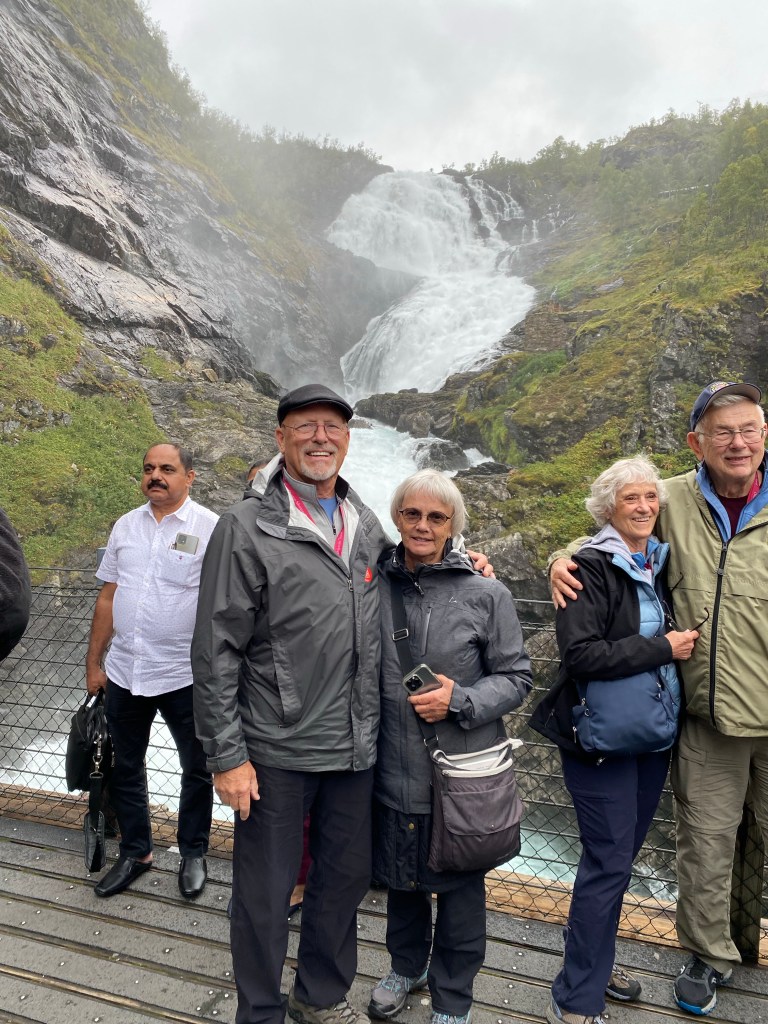
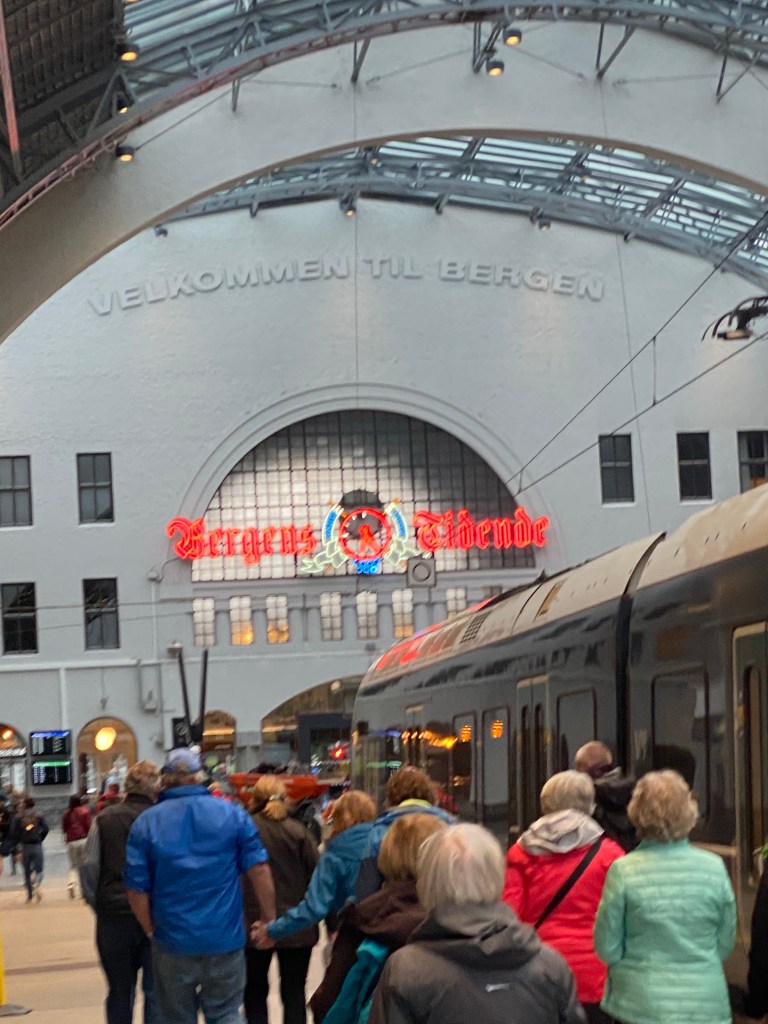
The old Flam trainAs we are leaving FlamUp the valley we goKjosfossen waterfall, free fall of 305 feetThe Kjosfossen water fall is the only photo stop on the one hour train ride.Several tunnels along the wayArriving in Bergen
A beautiful small town on a fjord in Norway. The controversial topic we discussed was how large cruise ships impact the small town. The town has 250 residents, how do they deal with one or two cruise ships that have 4000 passengers on board?
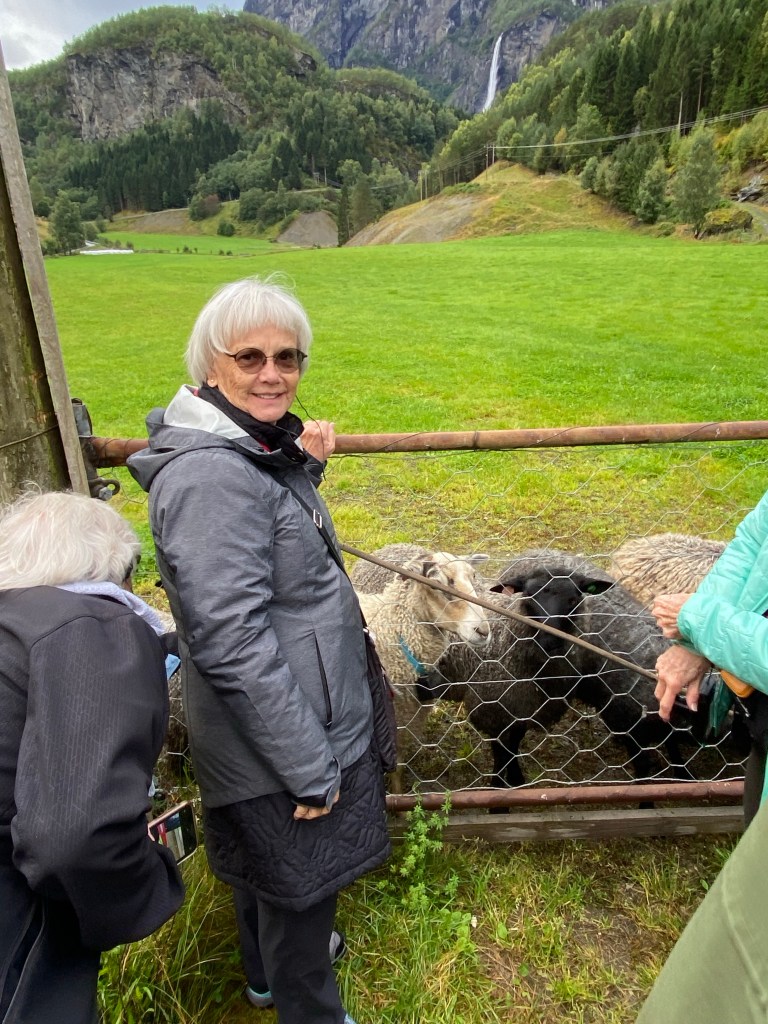
We visited a 5th generation family that raises sheep and quail. They don’t like cruise ship visits because of pollution and the visitors don’t spend any money. The cruise ships can dump “gray” waste water in the fjord. The family thinks that is one cause for the decline in the salmon population.
Patty likes the sheep!
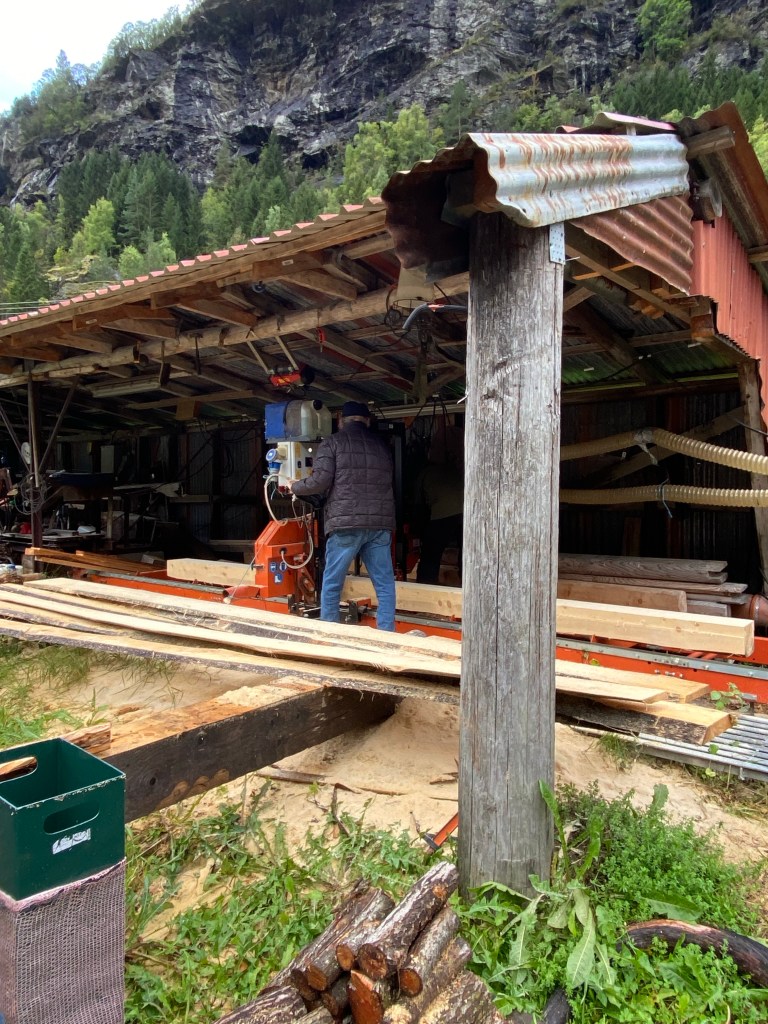
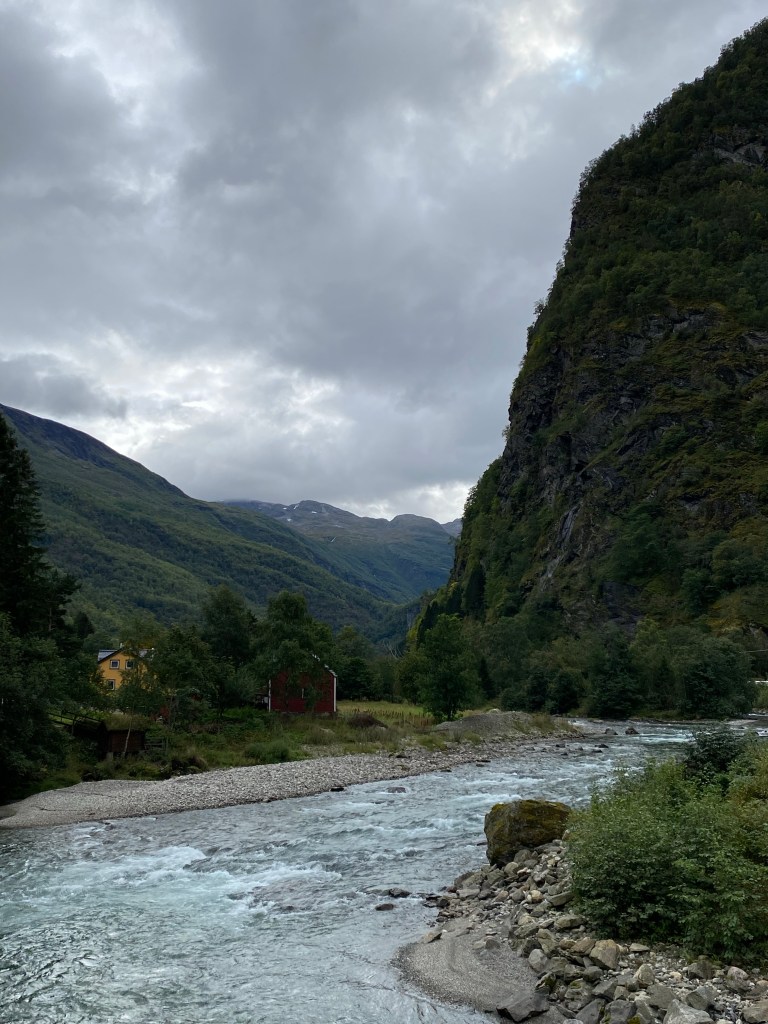
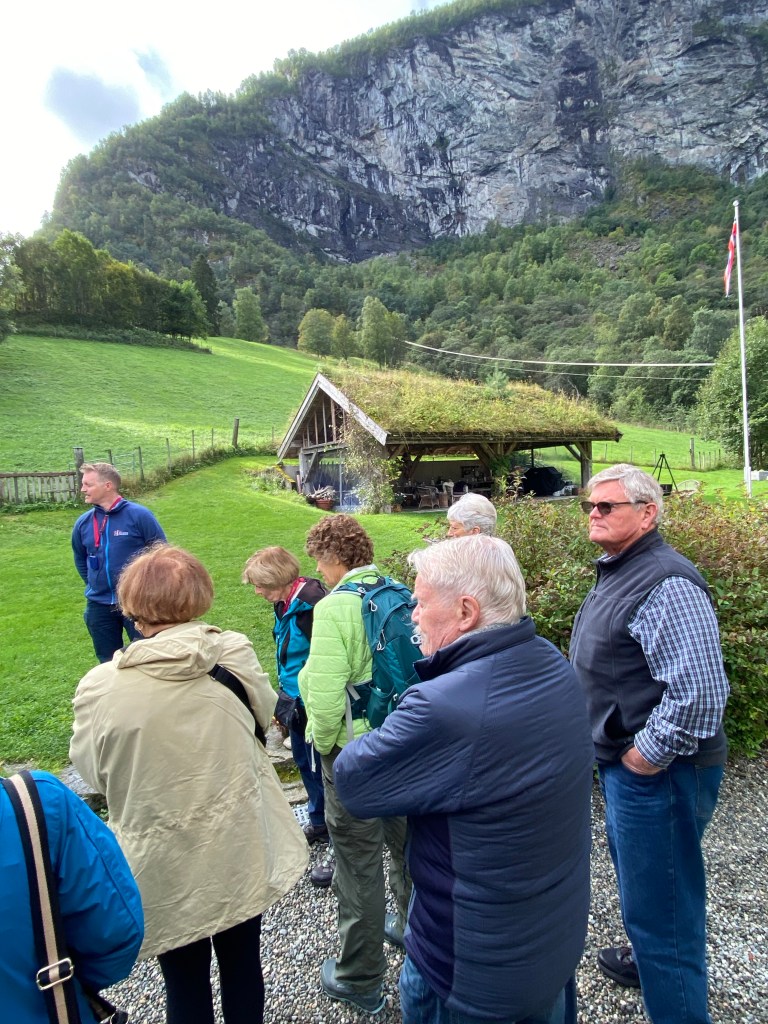
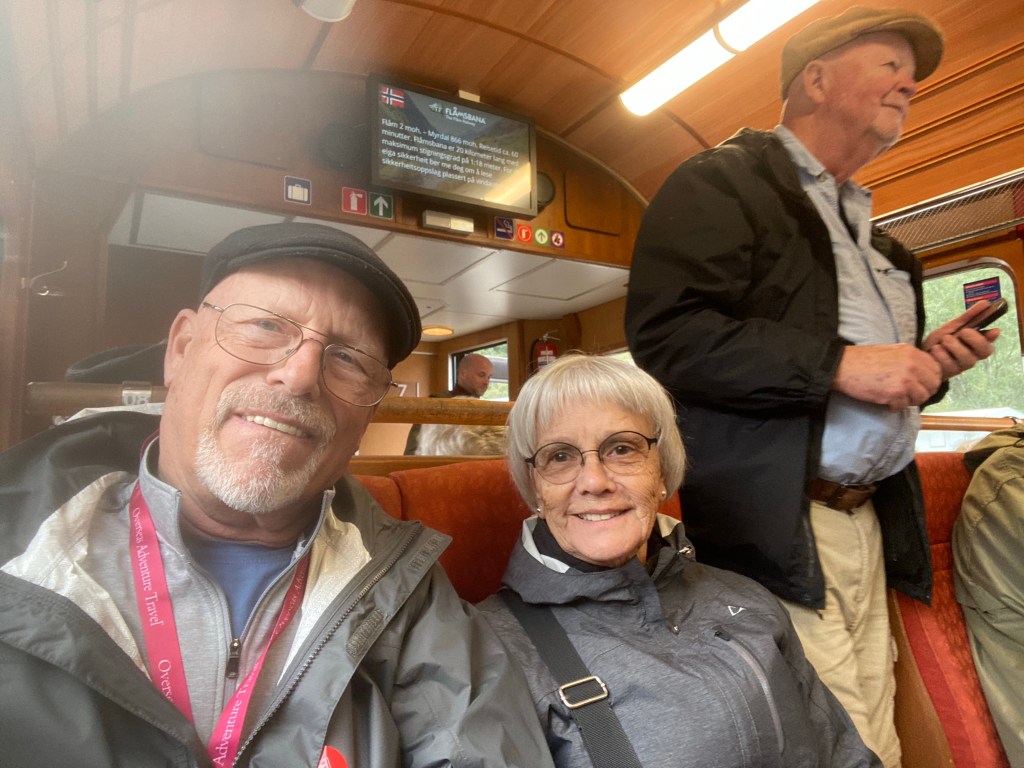
You must be self sufficient in this remote village. The owner has a sawmill, mills his own lumber, and is building two guest houses to use as an air B and B. They like the small group tourists that spend money in the restaurants, shops, and hotel.Beautiful river borders this farm. This young man, Odd, and his family have made a full time living since the late 1990’s raising pigs and sheep. They do everything on the farm with the animals. They butcher, package, distribute, and even have a large smoke house. They chose this life, not for the money but for the lifestyle. Odd is concerned with over tourism and is passionate about the fish farm controversy in Norway. He thinks the fish farming has caused the decline in wild salmon numbers….. more on that subject laterOn the old train from Flam to Bergen
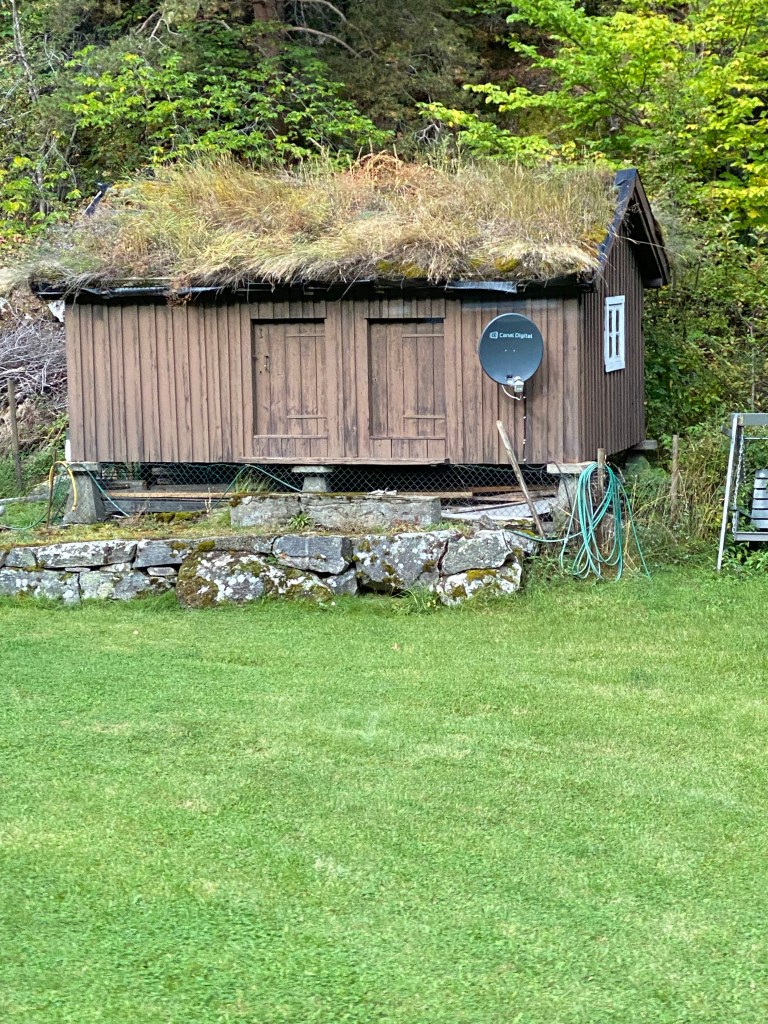
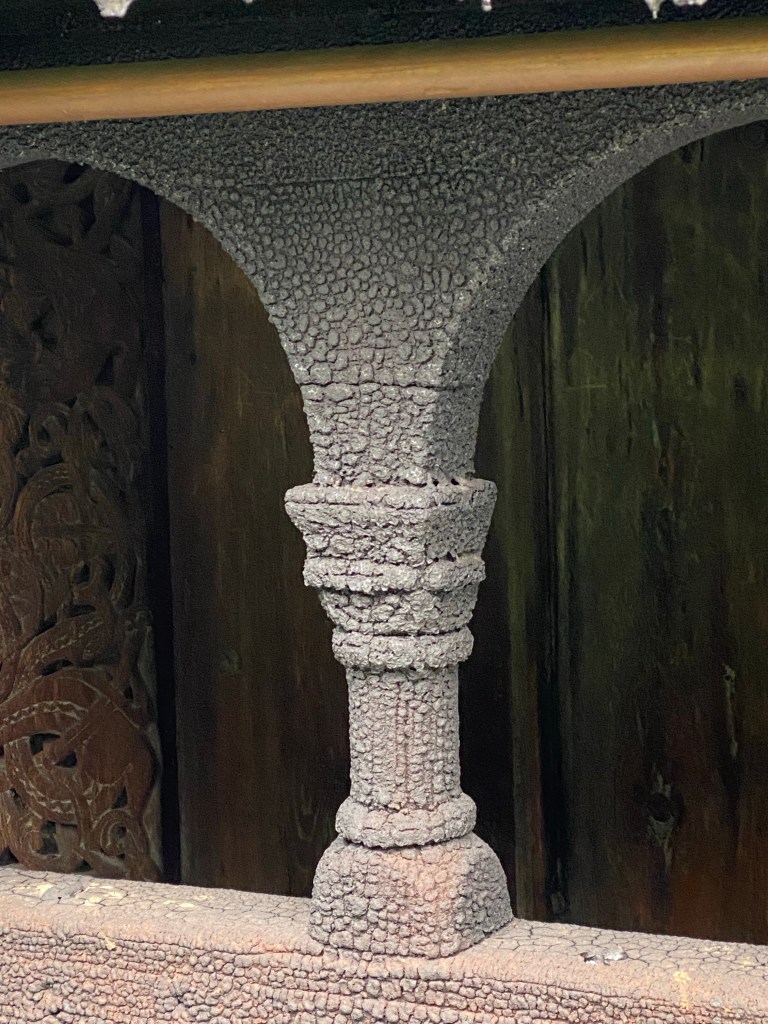
Followed this river across the mountains from Oslo to Flam. Flam is on the water in one of the Fjords.Sod/grass roofs are still in use todayWe stopped to visit a Stave church, it’s a 1,000 years old. One of only 27 still in existence in Norway. Stave describes the construction using spruce planks. It’s black because they didn’t have paint available and used a heated up pitch from the trees to preserve the wood. It turns black over time.Interesting architecture, considering the age of the construction.Interior of the churchCloseup of how the multiple layers of pitch ages over time
From ski jumps to museums, the opera hall and new library…. only some of the things we saw in Oslo
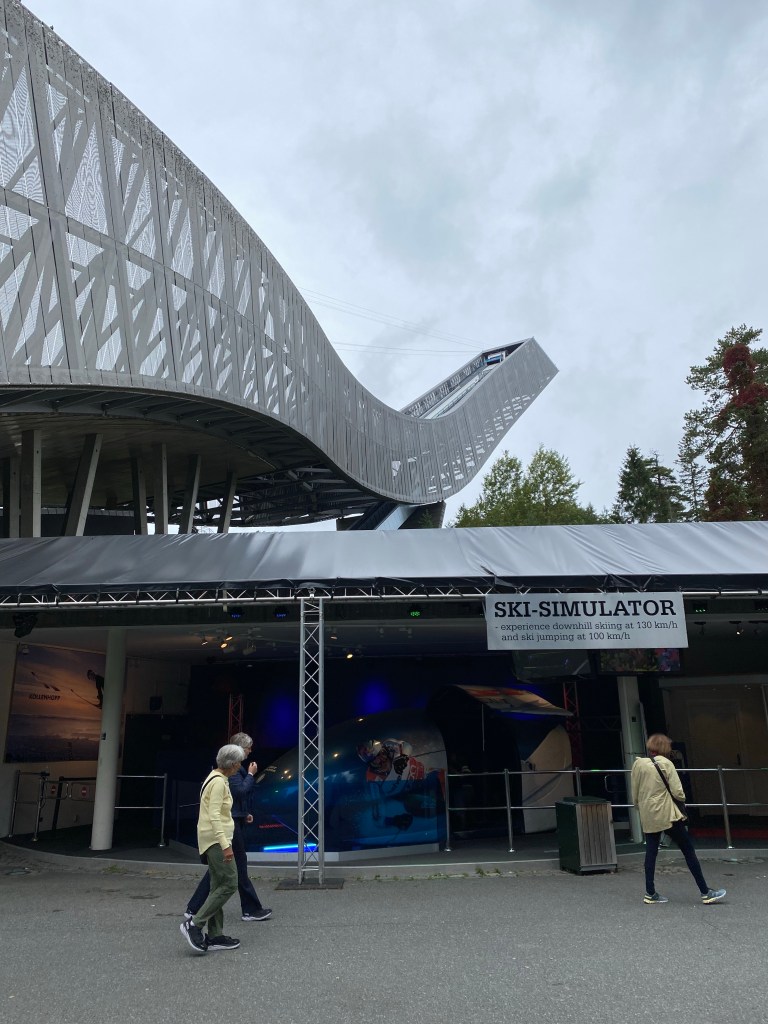
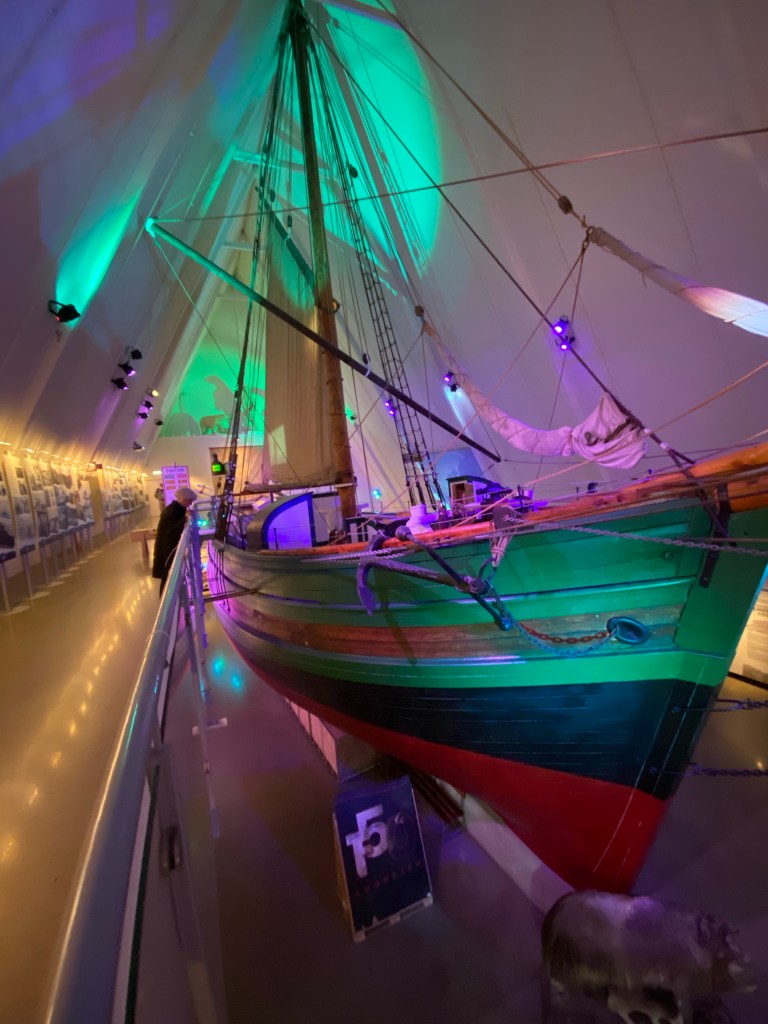
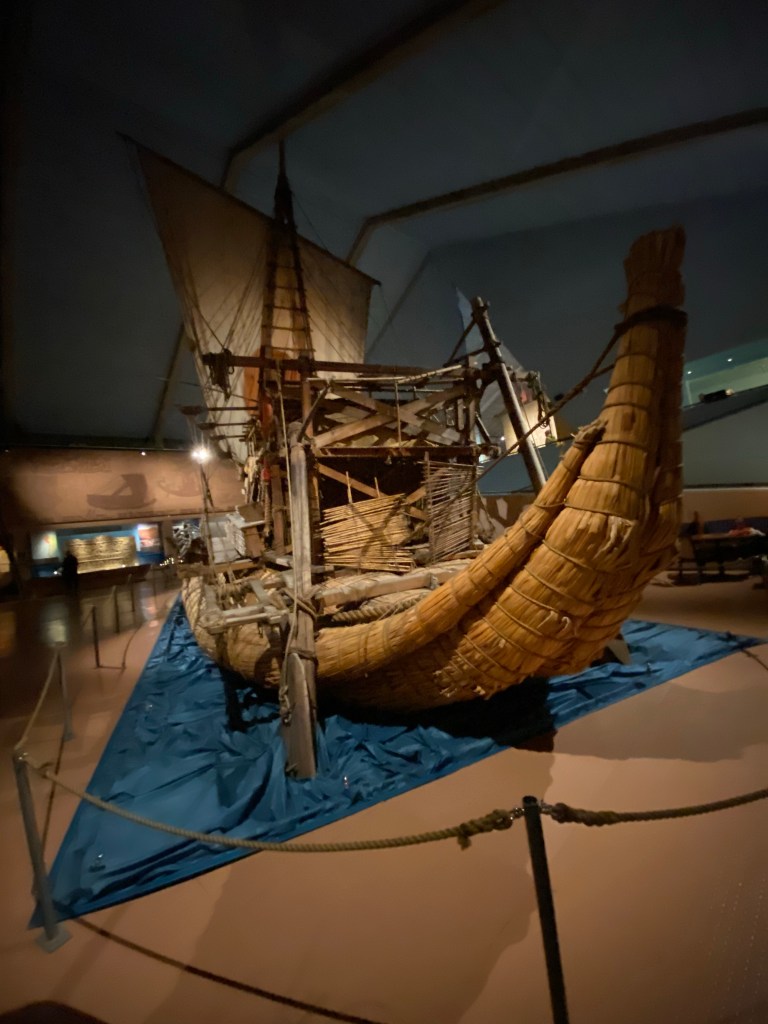
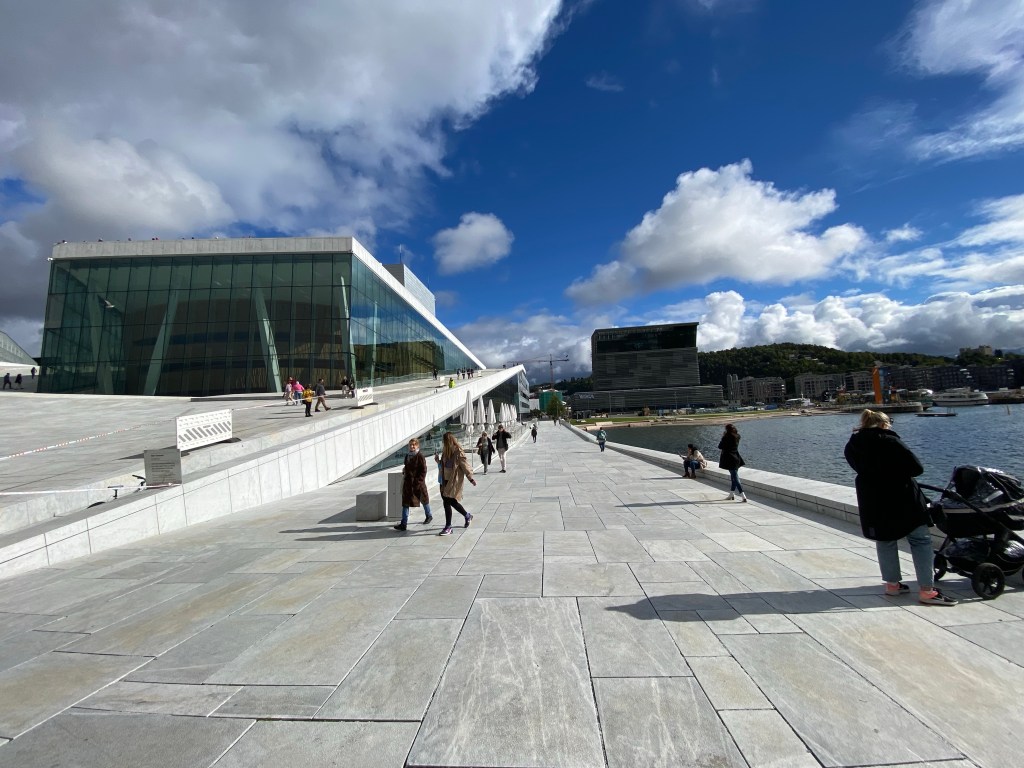
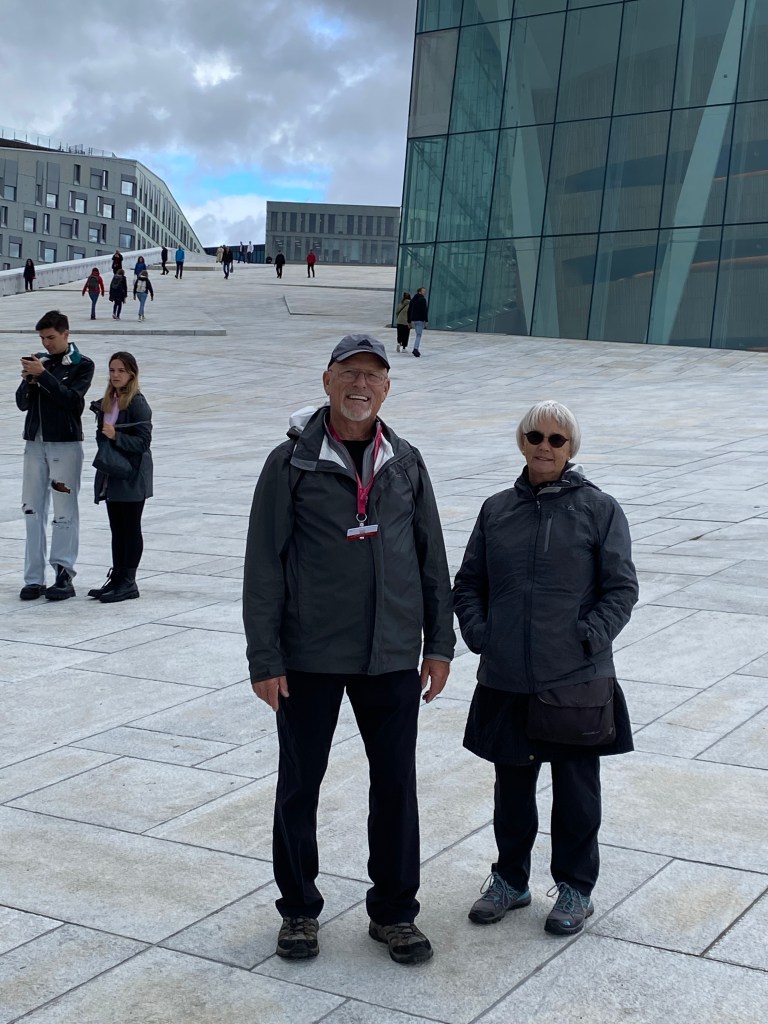
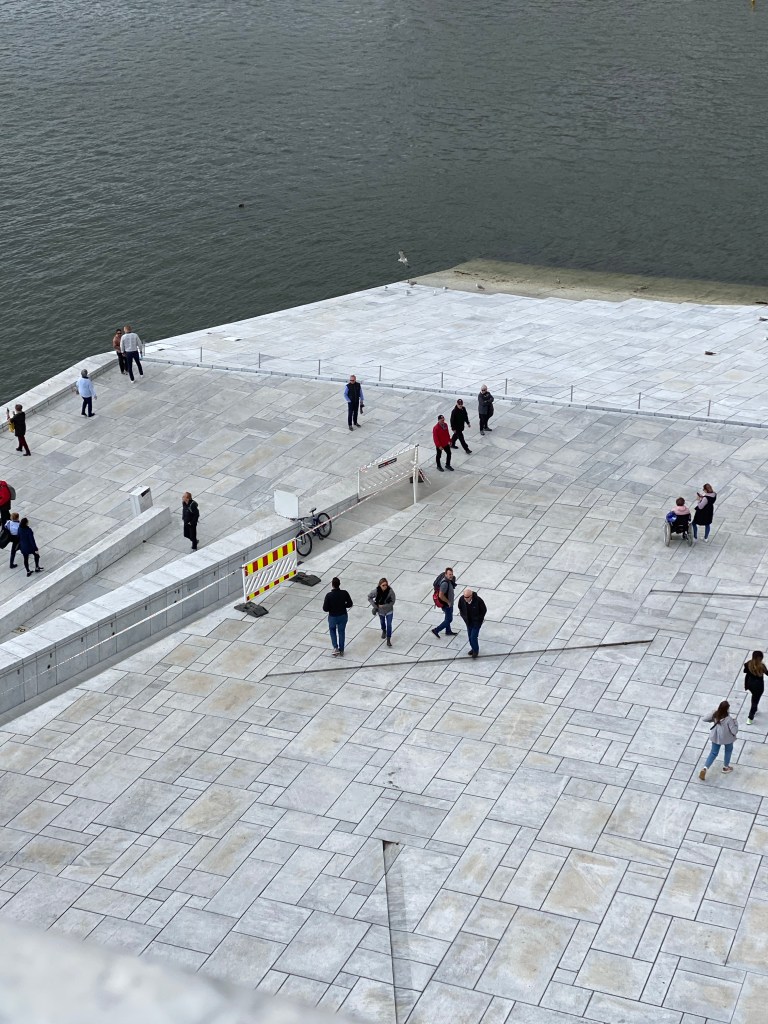
This is a 100 meter ski jump used only once a year. The facility is also used for biathlon training.A ski simulator under the ski jumpThe Fram museum houses the Gjoa and the Fram. Boats used by Viking explorers to find the northwest passage and be first to the South Pole. Roald Amundsen was the first to get to the South Pole, using the Fram to sail to the Antarctic in 1911. The Gjøa, the first boat to sail the northwest passage from Norway to Alaska and on down to near Seattle, a 3 year voyage completed in 1906. Thor Heyerdahl built and sailed the Kon-tiki across the pacific in 1947 to prove that it could be done a 1000 years ago.The Ra II, a reed boat that Thor built and sailed from Morocco to Barbados in 1970. He did this to prove that prehistoric civilizations could cross the oceans.Opera House on the left, designed to look like an iceberg. Rivals the Sydney opera house in its design and performance. The Munch Art Museum on the right. Edward Munch is most famous for his “Scream” series of paintings.On part of the roof of the opera house, you can walk to the very top of the opera house on this roof of stone tiles.View from the opera house roof. Patty is near the person in the red coatNew library, very nice inside. A gift shop, cafe with free coffee refills, a great place to spend a winter day reading a good book.
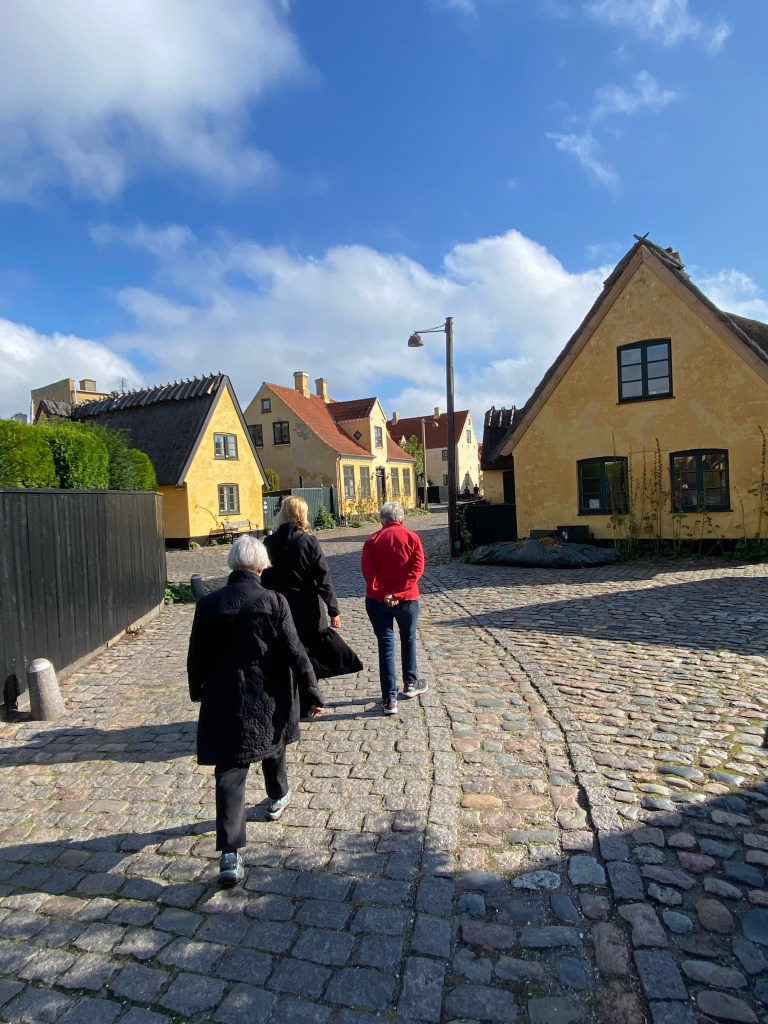
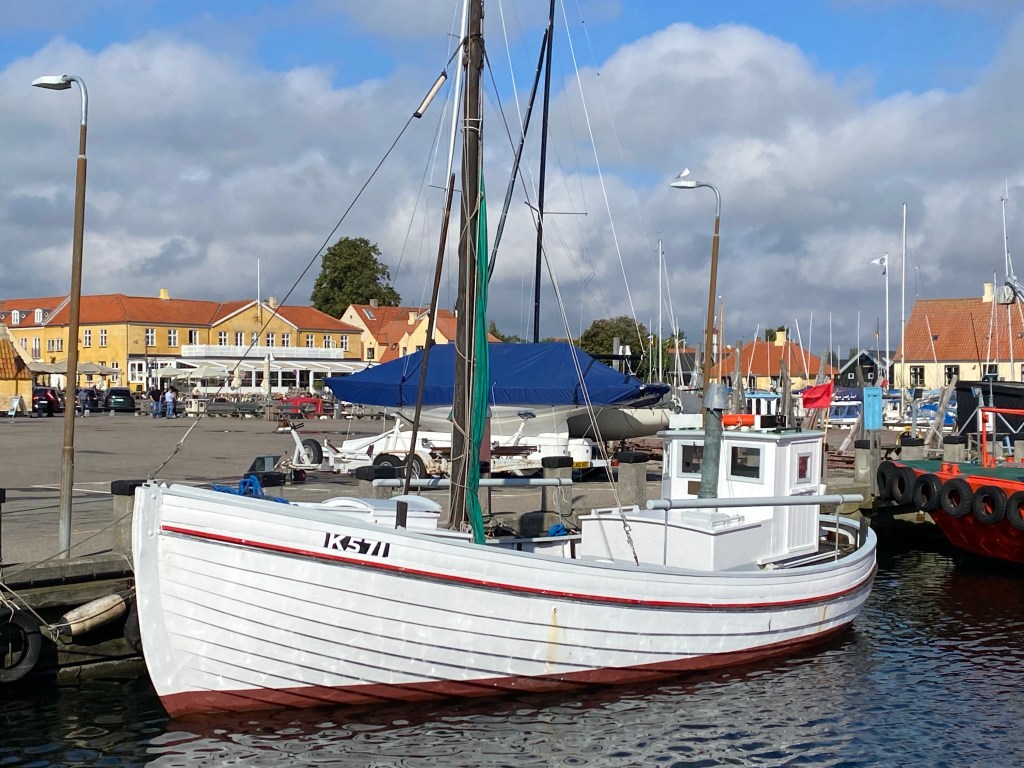
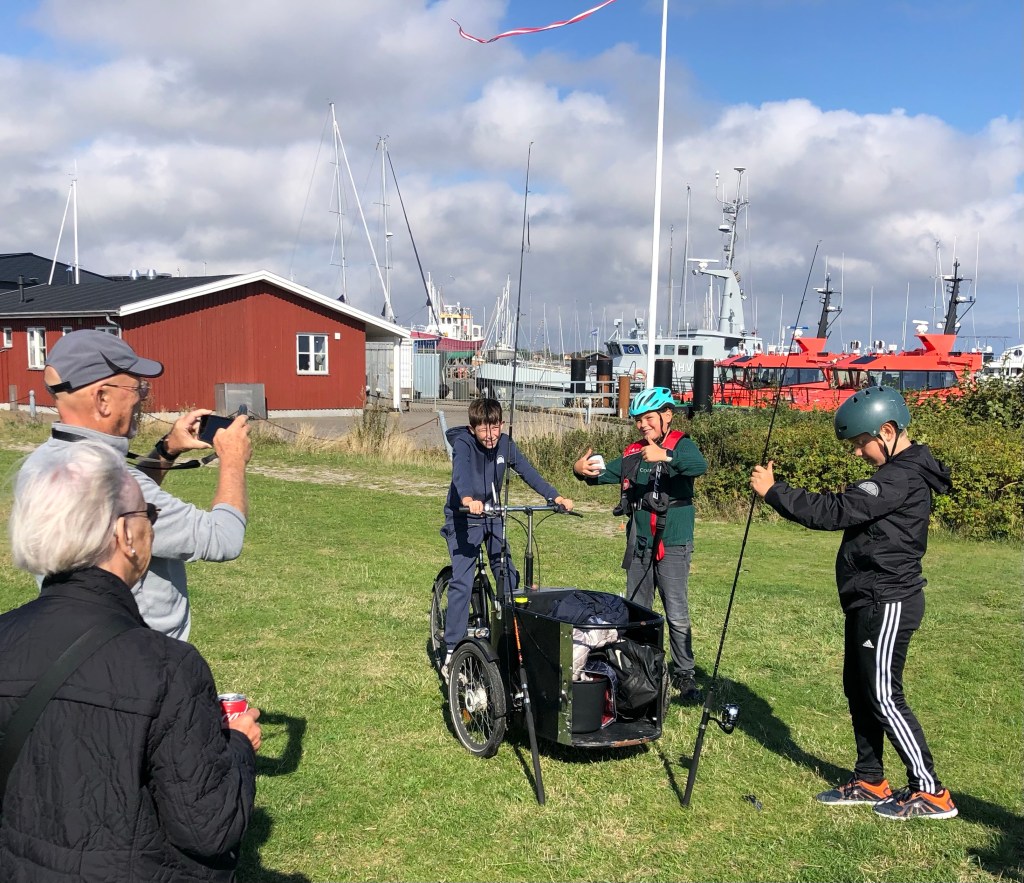
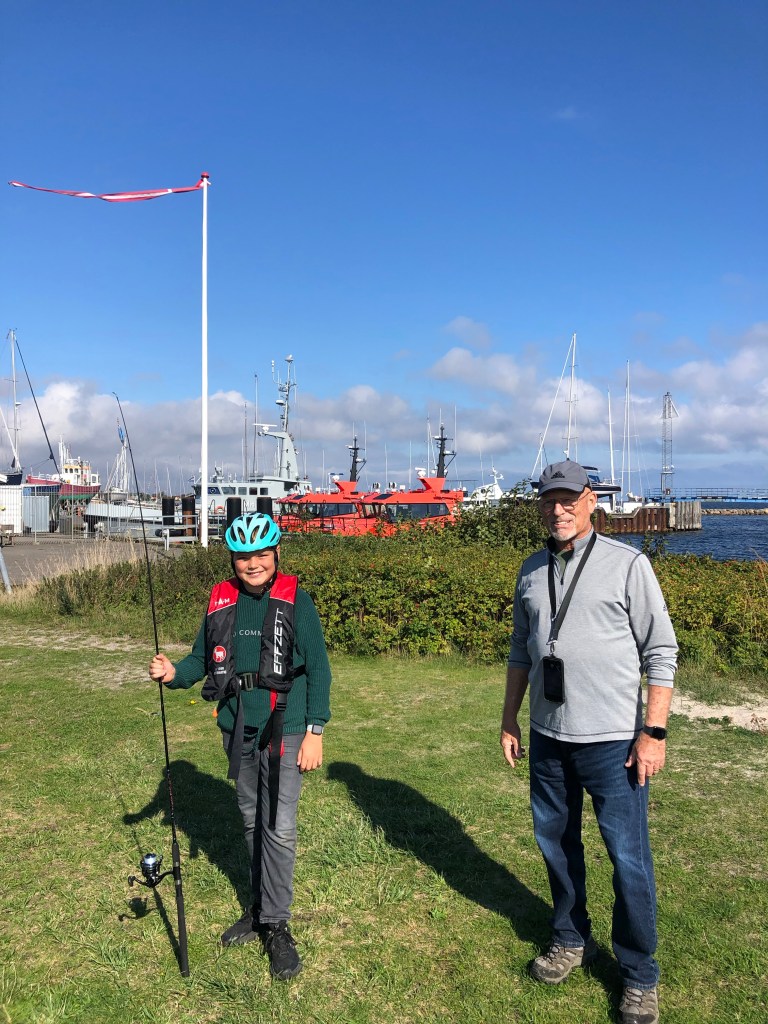
We started out visiting the small fishing village of Dragor. A quaint village of old wooden houses, some with thatched roofs, wooden fishing boats, a world war 2 famous little boat, and sailing and rowing clubs. We also met some local boys fishing that were nice enough to talk to us!
Boat number 571, the “Elisabeth”, the last surviving of the small fishing boats used to evacuate 700 Jews to Sweden to keep them from being captured by the Nazis in 1943 as the Nazis marched thru Denmark.I talked to these three boys because they were getting fishing poles ready for action. They are 11 years old, in the fifth grade and told us about the fish they were trying to catch and showed us pics on their phones of big fish they had caught. They also told us about a famous badminton player that came from their town. This boys name is Axel, same as our grandson and about the same age!
Next…. it’s off to the Ferry terminal for our over night (20hour) ferry boat ride to Oslo, Norway.
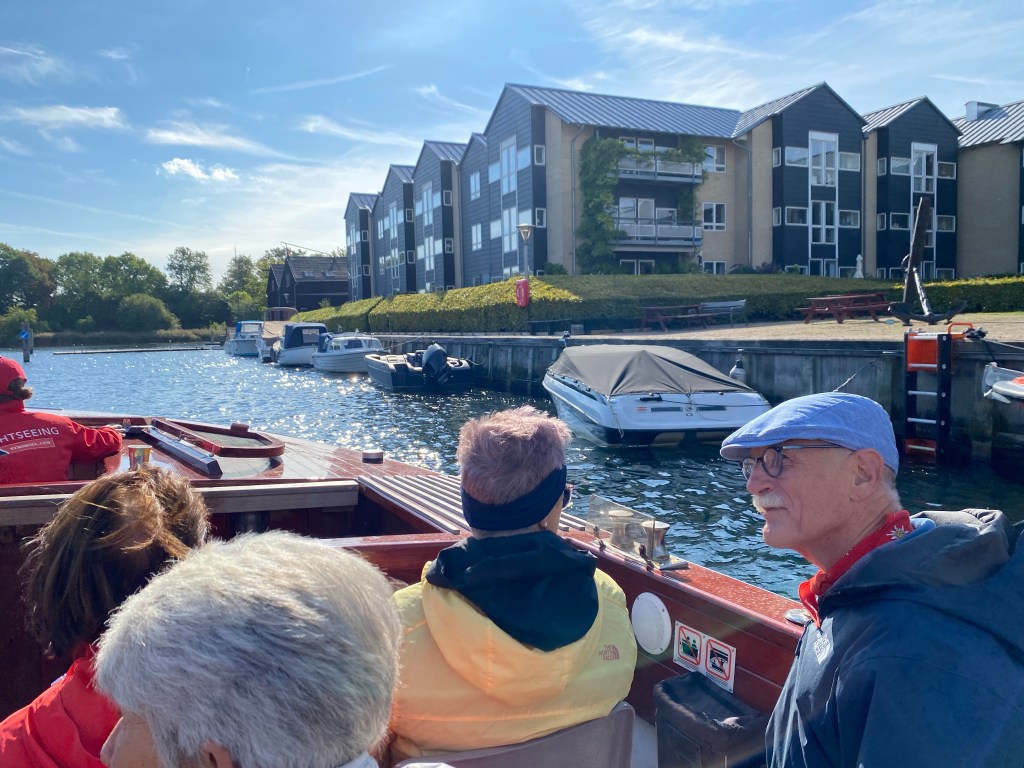
A walk about Copenhagen, a canal boat trip, and a Danish lunch…….
The underlying theme was how “Green” Denmark is.
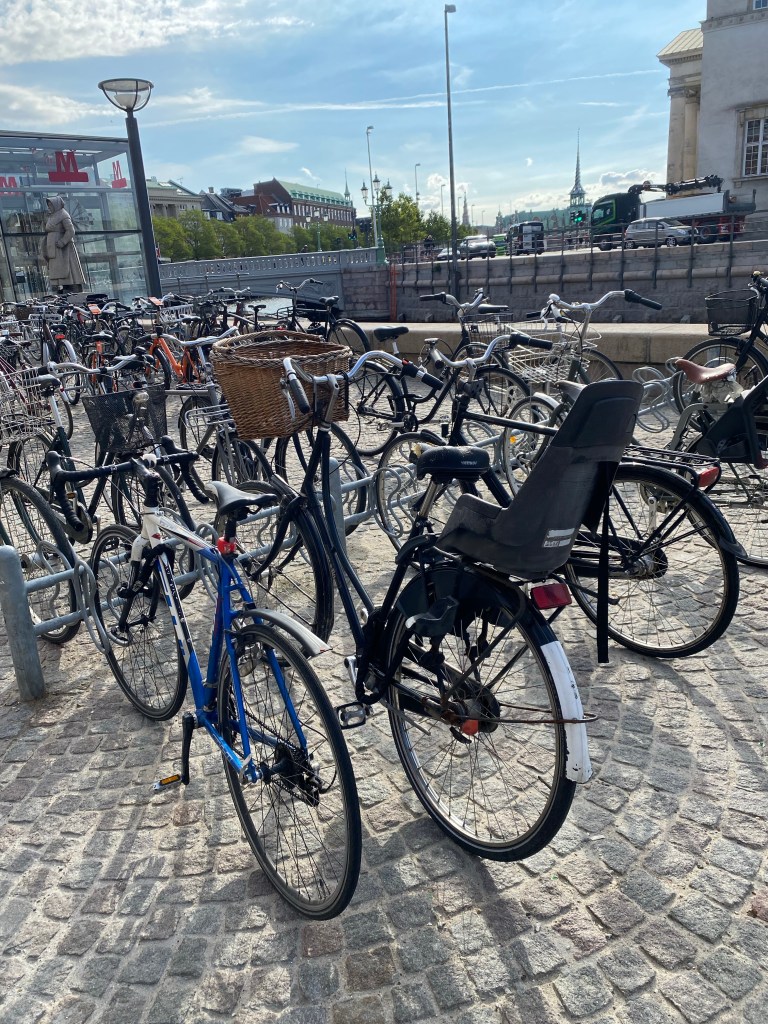
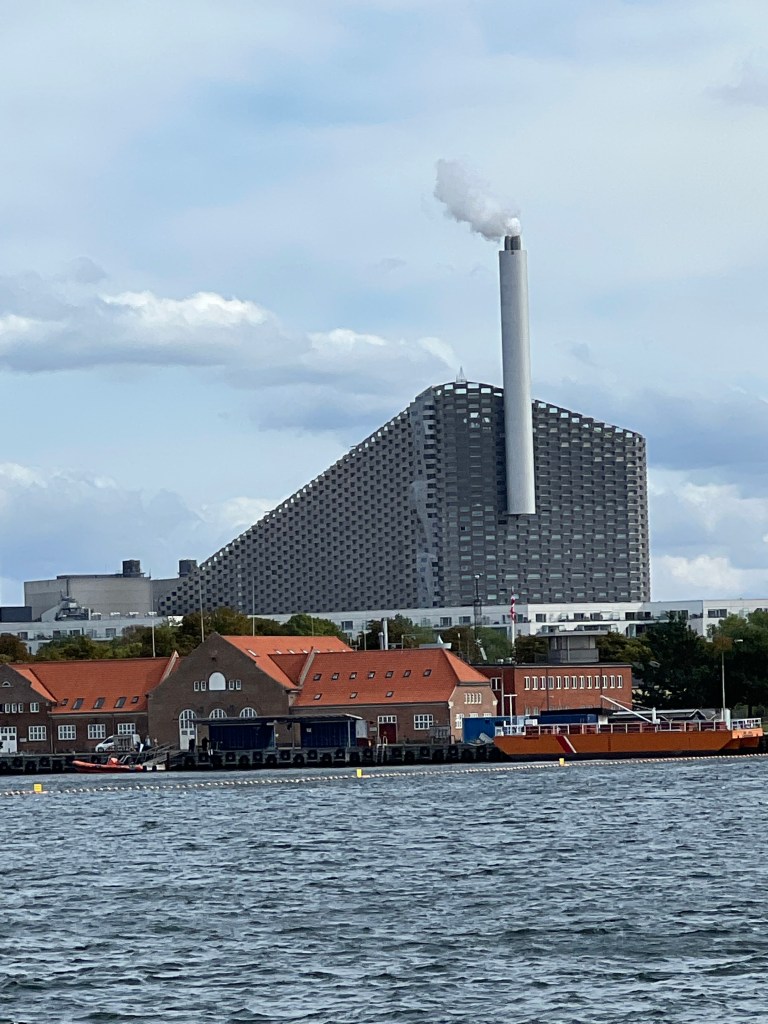
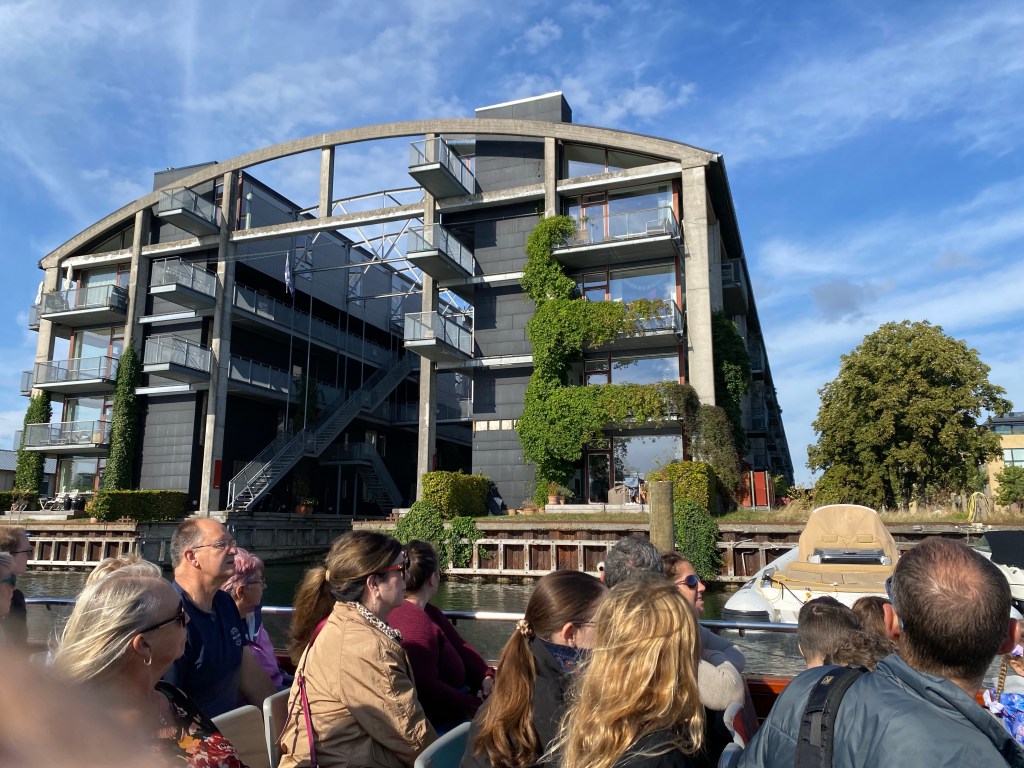
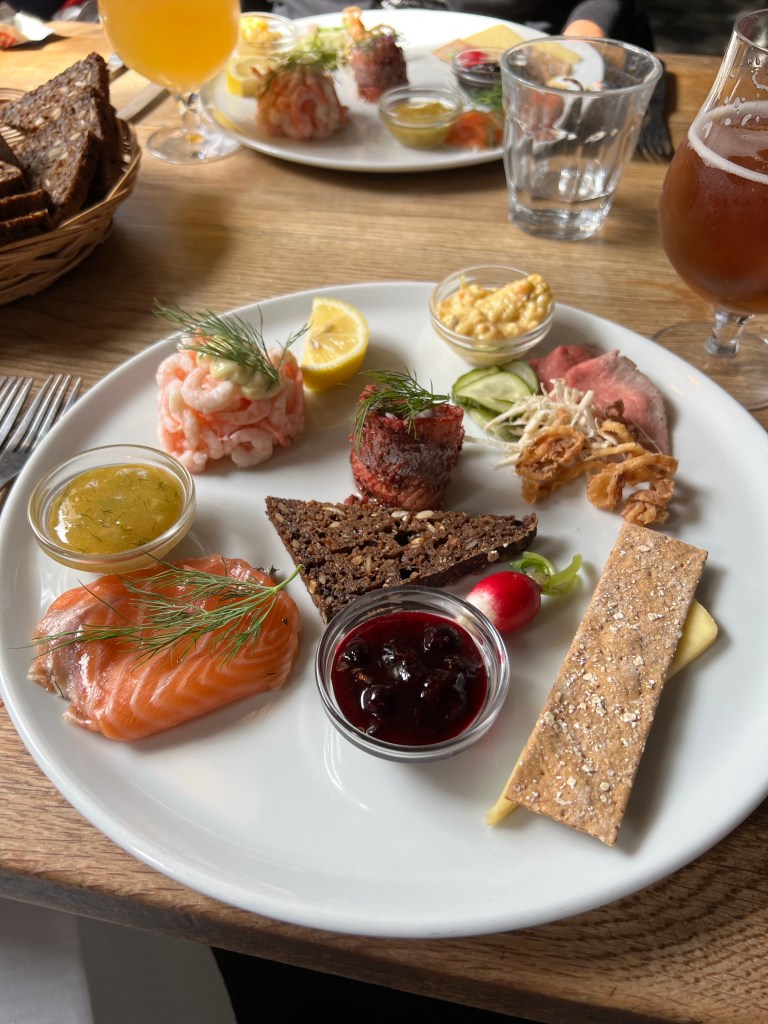
Green begins with lots of bikes and bike riding. As pedestrians we have to be aware of the bikes or get run over!Old navy barracks and buildings repurposed as high end waterfront condos Copen Hill….. it’s called a “waste to energy” plant, burning sewer waste and other trash and generates electricity. In its design it incorporates a climbing wall with a cafe/bar at the top and an artificial ski slope that is open all year for downhill skiing.A converted shipyard repurposed into high end waterfront condos .Repurposed Waterfront condos made from shipping containers Danish lunch…… cold salmon, marinated herring, shrimp, roast beef and cheese with cranberry jam. Aquavit(Danish schnapps) is consumed with the herring. All of the lunch is then best with a Danish beer(Tuborg).
Wonderful lunch!Danish humor…. check out our canal Tour sign






























 Rod and Patty’s Blog