A Scandinavia follow up…… food we ate, at least food Rod ate.

It started out with fish….. fish at breakfast, fish at lunch, and fish at dinner. Then it was reindeer ….. reindeer meatloaf, reindeer Pattie’s, and reindeer stew.

A hearty lunch…. Smoked, almost raw, salmon, very good small shrimp, thin sliced roast beef with rye bread, hard cracker cheese and berry jam
Our first taste of reindeer, pretty darn good as long as you weren’t thinking about Rudolph.
A flaky piece of cod from an outdoor market.
Patty’s lunch was a cinnamon roll.
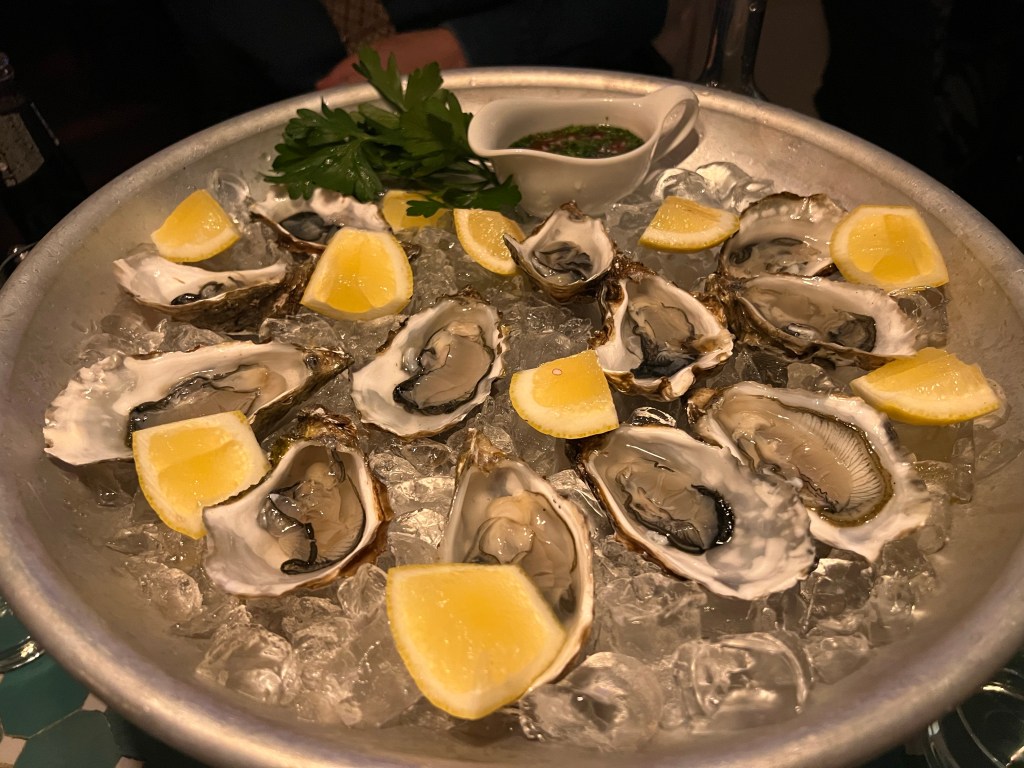
Oysters were great! Sweet and didn’t taste fishy.
Patty ate around the raw salmon and beets, I liked both.
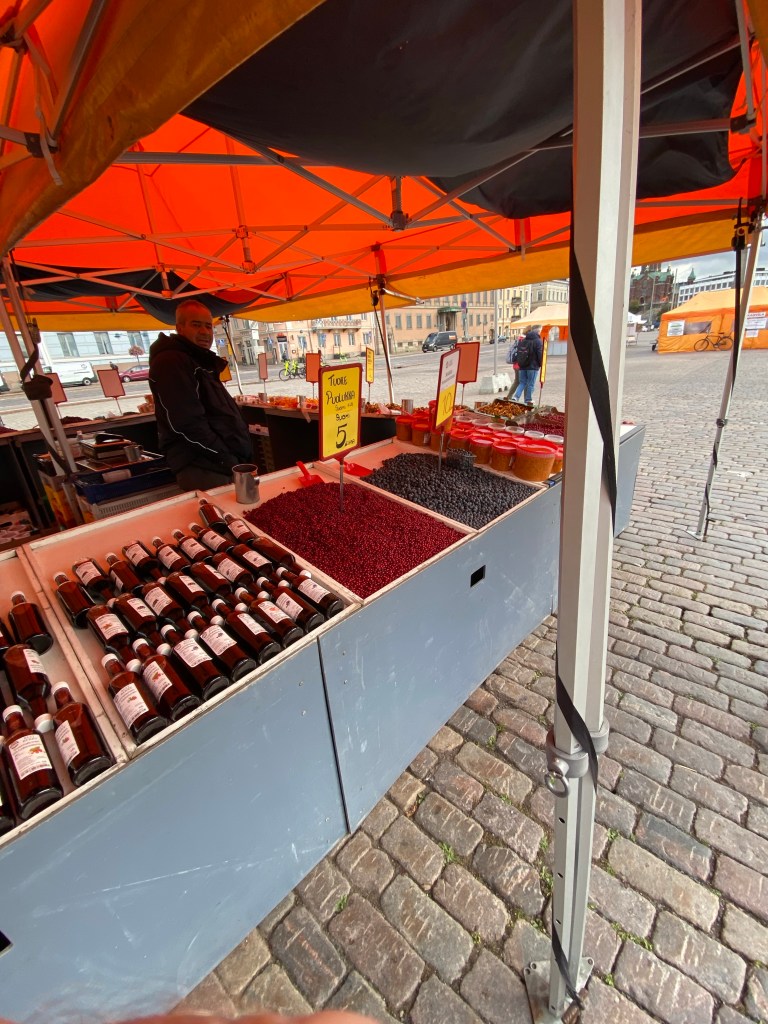
Fresh lingonberries, crow berries, and end of season blueberries. We had them on ice cream, crème brûlée, and made into jam they were very good too. Cloud berries were also good, they looked like orange raspberries.
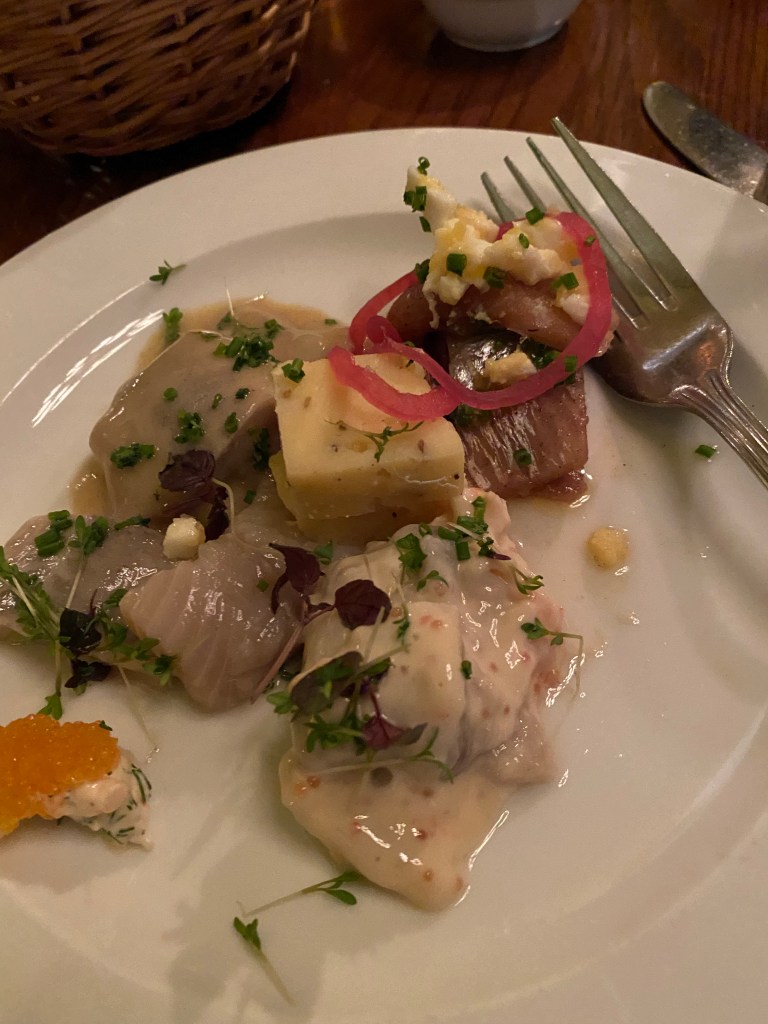
Pickled herring, mackerel, and salmon roe…. Good stuff, at least for Rod.
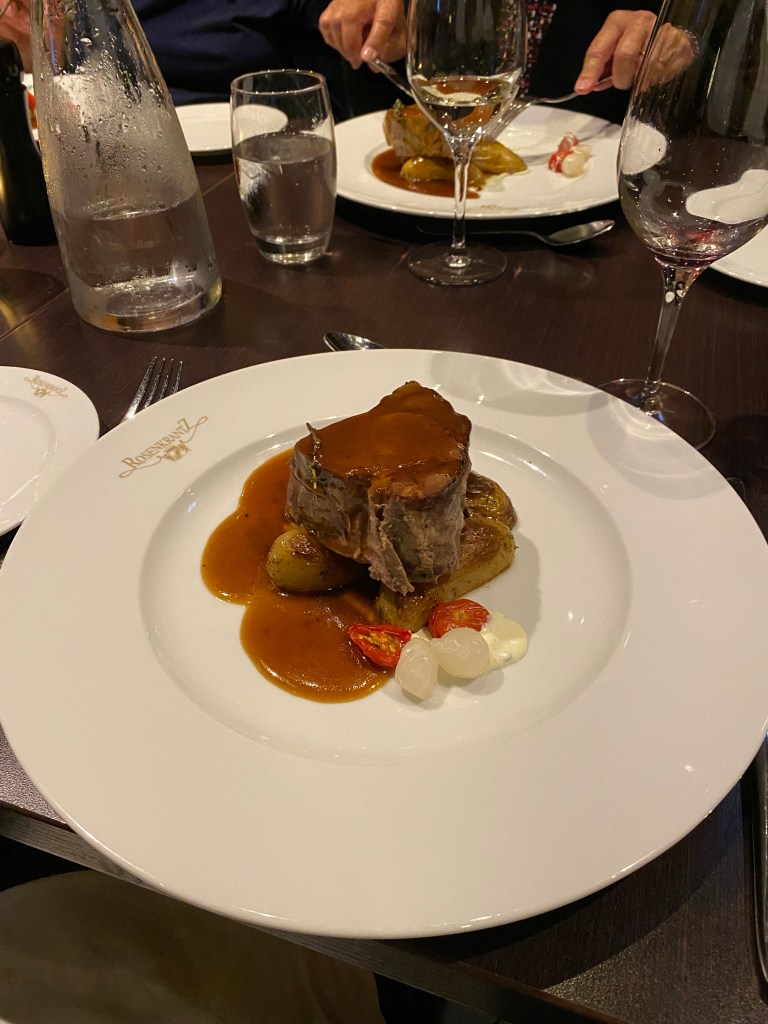
A leg of duck, it was very good, moist, tender and tasty. However, I’ve never seen a duck with legs this big.
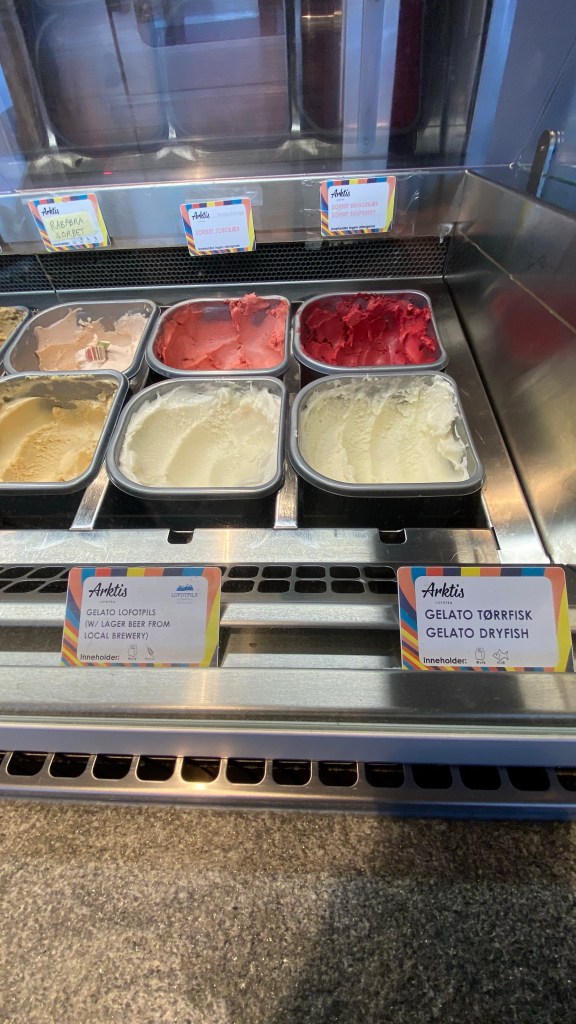
Neither one of us tried the dry fish gelato or the gelato with lager beer!
Patty did eat some of the cod.
Can’t go wrong with layers of chocolate, a strawberry and dark chocolate.
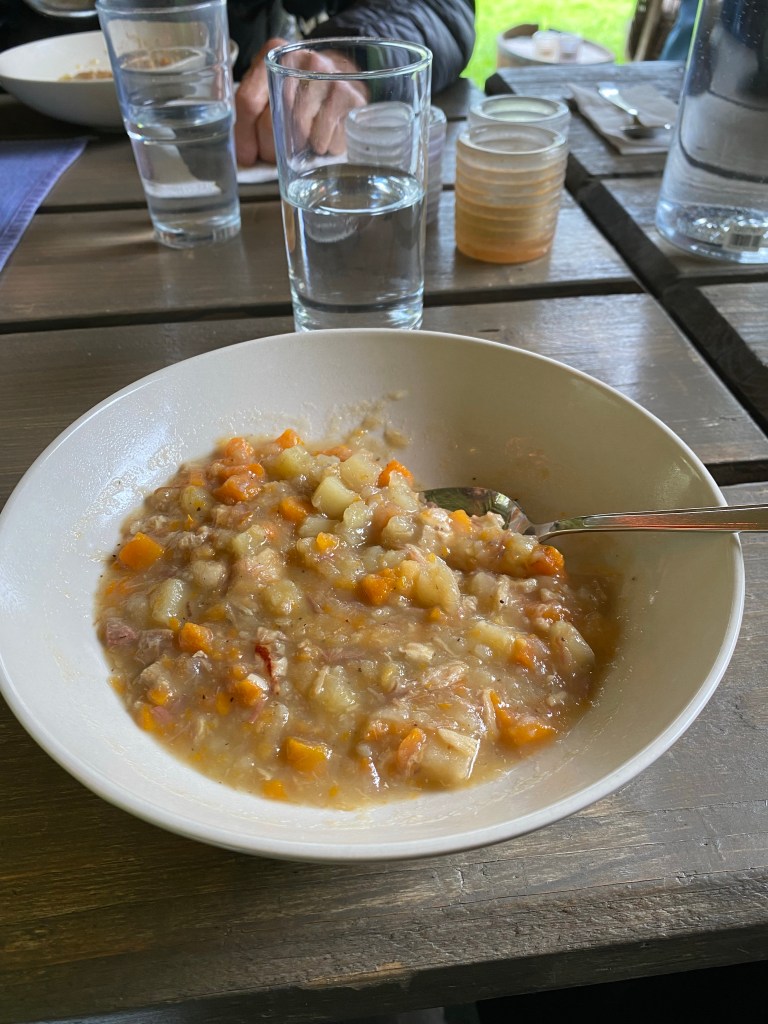
A salmon chowder, very good. Patty liked the bread.
Hotdogs and chocolate milk, good stuff!
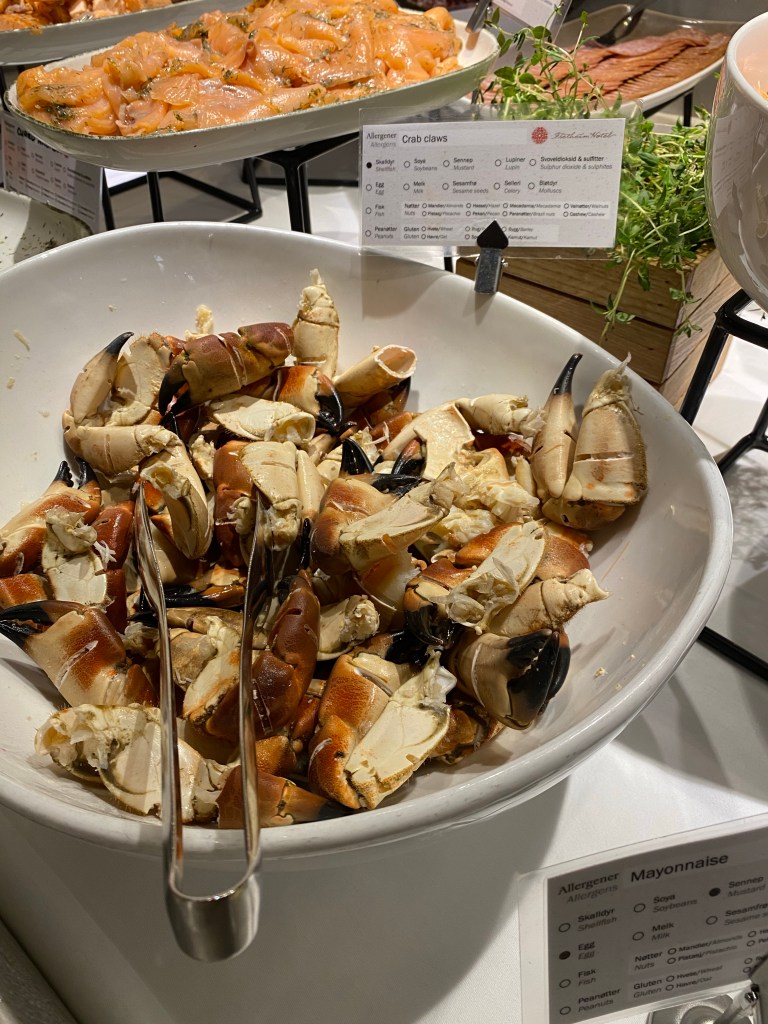
Crab claws on a buffet, Dungeness crabs from the Oregon coast are still my favorite.
A buffet with all kinds of seafood, crab, mackerel, prawns, cod, and salmon.
A lamb stew 👍
Patty enjoyed the white wine and passed me the salmon and beet appetizer
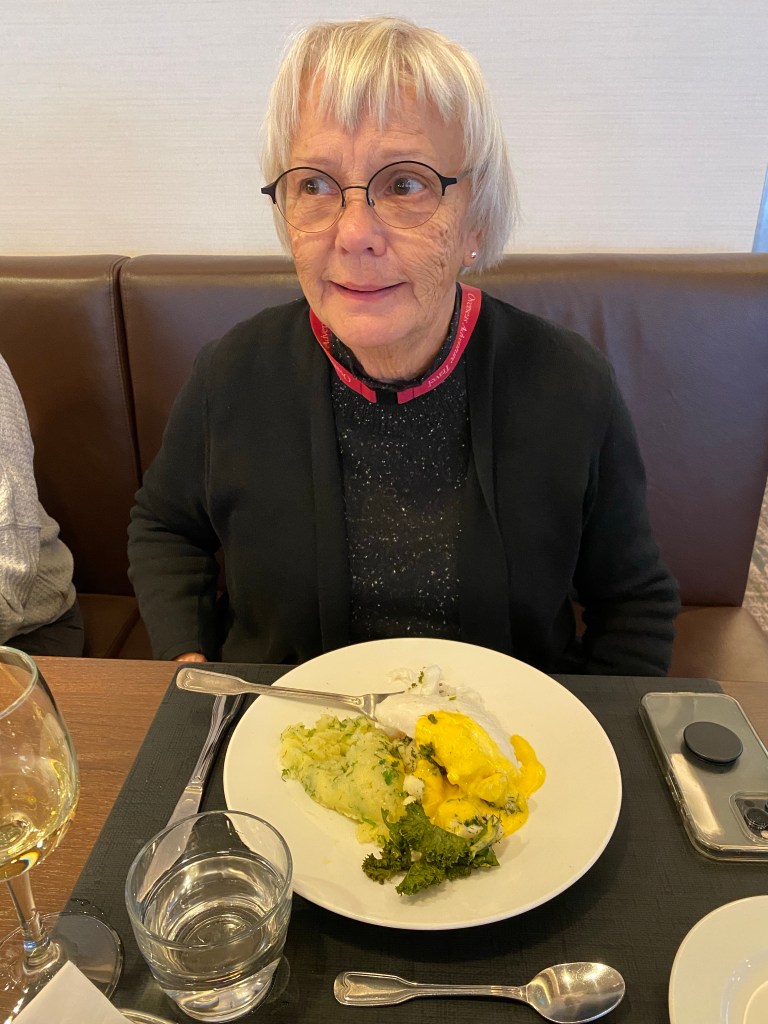
Patty’s breakfast
A slider, fries and a beer, almost like home.

Last day in Stockholm

The previous day we walked 17,500 steps, about 7 and 1/2 miles. We have been on the go for 23 days and Patty was ready for a day off. So, Daniel and I headed out early for a whirlwind 3 museum visit and walking in the old part of Stockholm. We did stop at an old famous hotdog stand for a quick lunch.
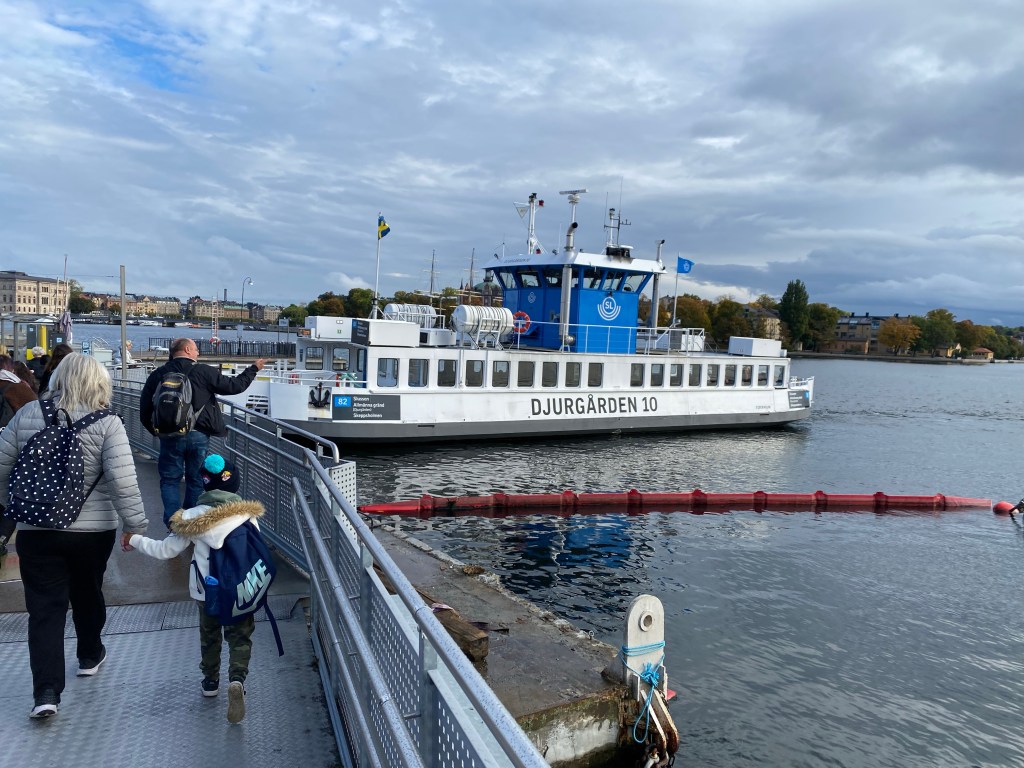
First thing we did was a ferry boat ride to the Vasa Museum. This ferry boat is included in our metro transportation pass.
The Vasa sank on her maiden voyage in 1628. It only went about 100 yards and a gust of wind blew it over. It was a Warship armed with 64 guns/cannons. It was top heavy and a poor design. A similar, almost sister ship, that was 40 feet wider sailed for over 30 years. The ship was on the bottom of the harbor for over 300 years and the brackish water didn’t allow for worms to eat away the wood. It was raised in the 1960s and is over 90 percent original.
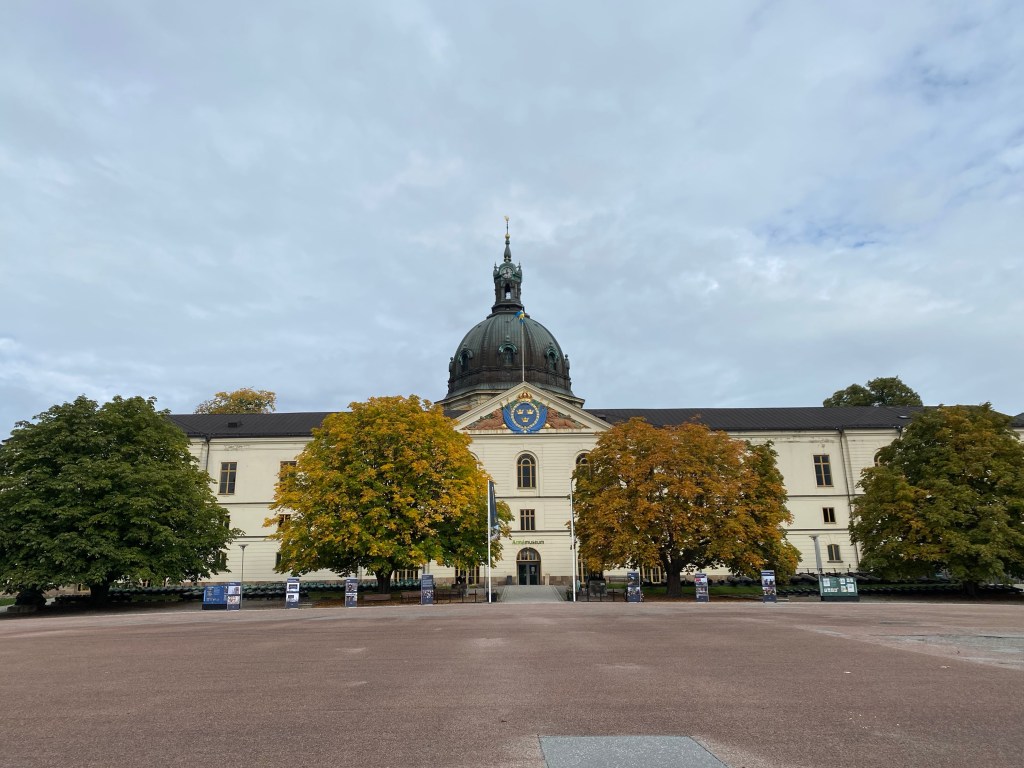
Next stop, the army museum. It was a very interesting display of not only weapons but room displays and diorama’s of Swedish military involvement dating back to the 1500s.
Then it was time for a stop at one of Stockholm’s famous hot dog stands, Rorstrandsgrillen hot dog stand, there was a line of about 10 people ahead of us and it was worth the wait. Daniel suggested Pucko chocolate milk to wash it down. It was a good quick lunch before heading off to the next museum.
A lucky moment! We were walking near the palace and Daniel said that this should be about the time that they do a changing of the guard……. Sure enough, and man do these soldiers look young.
Then it was off to the Nobel Prize Museum. Alfred Nobel made is fortune developing dynamite in 1867. He donated his fortune to the Nobel prize institute. There are 5 prizes awarded annually…… physical science, chemistry, medical science, literary work, and peace. I went to Washington High School in Portland, Oregon and so did Linus Pauling. He won two Nobel Prizes. In 1954 he won the chemistry prize. He won the Nobel Peace prize in 1962. Linus Pauling was a credit short in history and didn’t graduate from Washington High in 1917. He was accepted to Oregon Agricultural School( Oregon State University) and went on to get his PHD at Cal Tech. Washington High gave him an honorary diploma in 1962.
Albert Nobel’s “will”, has had a lasting impact world wide. He changed his will after a reporter thought Alfred had died when it was actually his brother. This reporter said that Alfred was a man who made his millions with his development of dynamite. The reporter also said that it was blood money because of the increase in battlefield deaths using dynamite. Nobel wanted to change his legacy and donated 97 percent of his estate to the Nobel prize program. Sometimes guilt can lead to good things!
Then it was one last happy hour and a farewell dinner with Daniel and time to say good by to 24 days in Scandinavia,

Stockholm, day 2

Off to Strangnas, Daniel’s hometown. We took the subway to the train station and had a nice ride on a smooth quiet and clean train. His apartment was a 10 minute walk and it was right in the middle of a nice small town.
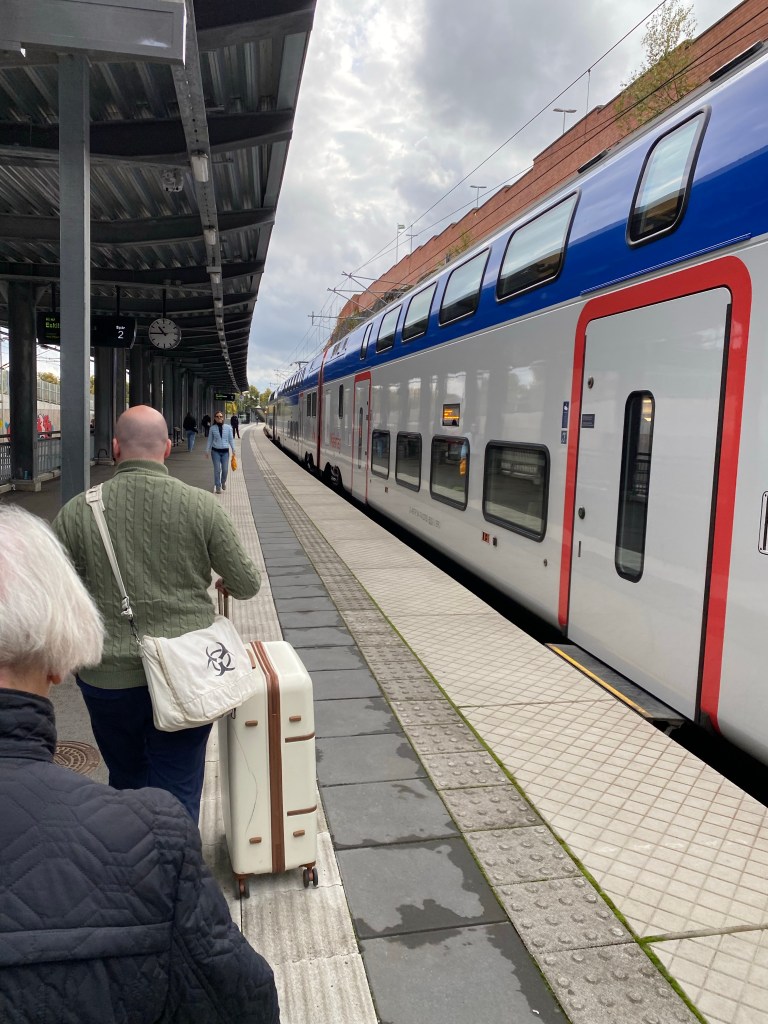
A nice new train
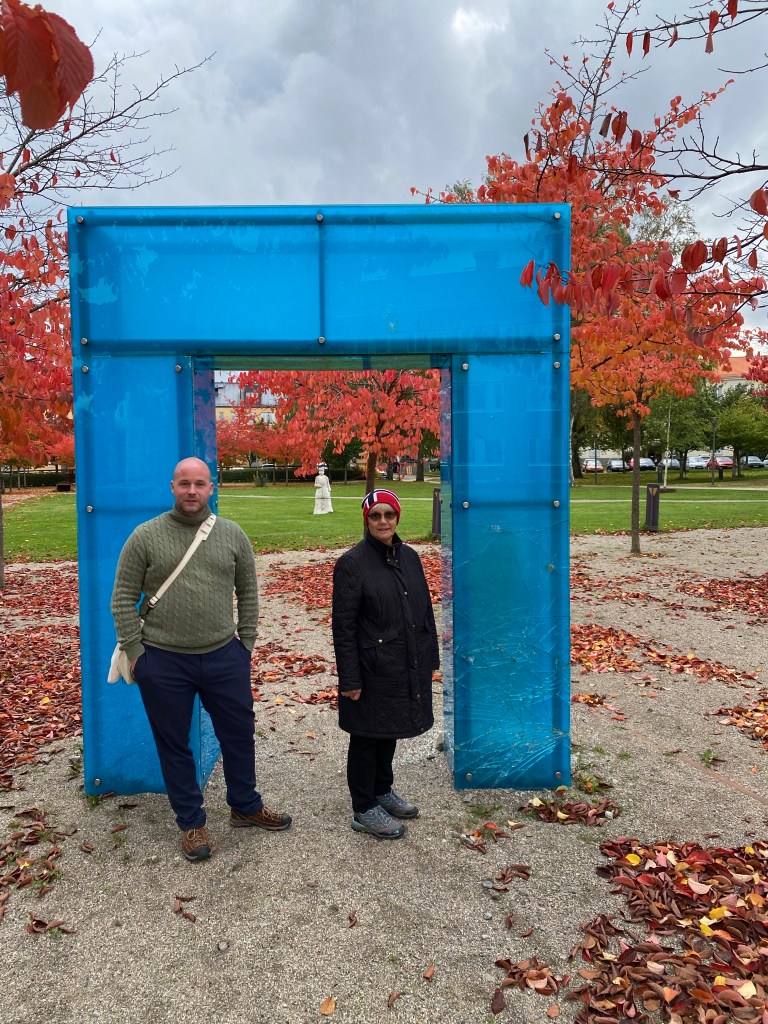
A nice fall day walking thru Strangnas
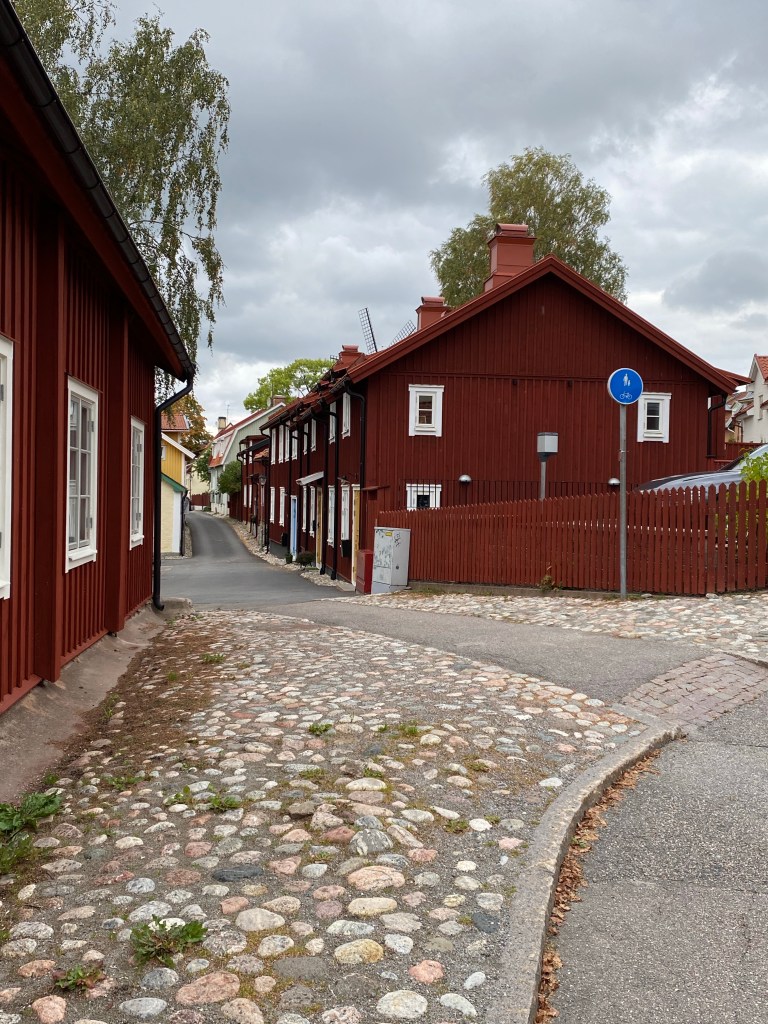
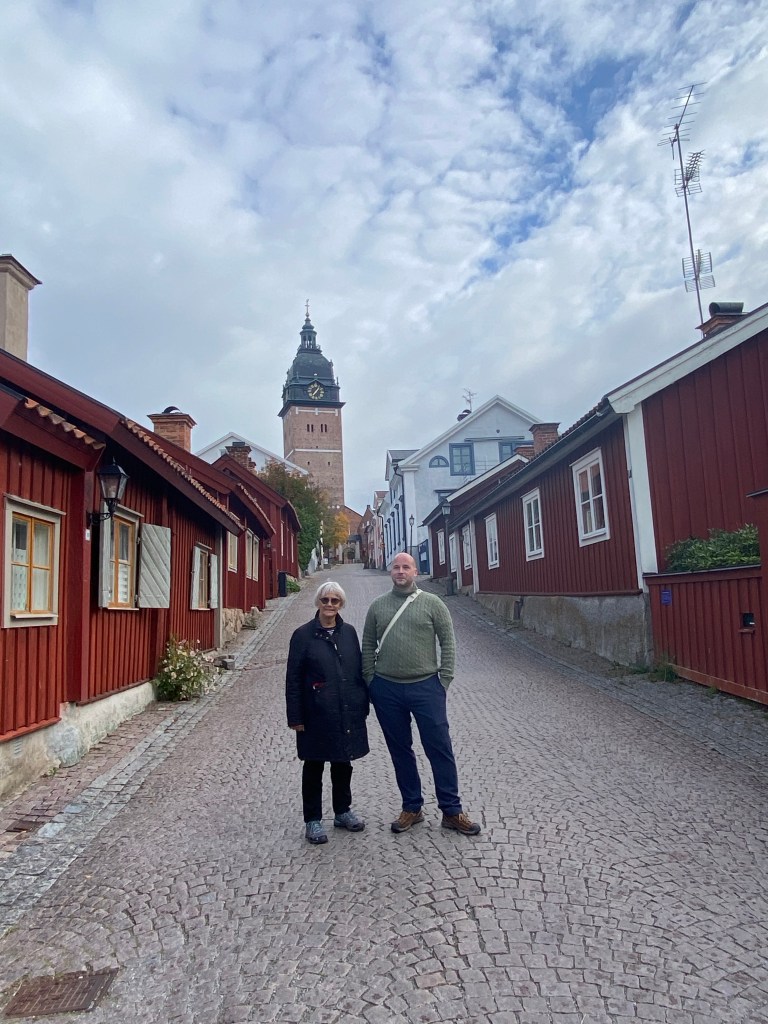
Very nice old part of town. The red paint, Falun red, is commonly used in old wooden cottages, barns, and houses. This “paint” dates back to the 1700’s. It is more of a dye than a paint, made from copper mine tailings, linseed oil, flour and water. It not only acts as a paint but it protects the wood from decay. This historic district requires that you use this Falun red to color(paint) your house.
This gentleman is painting his house with Falun red. I talked to him and ask about his Wisconsin baseball hat. He got his PHD from Wisconsin back in the 70s and then moved back to Sweden to to teach economics at a Swedish university. It’s a small world! “Go Badgers” he shouted as we walked away.
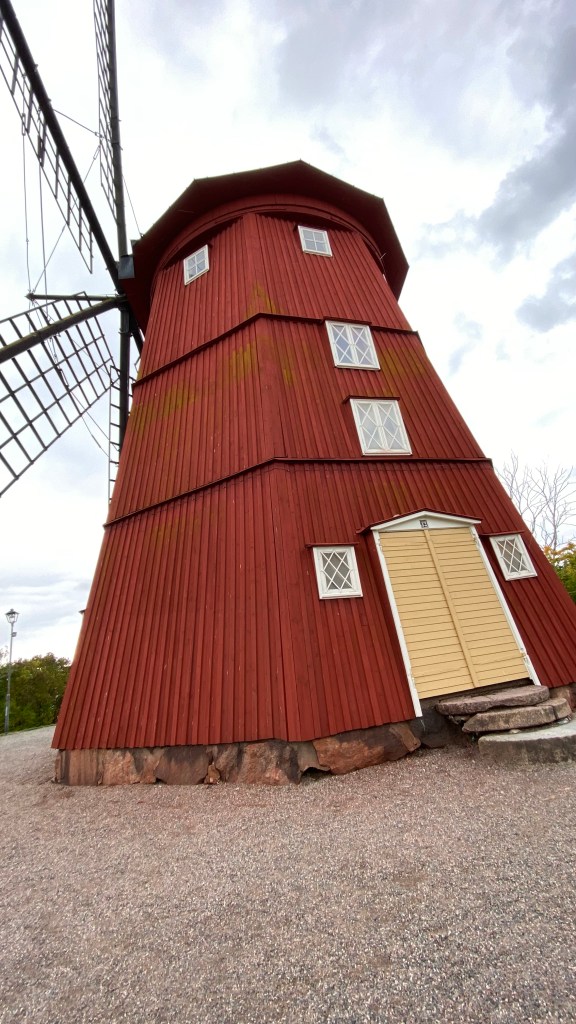
An old windmill,still in good shape after 100 plus years
This is the Strangnas cathedral, dating back to 1260, it has one of the oldest working libraries in Sweden. The library dates back to 1316. It is still accessible, just need an appointment to visit the library inside the cathedral.
A runestone outside of the cathedral. Sweden has over 3,000 runestones, most date back to the 11th century, the end of the Viking Age.
Gyllenhjelmsgatan is deemed the most beautiful street in Sweden. A Swedish poet deemed this in one of his poems so it must be so. Our guide says it looks even better when the flowers are in full bloom.
Another small library. They pop up all over Sweden. They are proud of their libraries, big and small.
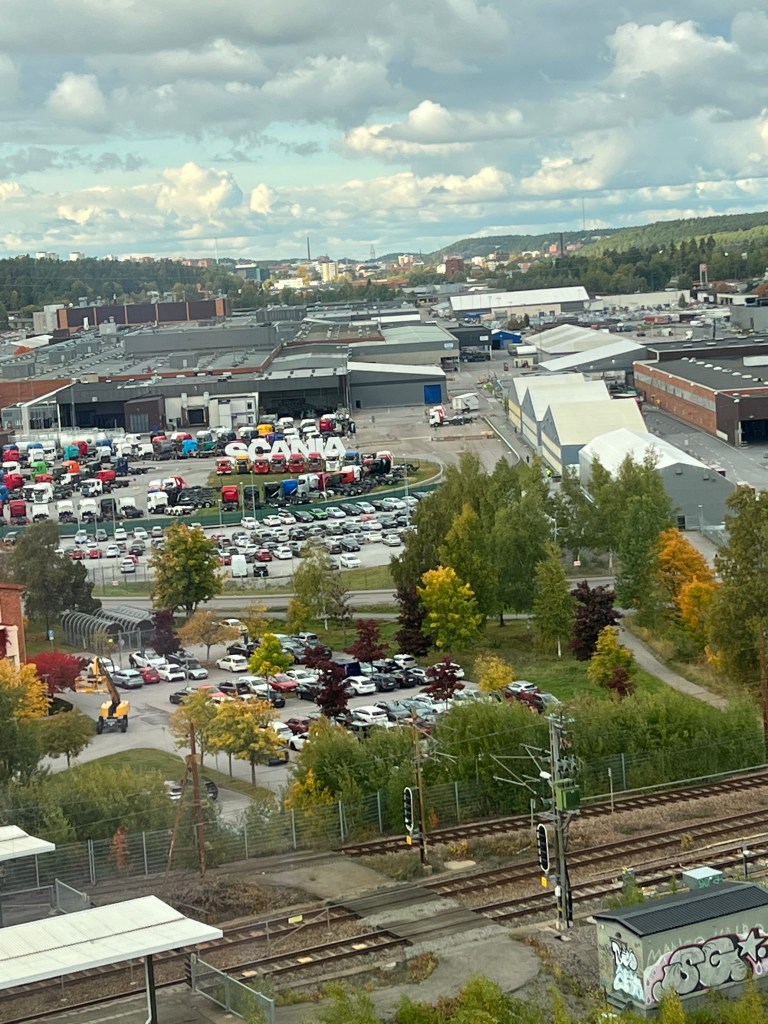
On the train ride back to Stockholm we saw a truck assembly plant. I was not aware that Saab and Volvo (Swedish auto companies) sold out to the Chinese. The cars are now made in China. The trucks, both Volvo and Saab, are made in Sweden.
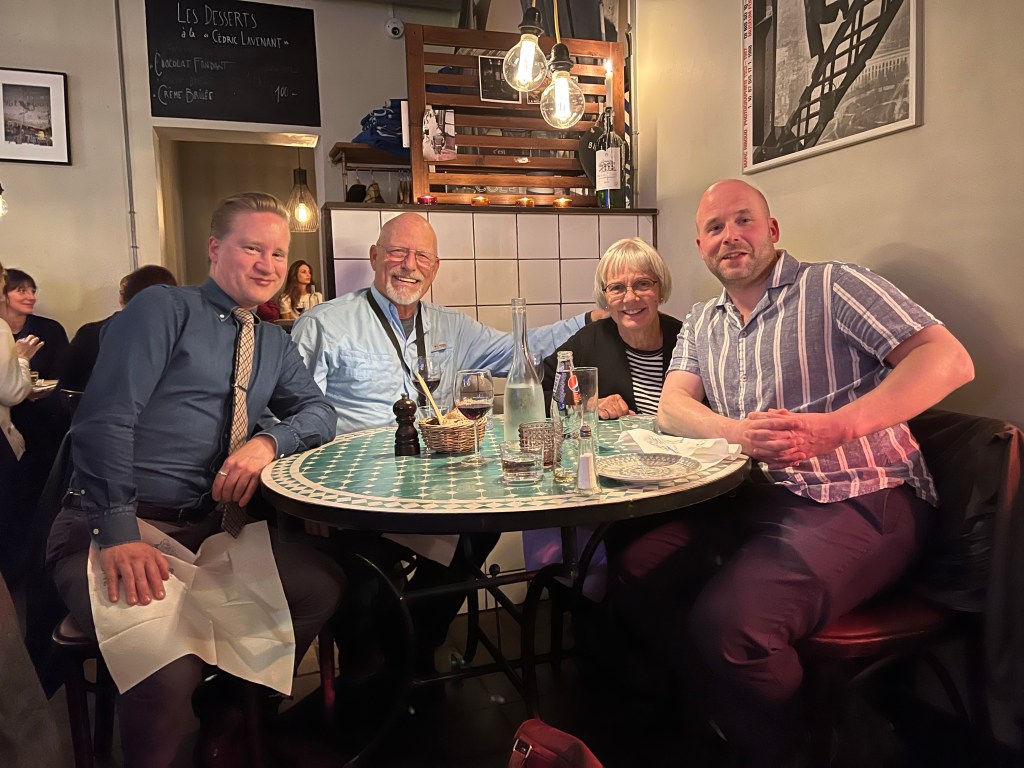
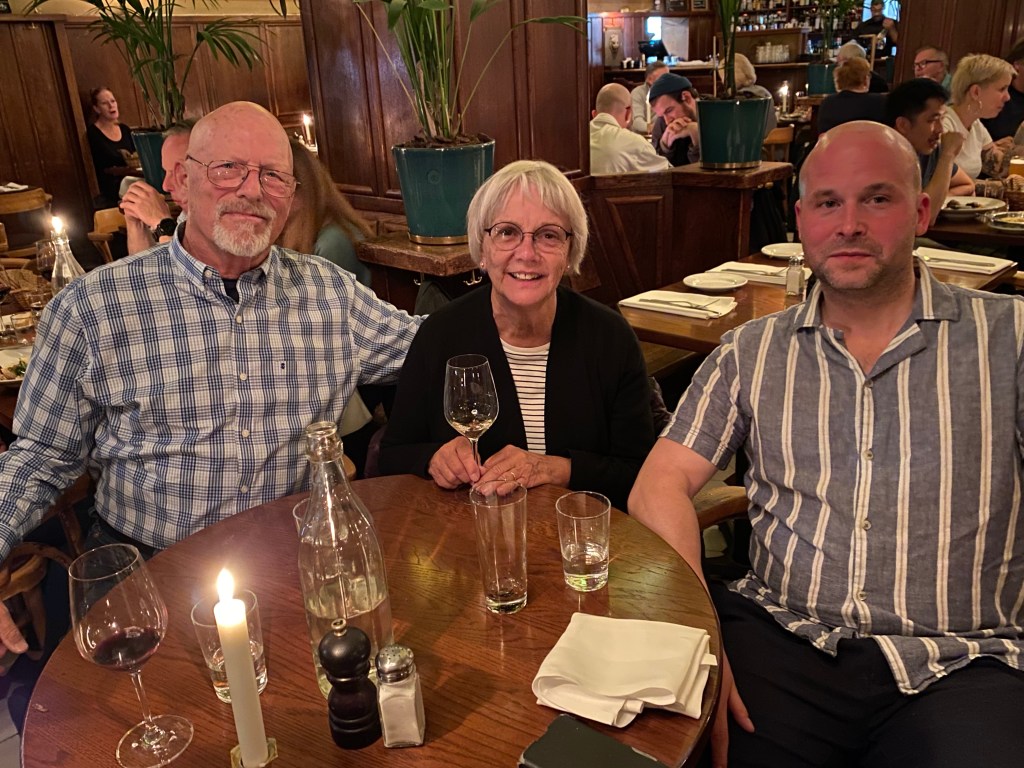
We finished the day back in Stockholm at a small nice restaurant in an old gentrified area of Stockholm. Daniel’s friend, Christian, met us for dinner. It was like another ‘people to people’ experience talking to Christian. He lives around the corner and he was willing to tell us about his life in Sweden. A very nice evening.
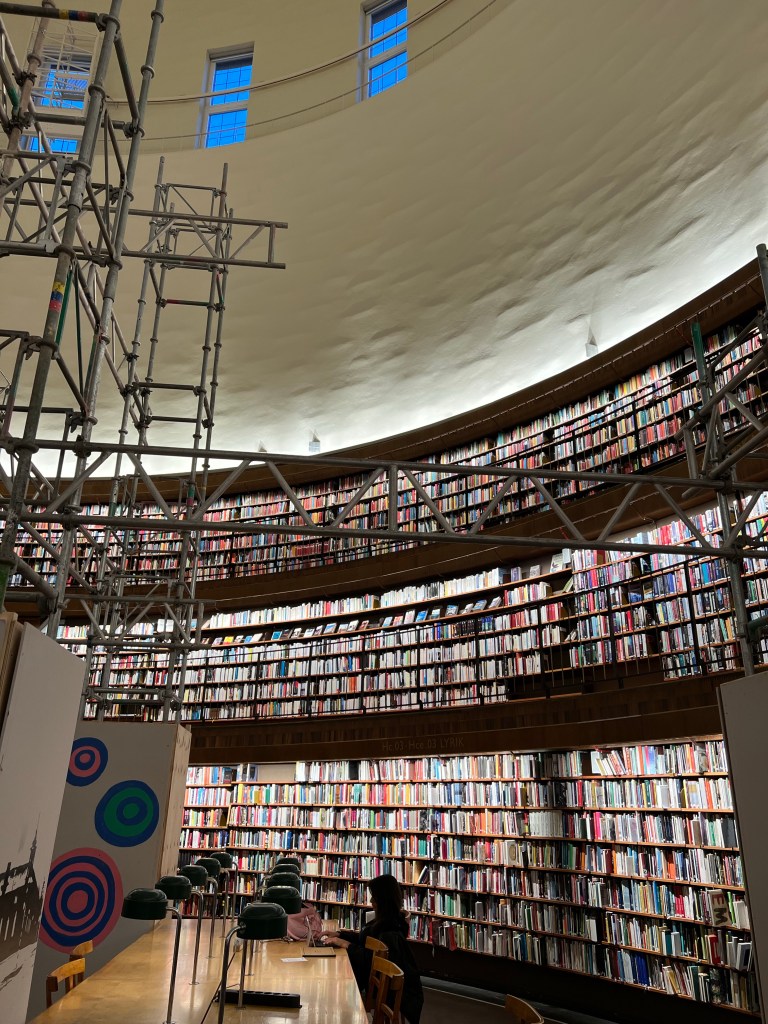
After dinner we walked by one of Stockholm’s public libraries
And of course we stopped in
And books galore! Scaffolding is there for renovations and painting.

Now it’s off to Stockholm, Sweden.

Sweden is a 3 night post trip. Our main trip had 22 travelers and twenty of them went home after the main trip. Patty and I are the only ones on this post trip. Daniel is also the guide for the post trip. He’s from Sweden and he has figured out an itinerary that will cover lots of Stockholm and most of one day will be spent in his home town, Strangnas, which is a one hour train ride away. Stockholm is made up of 14 islands. A little over 10 million people live in Sweden and metro Stockholm has 2.4 million people. 1/3 of Stockholm is water, 1/3 is parkland, and 1/3 is developed with buildings and housing. This made for a pretty drive around the city on our way to our downtown hotel.

Patty and I on our way to the airport in Helsinki for our flight to Stockholm.
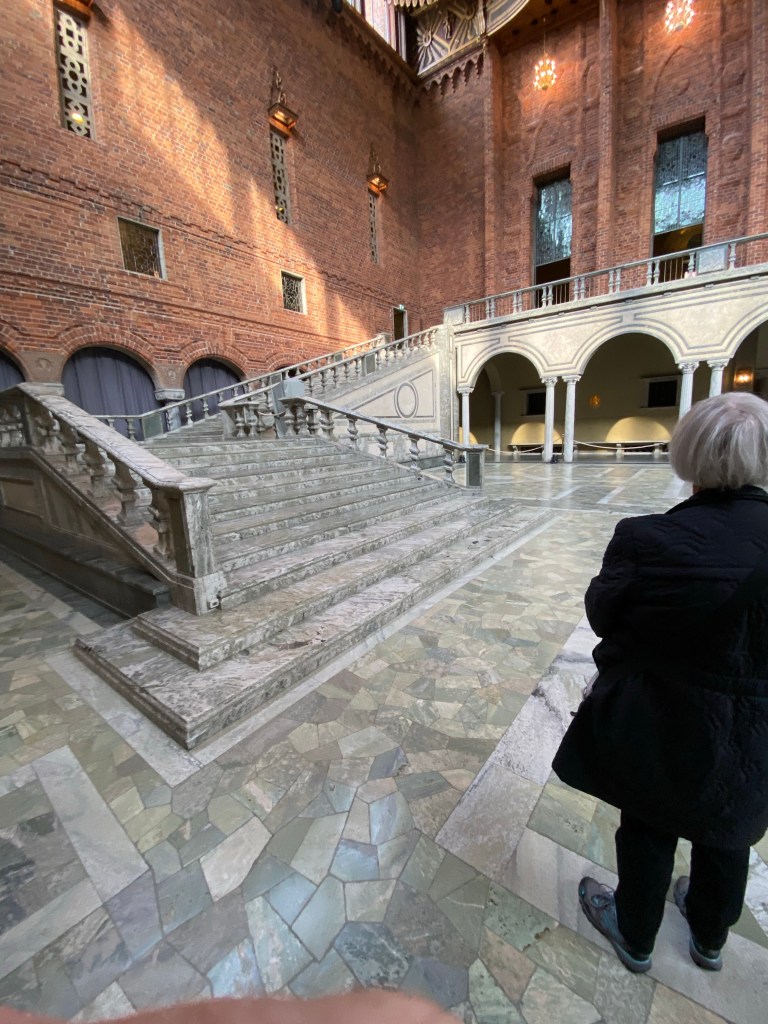
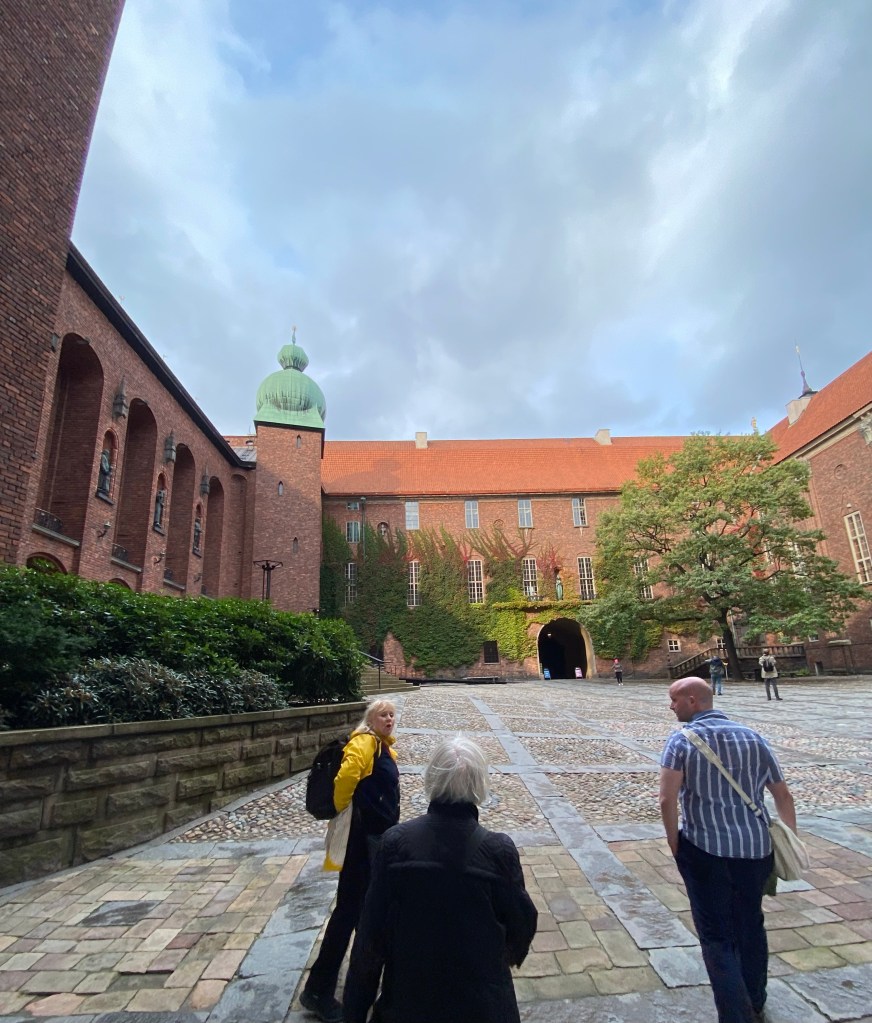
First stop is city hall. We meet our city tour guide. Why city hall? It was built in 1923 and is a beautiful brick structure. We are walking in the court yard, about to enter the building. Not only does the government use this building on a regular basis but it is also the site of the annual Nobel Prize Banquet and dance.
This is the blue room of city hall. The brick was supposed to be painted blue but once the brick work was finished the powers to be liked the look of the brick. This the room where the banquet occurs and some the entertainment takes place on the stairs to the left.
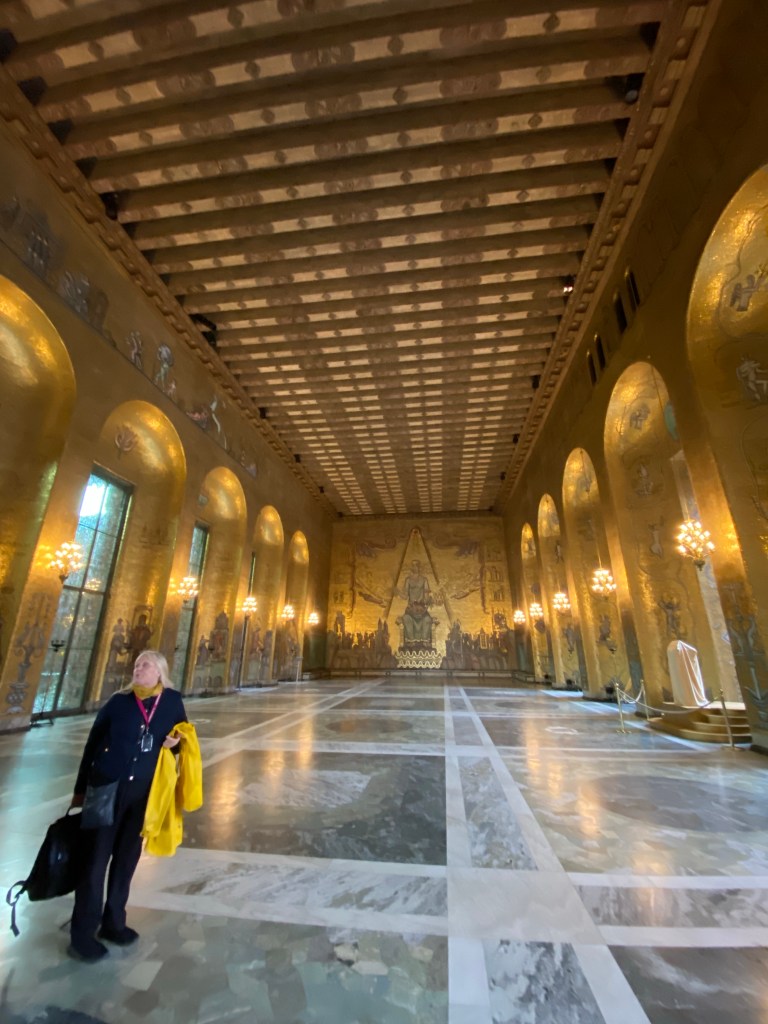
The golden hall overlooks the blue hall and the Nobel Banquet attendees move here for dancing. The walls are covered in small glass tiles with a layer of gold leaf under the glass.
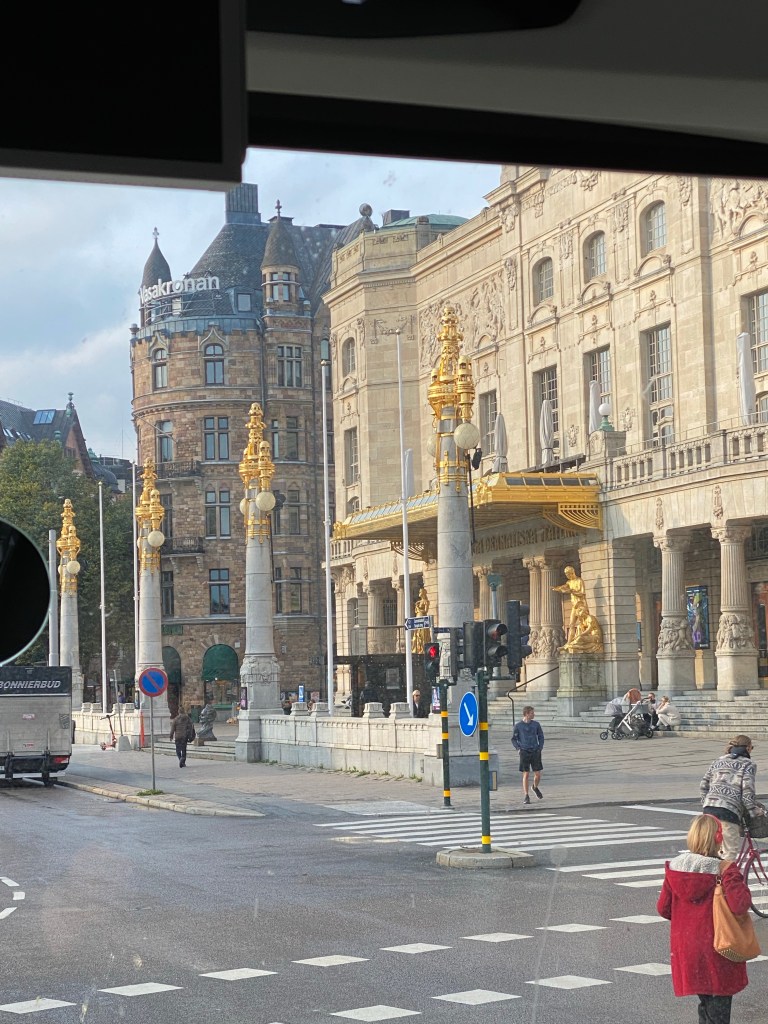
The Royal Dramatic theater was built in 1908. The royal dramatic training academy is here. Most of Sweden‘s major stars performed at this theater. Greta Garbo and Ingrid Bergman got their start here.
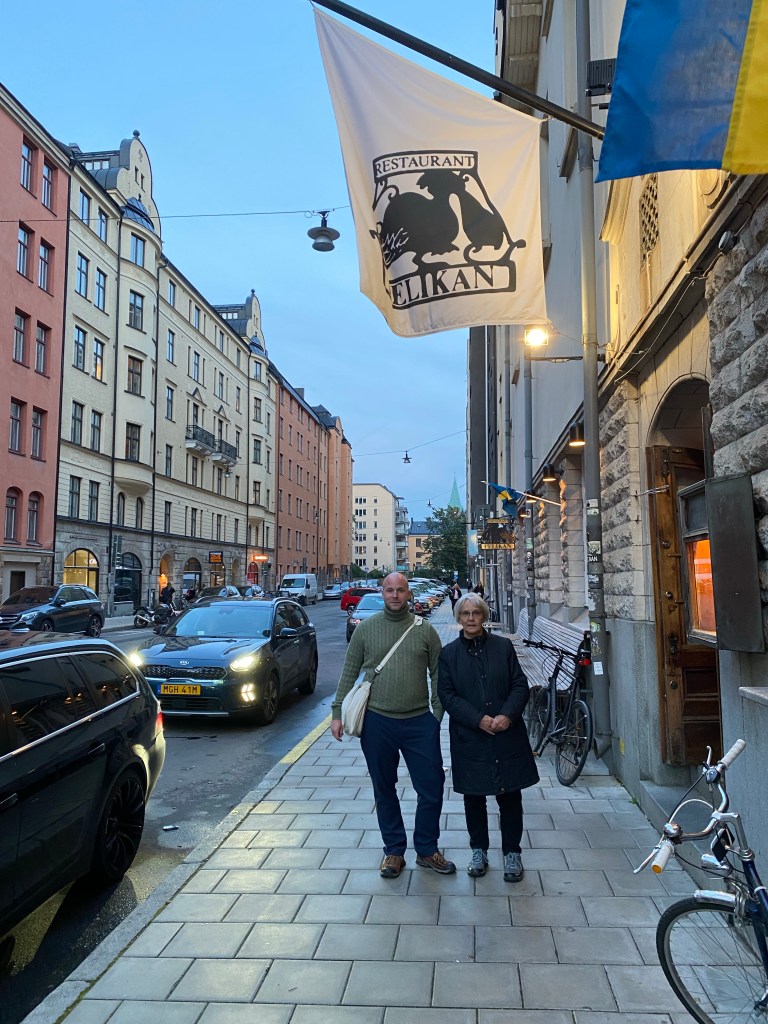
Pattyand Daniel outside an authentic Swedish restaurant. It was really crowded and glad we had reservations. Come to find out, most of the customers were eating early so they could go to the Bob Dylan Concert on this night!
It was a very nice dinner! Daniel and I, at his recommendation, had calves liver and onions. It was great!
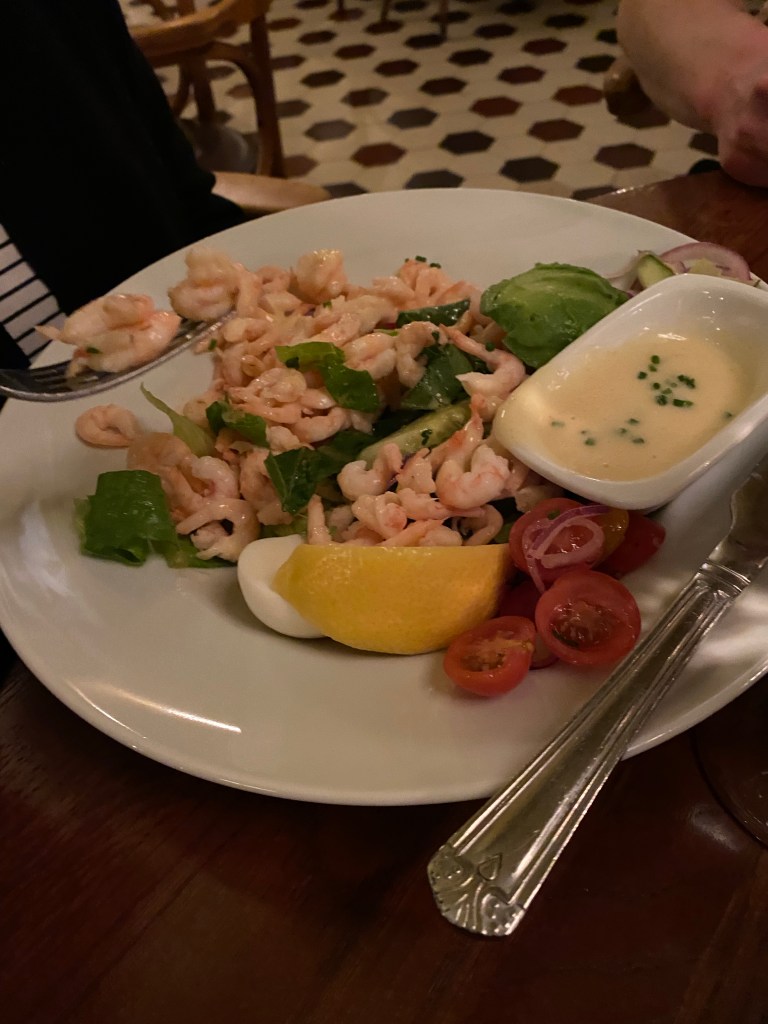
Patty has found her Swedish dish of preference. The baby shrimp has been great. It is reminiscent of the baby shrimp fresh from the Oregon coast. Much better than the “fresh” shrimp we get in Michigan.
Stockholms’s public transportation is great. We are getting on the subway to go across town.

Helsinki …..Day two

The second day in Helsinki was another walk with our city guide, Cornelia. She was knowledgeable, enthusiastic, and proud of her country and the city of Helsinki. We went on a 15 minute ferry boat ride out to Suomenlinna. It’s a unesco world heritage site and is a cluster of 6 small islands. The biggest island includes an old fortress, the Finnish Naval academy, museums, a World War Two submarine, restaurants, and old wooden historic homes. People live on this island and 1000 naval cadets train to become officers on this island. The naval academy is different than the US naval academy. Cadets train for 11 months to become officers and upon completion a large percentage become reserve officers and are subject to recall to active duty until they are in there 50s. Our tour guide’s son just completed the 11 month training program and chose to become a reserve officer.

The ferry makes trips to Suomenlinna every hour.

Finland coast guard ship
Our city guide, Cornelia and one of many old Cannons on display.
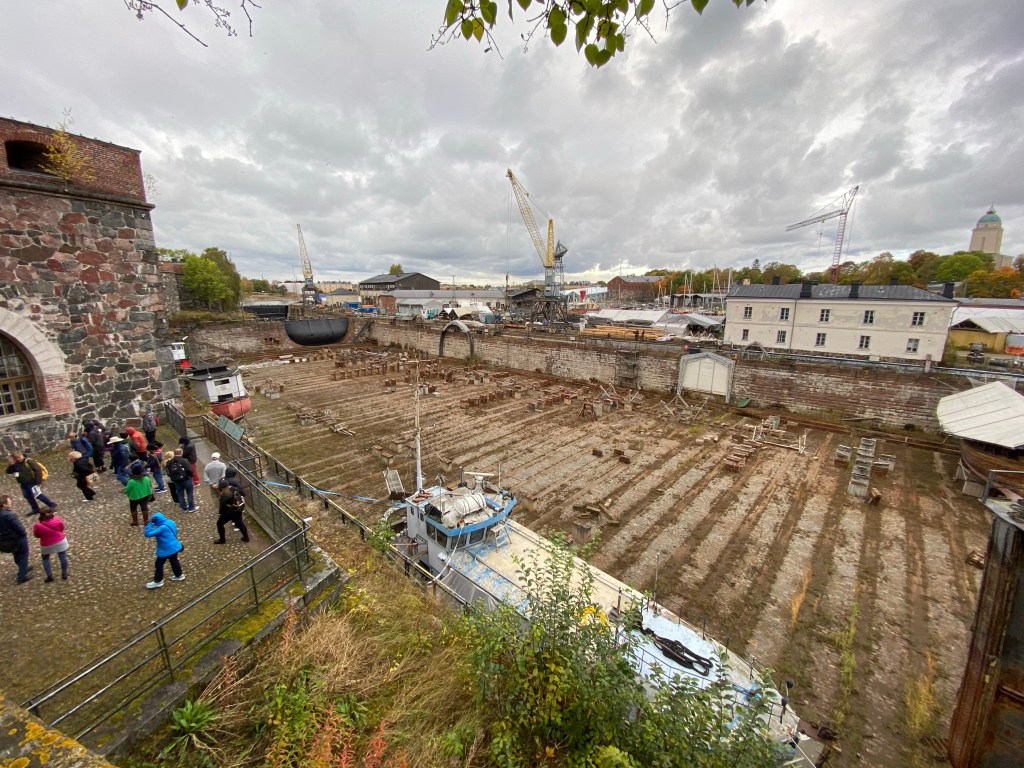
A large dry dock,used for boat maintenance and also used for winter boat storage. The storage season is just around the corner.
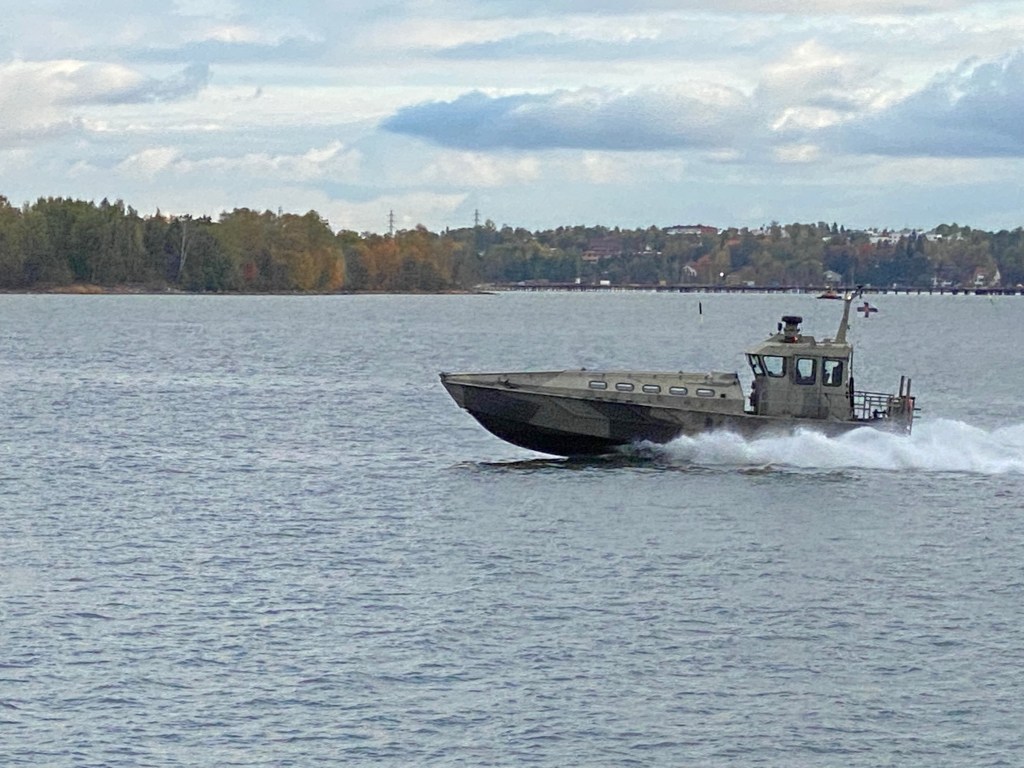
A Finnish navy boat
Walking back to our hotel. Many bikes and scooters used in Helsinki. The green electric scooters are rented out. You need to get an app on your phone, load your credit card and then you grab a scooter and go. You are charged by the time you use it and just leave it at your destination. The bike is an electric assist transport bike. Sometimes children, even adults ride in the front and often there will be groceries or other goods being transported. These are privately owned, not for rent.
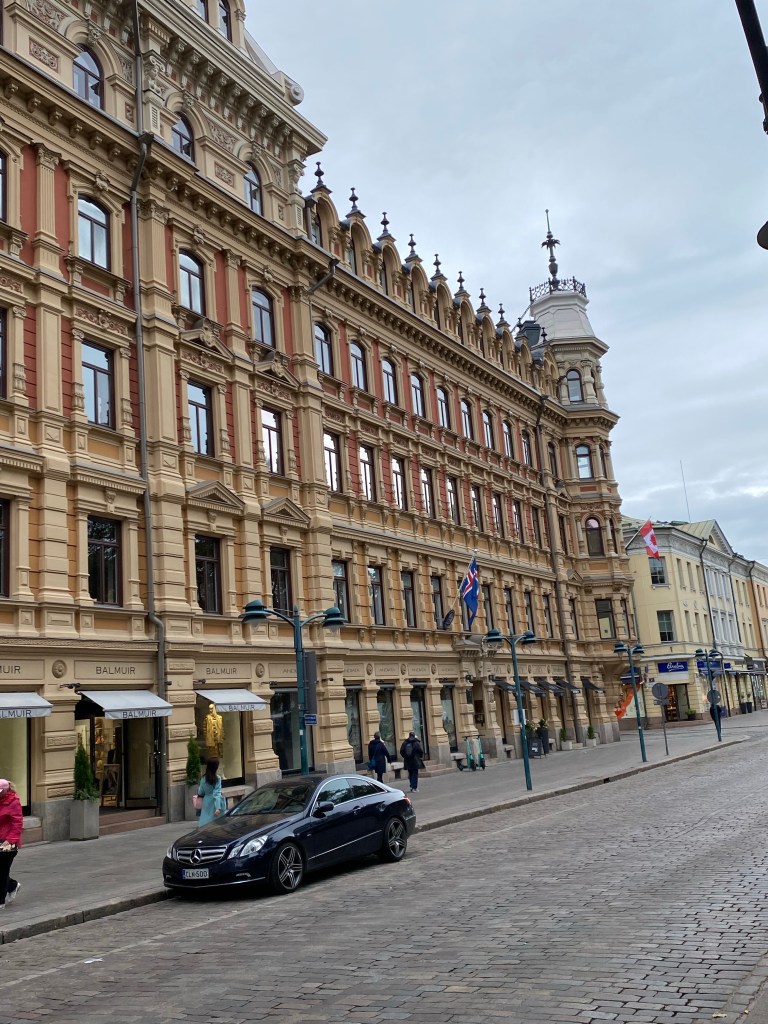
Beautiful cobblestone streets with nice old Art Deco buildings.
Many city parks with sculptures and ponds
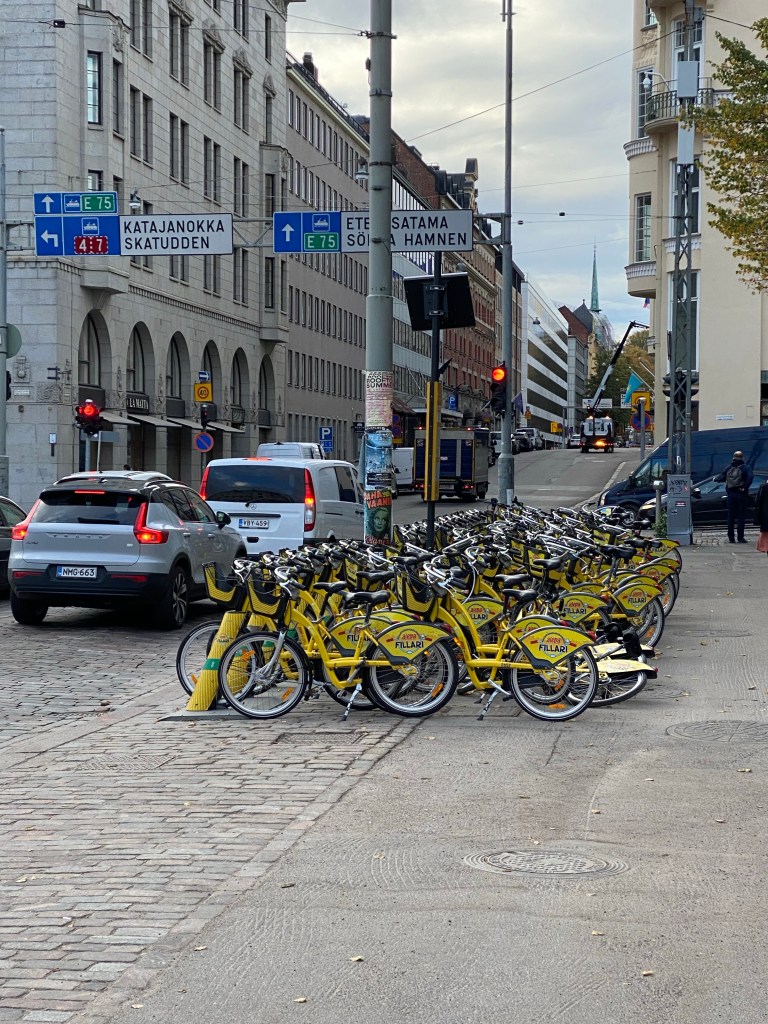
These are rental bikes, similar to the lime green scooters. Download the app with your credit card info and jump on a bike and off you go.
Hanna, a 5th and 6th grade teacher, gave a good presentation about the Finnish school system. Finland has been ranked the number one school system in the world several times in recent years. Preschool (our kindergarten) starts at age 6. That’s a year later than we start in the US. First grade starts at age 7 and many can’t read at all when the start. Class size… she has 21 this year, last year she had 30 with an extra teacher but in a small classroom. She told us that Michael Moore did a documentary about the Finnish school system. That might be interesting to watch. They have 190 days of school per year, similar to ours. The schools don’t have buses and they discourage parents from dropping them and picking them up. Most students, even youngest ones, go to school by themselves, walking, riding bikes or scooters, or taking public transportation. There are no school sports teams. All sports teams are club teams, not associated with a school.

The Finnish people are ranked as the happiest in the world. Our city guide, Cornelia, agrees. She said they pay between 40 and 60 percent income tax but they also get almost free healthcare, free or low cost higher education, govt funded retirement, and very good basic school systems(best in the world according to some tests). Also basic services are very good, such as public transportation, public parks, and remember the great library in the previous post.

We leave reindeer and Sami country and head to the big city, Helsinki

Our first stop in Helsinki is Senate Square. We were met by an enthusiastic local city guide, Cornelia. The square is a large open area in the middle of downtown bordered by the Helsinki Cathedral, the Government Palace, the main building of the University of Helsinki, and the National Library of Helsinki. This square is similar to New York’s Times Square, it is the gathering spot for special celebrations, such as New Year’s Eve and Independence Day(December 6th). In the center of the square is a statue of Alexander the second. The Finnish people still admire the Russian emperor , he was known as a reformer. In the 1860s he abolished corporal punishment, promoted local self government, imposed mandatory military service, and promoted university education.

Left to right…. University library, statue of Alexander the second, and the cathedral.
Interesting sculpture of a fish(looks like our northern pike). We are outside the new Helsinki public library. A common theme about the large cities that we have visited is how clean they are. No trash in the streets and lots of trash cans and recycling bins available.
Now that’s a library! It is 3 stories and doesn’t just have books. This library has sound recording rooms, kitchen rooms to host cooking classes, 3 D printers available for a nominal charge, huge laminating machines, screen print machines for printing tee shirts, etc. and a huge children’s section. It also has a cafe that serves beer and wine. It was full of users on a nice day when we visited. I think it would be a great place to spend time when the long winter days have only a few hours of daylight.
Free instruments to checkout at the library!
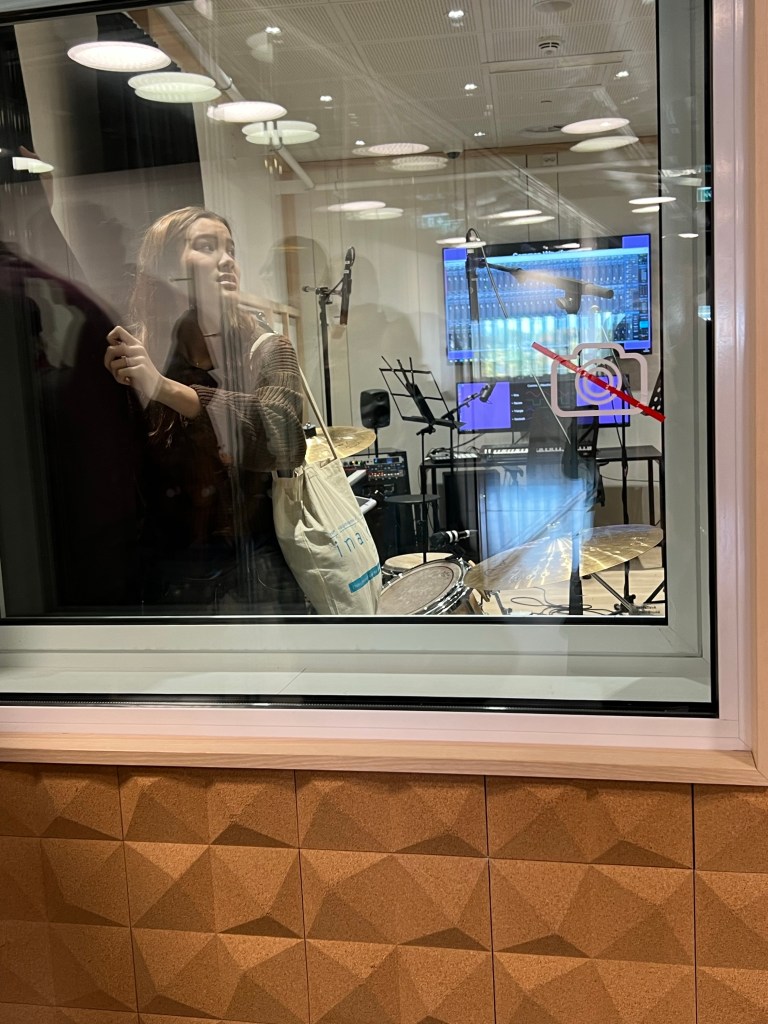
Kids in a recording room. Notice the cork squares on the wall. These rooms were totally soundproof, couldn’t here a thing as we walked by. The library was right on the bus route and next to a train station that you could take to the airport.
A nice break for lunch at a small cafe. We shared a smorrebrod, an open faced sandwich on rye bread with hard boiled egg and shrimp. The shrimp was great, very fresh. Patty has a croissant with ham and cheese that we also shared. It was all washed down with a glass of wine. A nice thing about the Scandinavian countries, almost all restaurants spoke English and most employees were very friendly. Most people we came into contact with were very polite and friendly.
Outdoor markets near the waterfront, again note how clean it is.
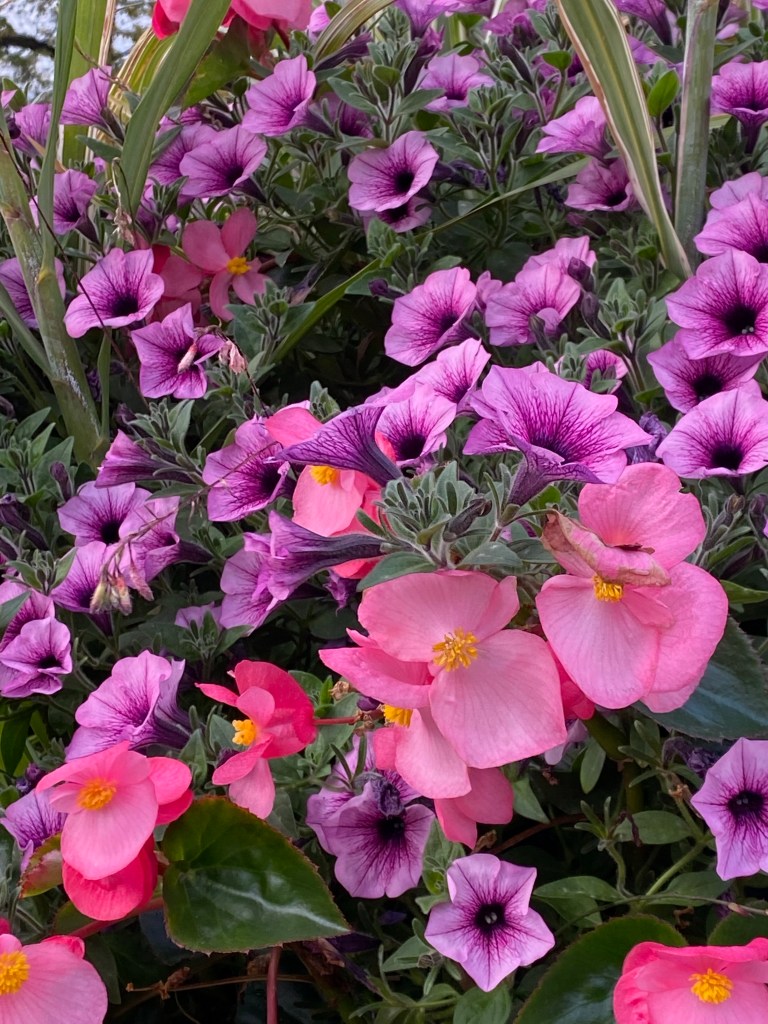
Nice flowers and note the blanket on the chair back at this outdoor cafe. The Finns will sit outside as long as they can!
The flowers are still looking good and it’s the last week of September and the nights are cool, dropping into the low 40s.

Home hosted meal, always a high lite.

Having dinner with a local family is always a great experience. Our family bought 12 acres in the woods about 25 years ago and built everything by themselves. They first built a log structure from trees he cut down and that was what he used as a workshop for building the house, sauna room , garage, art studio, patio, a couple of garages……. They were very resourceful and reused and repurposed lots of used materials from old houses and even brick pavers from the airport that was torn down.
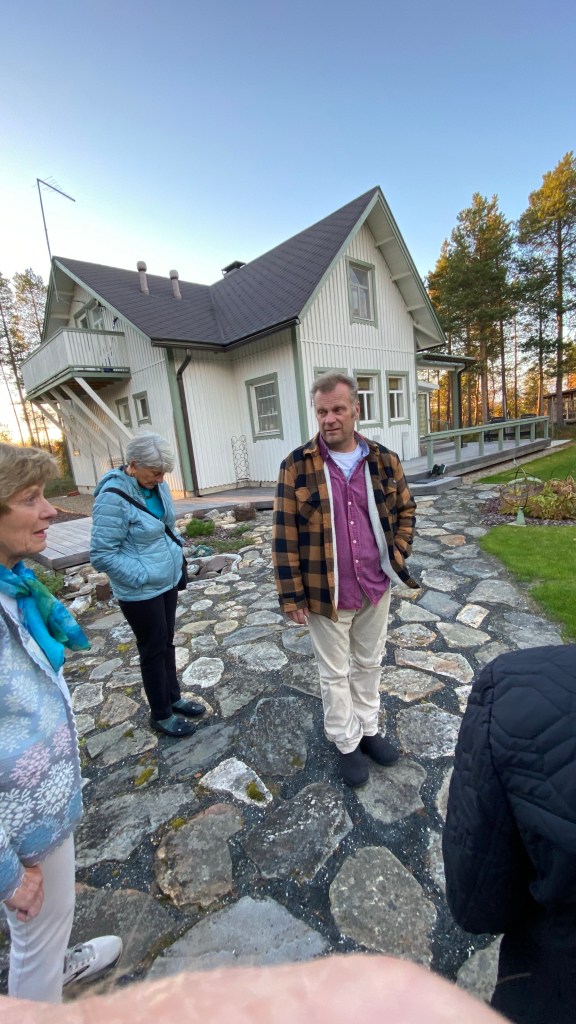
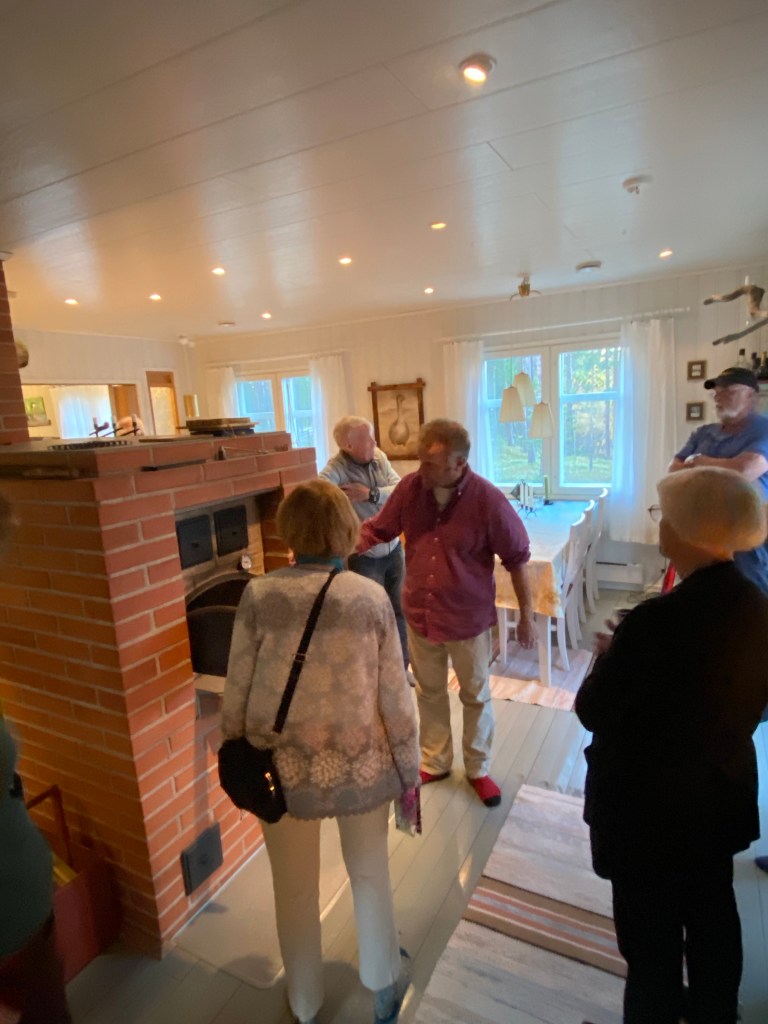
This gentleman and his wife had us for dinner. They built the house from the ground up.
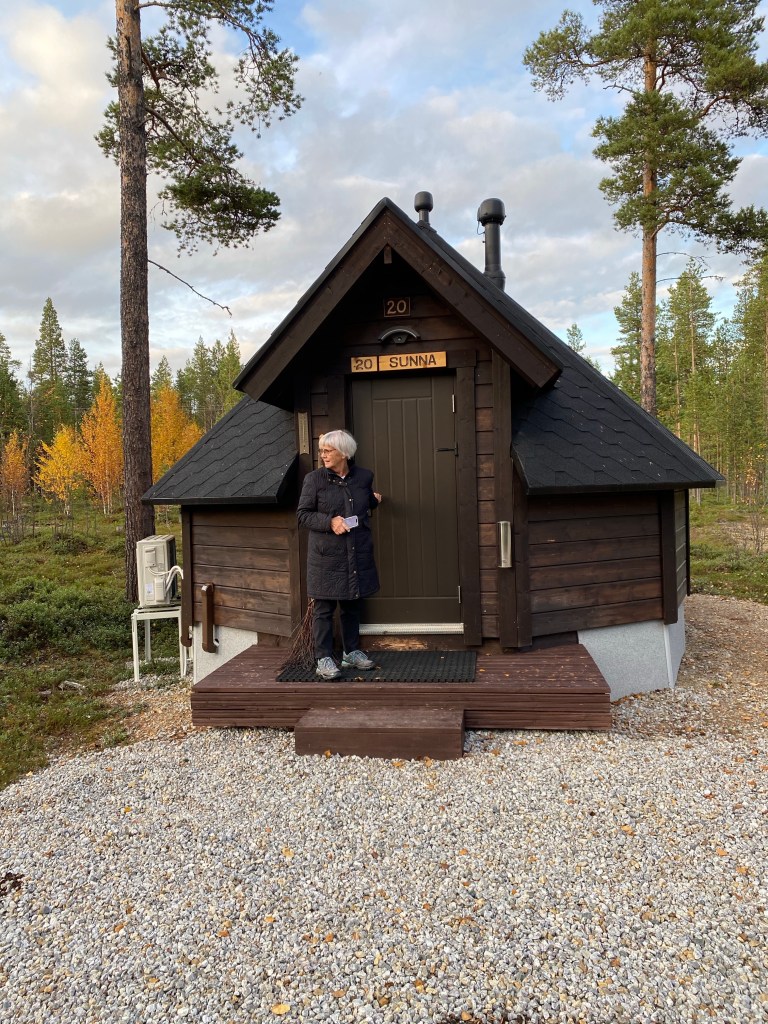
A brick wood stove heats the house, a small wood stove in the kitchen is used for cooking and he cuts all his own firewood that is also used to heat the sauna!
To serve dinner he put on a shirt with a tie! A think a sense of humor is required to live near the arctic circle…… 24 hours of daylight in June and no sunrise in December takes a special disposition.
Dinner started with a salad with fried fish. The grew the vegetables , except the carrots and the wife caught the fish and the husband cooked it. We also had a reindeer meatloaf that was excellent and it was covered by a mushroom gravy… of course they picked the mushrooms!
The wife is quite the artist and has a nice studio

Sami people and their reindeer

We had a nice visit with reindeer farmers Hanna and Jani. They have 4 children that are 7 years old to 20 years old. The children are learning the Sami language in school. Hanna and Jani are learning the Language with them, trying to keep the culture and language alive.
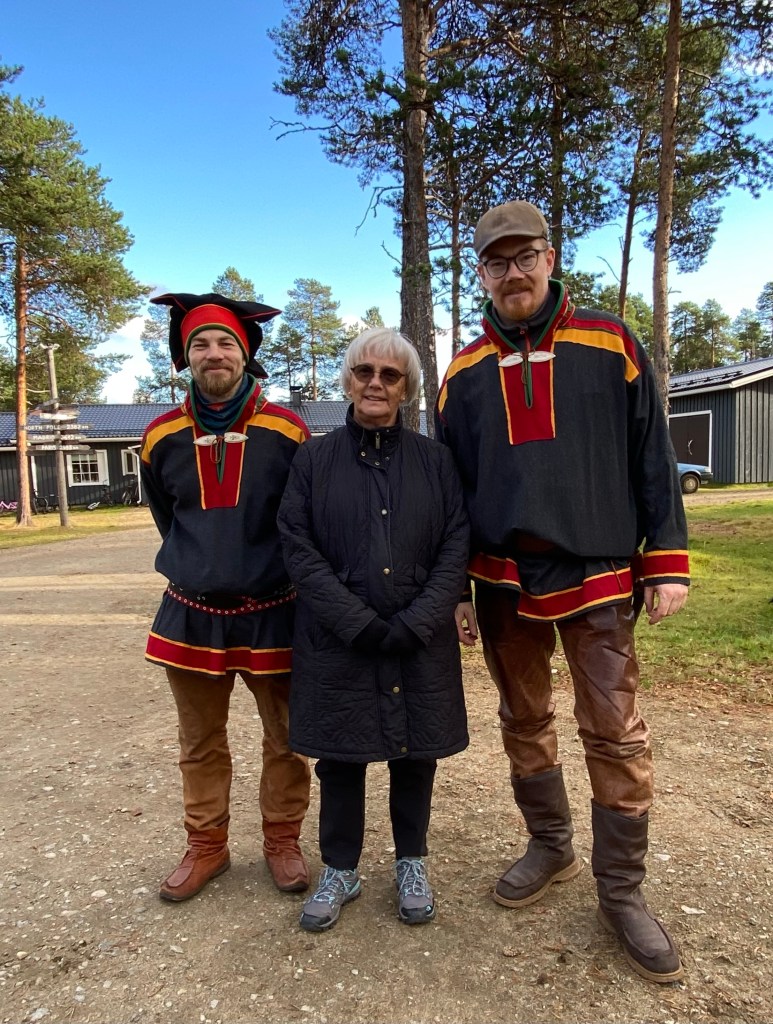
This is Jani and his employee dressed in traditional Sami clothing
Feeding reindeer was fun. The deer’s ears are notched to identify who they belong to. These animals free range with deer owned by others and at round up time they are separated by ear notches.
Jani holds a Sami flag. We are inside a traditional ‘iota’, like a Native American teepee but made of wood and traditionally covered with a sod/moss roof. We are enjoying coffee and tea and learning about Sami life.
Rod is auditioning for a reindeer ranch hand job.
Rod is such a deer, just ask Patty!
End of the reindeer farm visit

Crossing the border into Finnish Lapland

Lapland is also called Samiland, it includes parts of Norway , Finland and Sweden. The Sami people are indigenous people of northern Scandinavia and their history dates back to prehistoric time. We got a great education with visits to a Sami reindeer farm and the Siida museum.

Reindeer on the road, our bus had to stop. There are no wild reindeer in Scandinavia, they are all owned by Sami people. Reindeer free roam for half of the year and then are rounded up and counted. The reindeer farmers have a limit to the size of their herd. Once the numbers increase that dictates how many can be sold and butchered. This keeps the population under control.
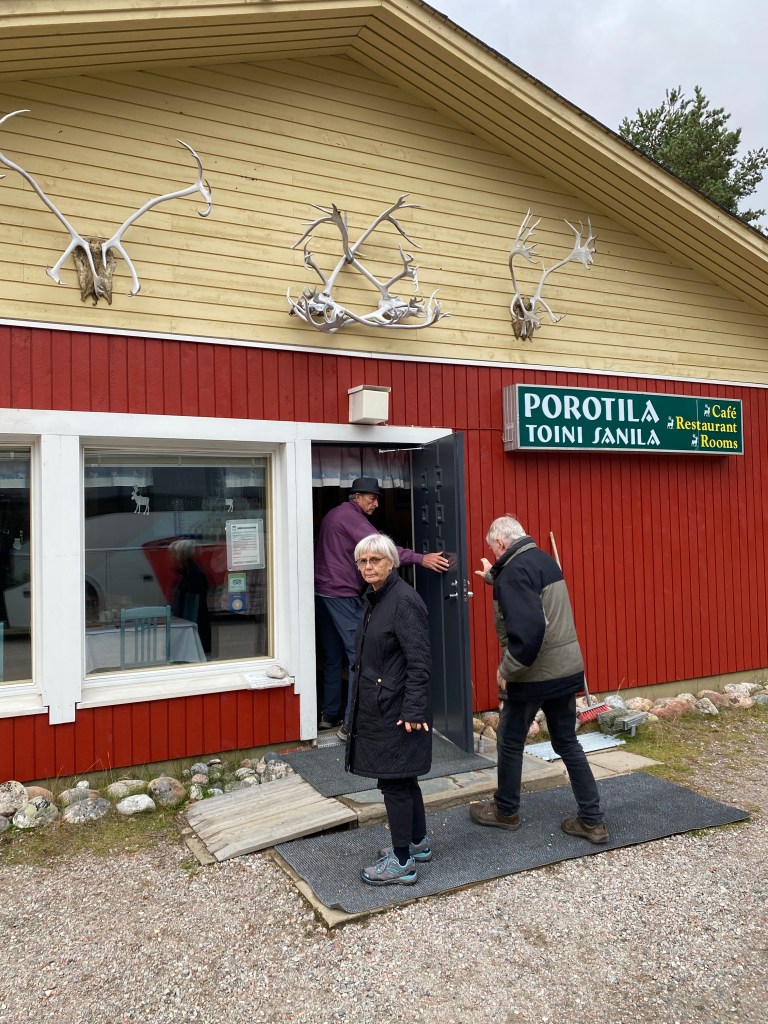
We stopped for lunch at a campground that rents cabins and has a restaurant. It is a Sami family that owns and operates the rustic resort.
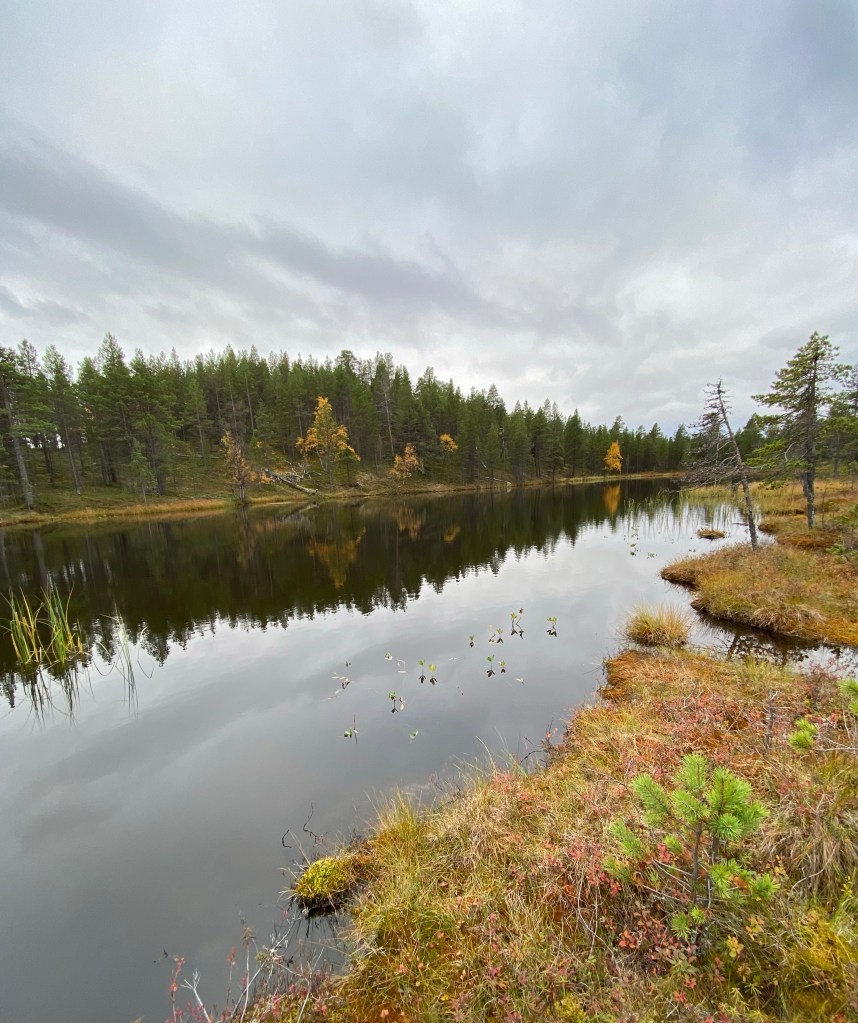
This is a land of beautiful lakes, rivers, and forests.
We stayed in cabins for two nights that had a glass ceiling. This is so we can hopefully see the Northern Lights.
Inside of our cabin.
This is a side view of our cabin, notice the glass roof on the right side.
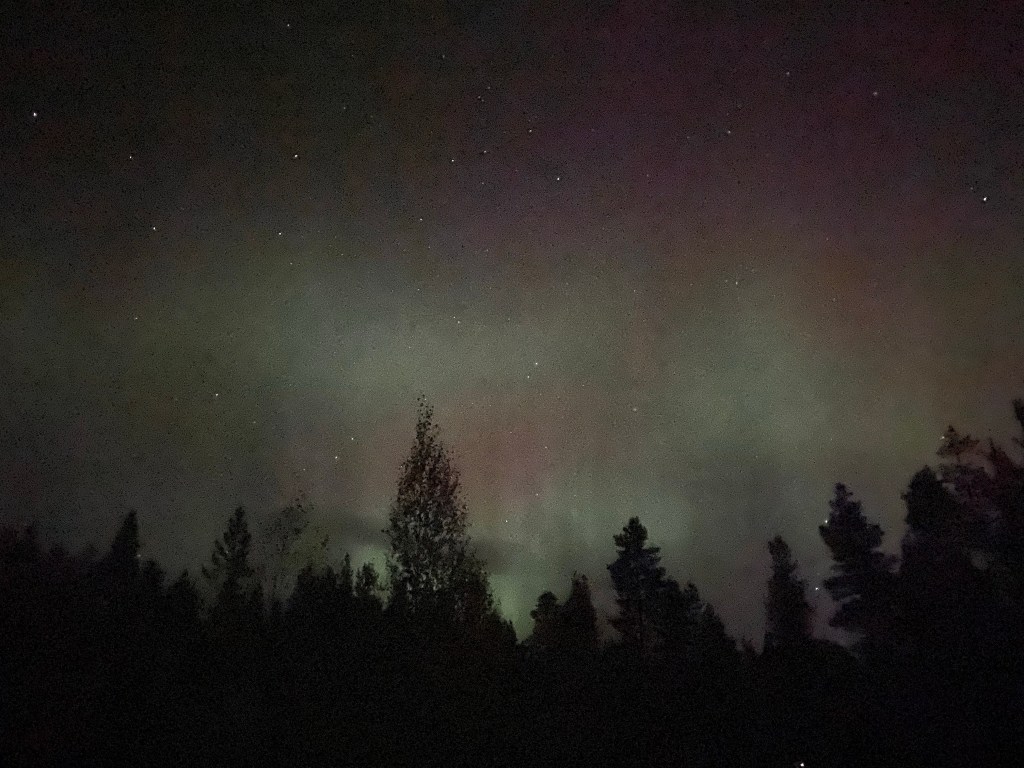
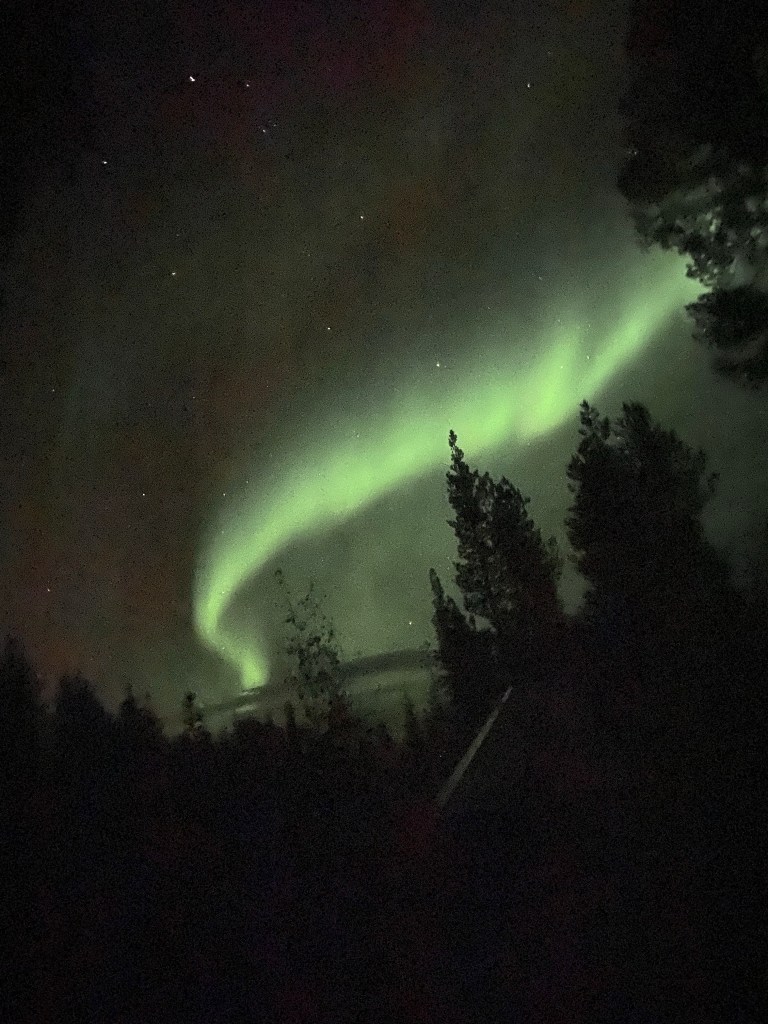
We saw the light!
More lights, I could bore you with anymore pictures. The first night was the best. The lights started about 10pm and they were the best about 1:30am.
Just one more for your enjoyment!

Kirkenes, Norway

We get off the ship at Kirkenes and do a driving tour of the town. This was a strategic area for the nazis in World War Two. The area is rich in iron ore that was desperately needed for Germany to produce weapons. 100,000 Nazi troops occupied Kirkenes.

We arrive in Kirkenes, Norway. It is only 3 km from the Russian border. Until recently there was free movement and trade between the Russians and Norwegians that lived within approx 30 km. This was mutually beneficial as Norwegians could drive across the border and buy cheap gasoline and duty free cheap alcohol. The Russians were able to by groceries, appliances, and various home goods unavailable in Russia. The Ukraine conflict has basically closed the border for such activities.
View of the harbor from a hill top in Kirkenes.
Inside a tunnel that held up to 700 people during World War Two fighting. The Russians came to the rescue, driving out the Nazis. This was like making a deal with the devil!
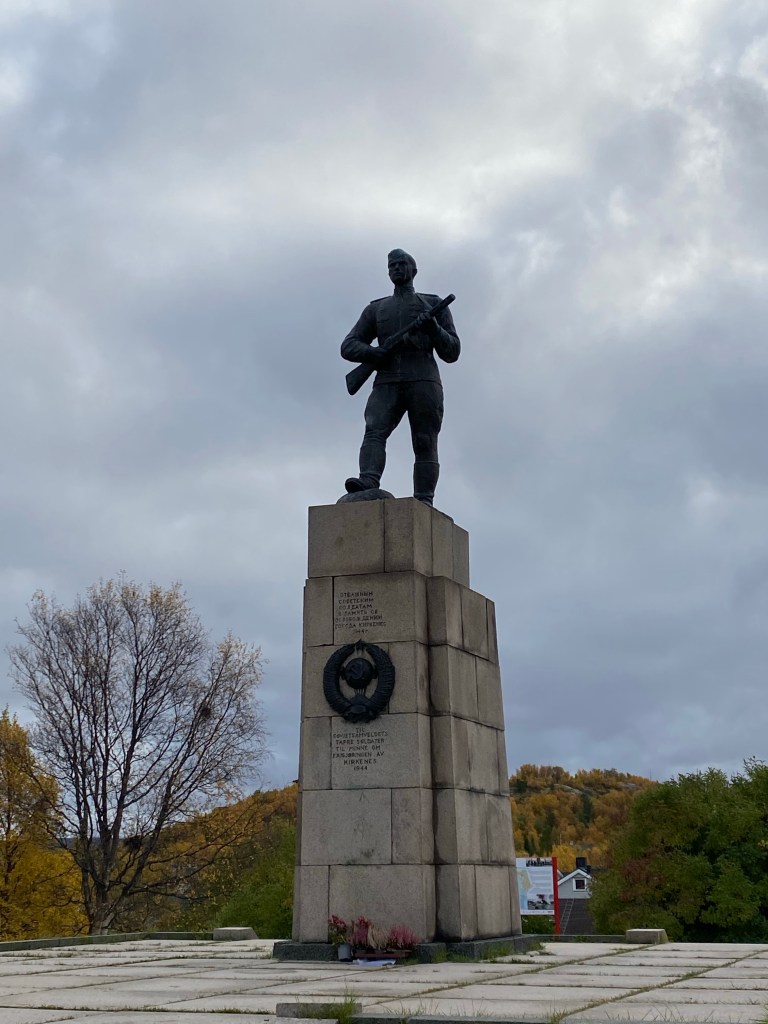
A statue honoring the Russian troops that defeated the nazis in Kirkenes.
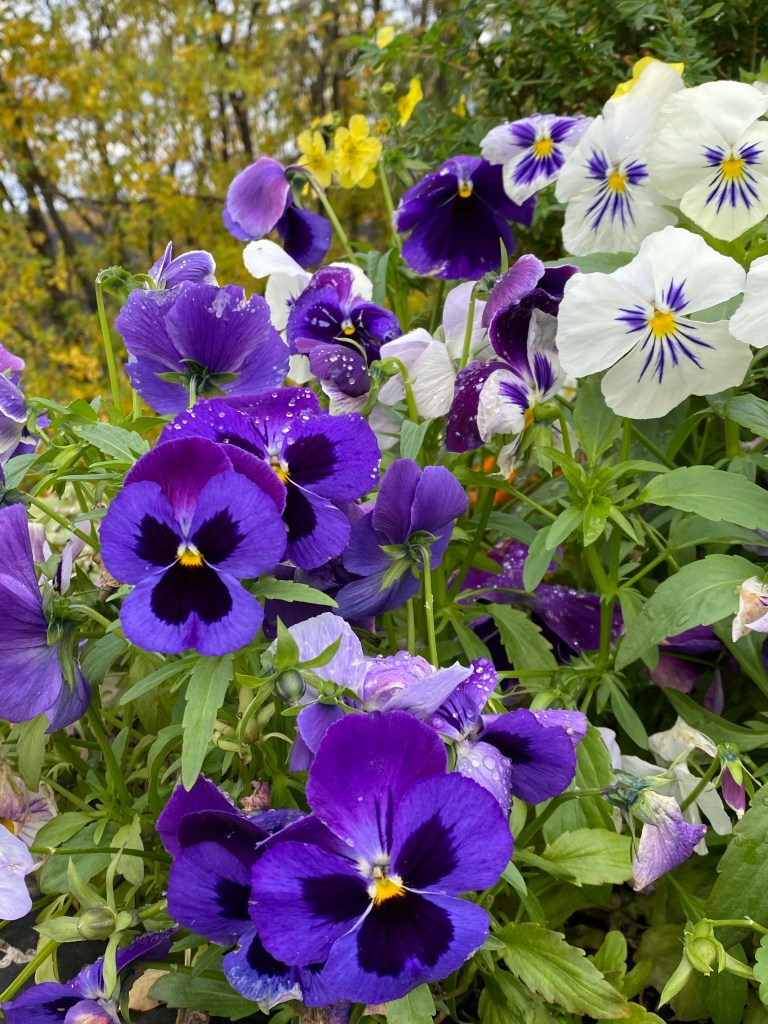
Late September and still some beautiful flowers as the cool weather begins.