Our first stop in Helsinki is Senate Square. We were met by an enthusiastic local city guide, Cornelia. The square is a large open area in the middle of downtown bordered by the Helsinki Cathedral, the Government Palace, the main building of the University of Helsinki, and the National Library of Helsinki. This square is similar to New York’s Times Square, it is the gathering spot for special celebrations, such as New Year’s Eve and Independence Day(December 6th). In the center of the square is a statue of Alexander the second. The Finnish people still admire the Russian emperor , he was known as a reformer. In the 1860s he abolished corporal punishment, promoted local self government, imposed mandatory military service, and promoted university education.
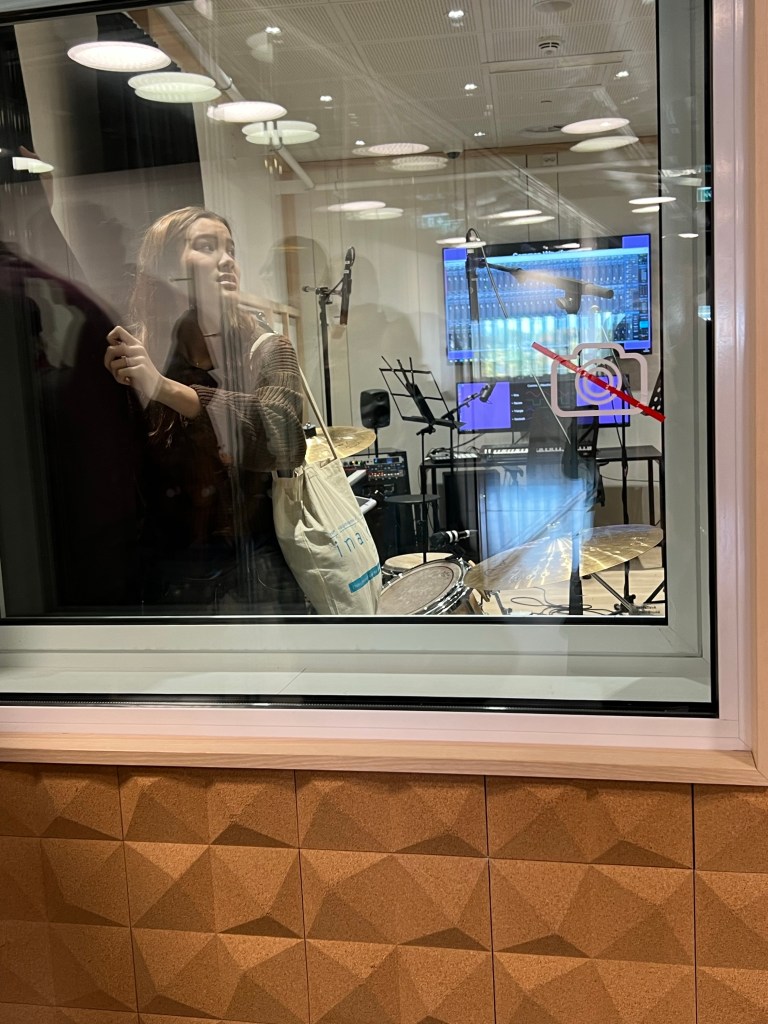
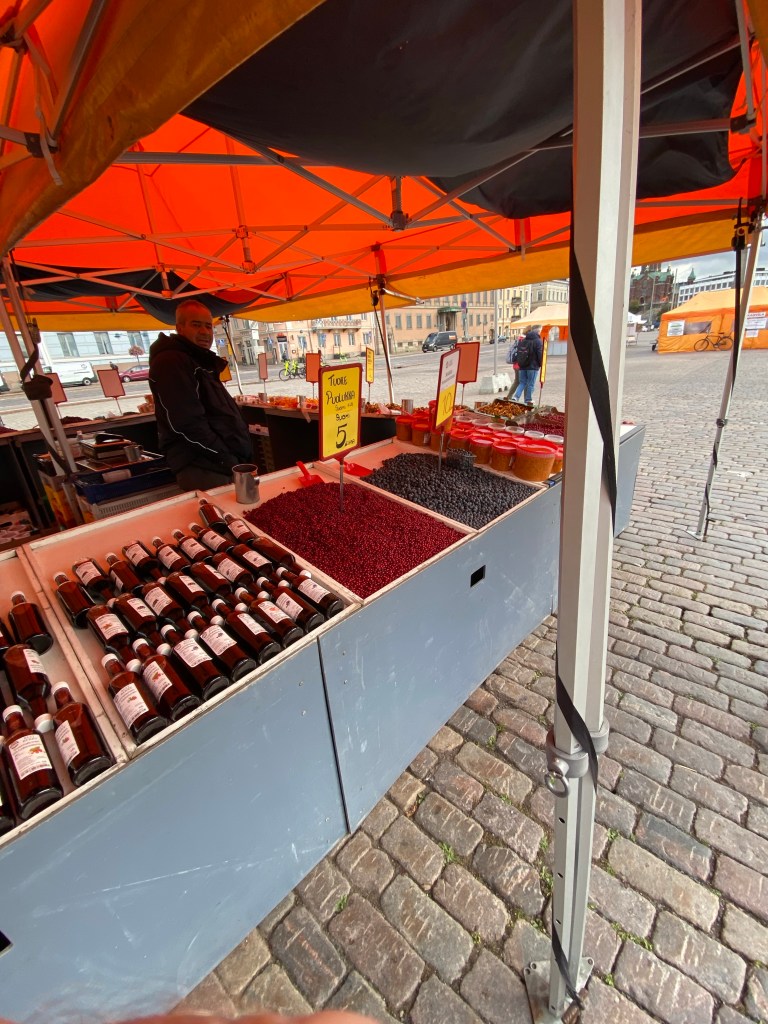
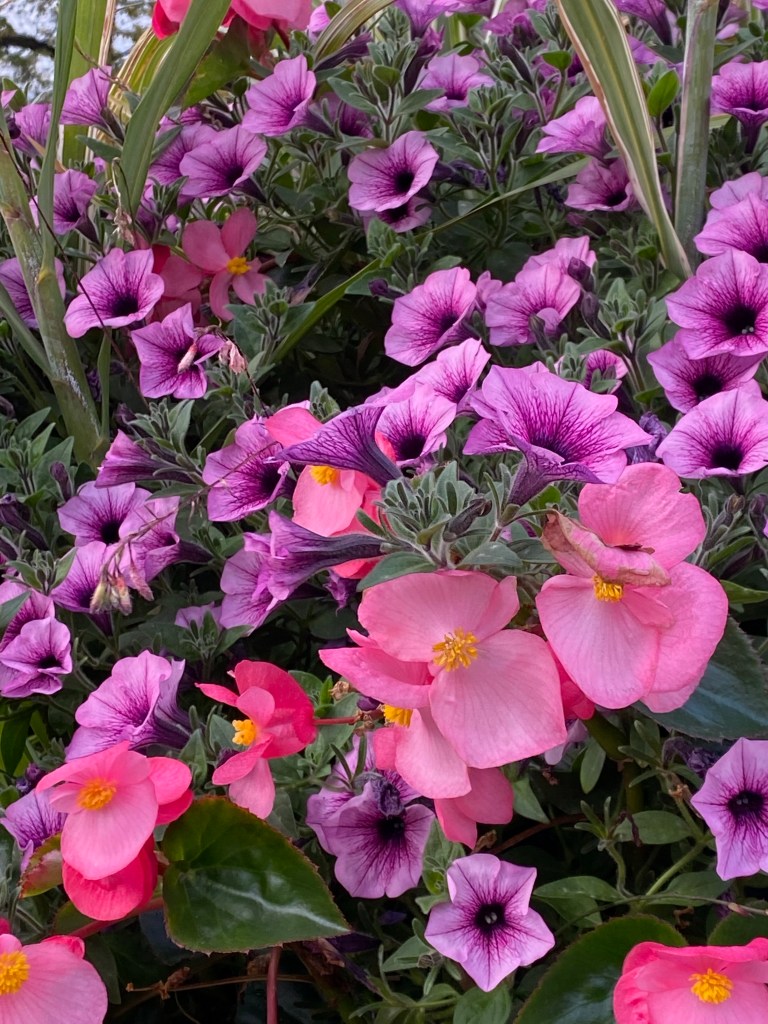
Left to right…. University library, statue of Alexander the second, and the cathedral.Interesting sculpture of a fish(looks like our northern pike). We are outside the new Helsinki public library. A common theme about the large cities that we have visited is how clean they are. No trash in the streets and lots of trash cans and recycling bins available. Now that’s a library! It is 3 stories and doesn’t just have books. This library has sound recording rooms, kitchen rooms to host cooking classes, 3 D printers available for a nominal charge, huge laminating machines, screen print machines for printing tee shirts, etc. and a huge children’s section. It also has a cafe that serves beer and wine. It was full of users on a nice day when we visited. I think it would be a great place to spend time when the long winter days have only a few hours of daylight. Free instruments to checkout at the library!Kids in a recording room. Notice the cork squares on the wall. These rooms were totally soundproof, couldn’t here a thing as we walked by. The library was right on the bus route and next to a train station that you could take to the airport. A nice break for lunch at a small cafe. We shared a smorrebrod, an open faced sandwich on rye bread with hard boiled egg and shrimp. The shrimp was great, very fresh. Patty has a croissant with ham and cheese that we also shared. It was all washed down with a glass of wine. A nice thing about the Scandinavian countries, almost all restaurants spoke English and most employees were very friendly. Most people we came into contact with were very polite and friendly.Outdoor markets near the waterfront, again note how clean it is.Nice flowers and note the blanket on the chair back at this outdoor cafe. The Finns will sit outside as long as they can!The flowers are still looking good and it’s the last week of September and the nights are cool, dropping into the low 40s.
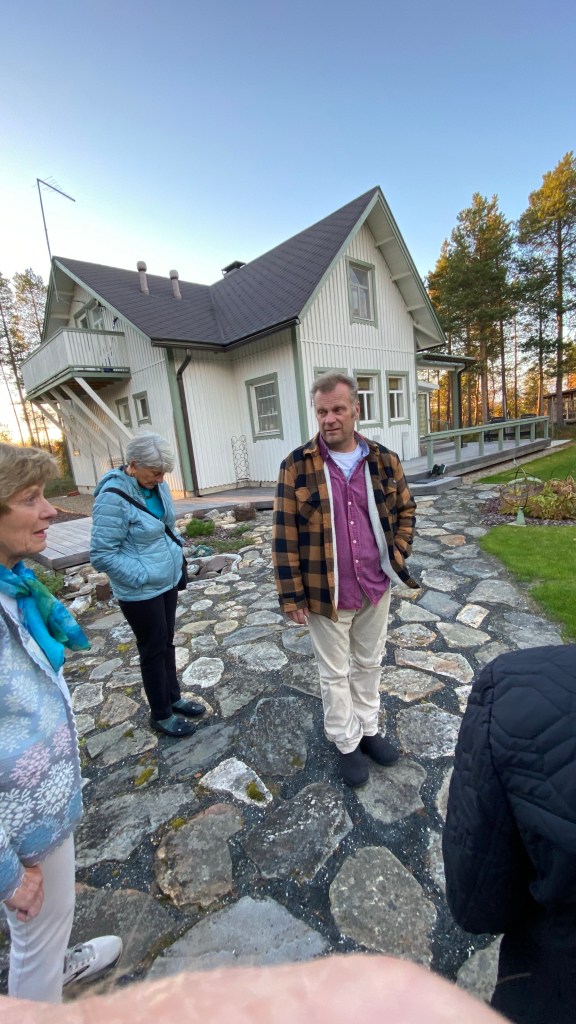
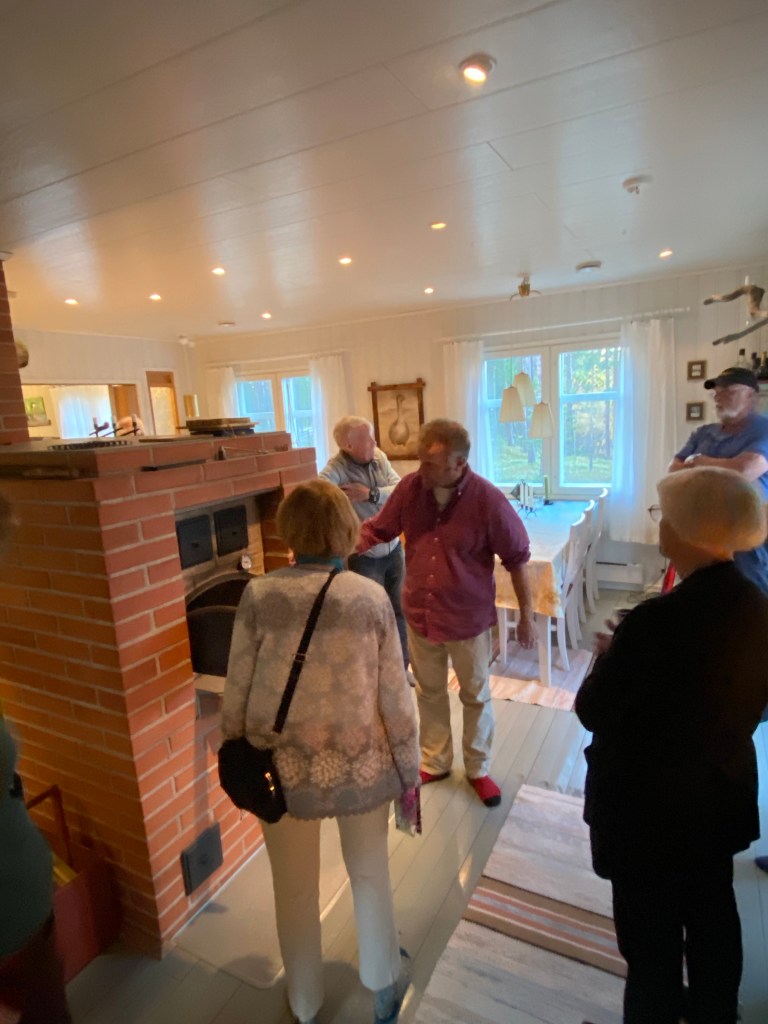
Having dinner with a local family is always a great experience. Our family bought 12 acres in the woods about 25 years ago and built everything by themselves. They first built a log structure from trees he cut down and that was what he used as a workshop for building the house, sauna room , garage, art studio, patio, a couple of garages……. They were very resourceful and reused and repurposed lots of used materials from old houses and even brick pavers from the airport that was torn down.
This gentleman and his wife had us for dinner. They built the house from the ground up.A brick wood stove heats the house, a small wood stove in the kitchen is used for cooking and he cuts all his own firewood that is also used to heat the sauna!To serve dinner he put on a shirt with a tie! A think a sense of humor is required to live near the arctic circle…… 24 hours of daylight in June and no sunrise in December takes a special disposition.Dinner started with a salad with fried fish. The grew the vegetables , except the carrots and the wife caught the fish and the husband cooked it. We also had a reindeer meatloaf that was excellent and it was covered by a mushroom gravy… of course they picked the mushrooms!The wife is quite the artist and has a nice studio
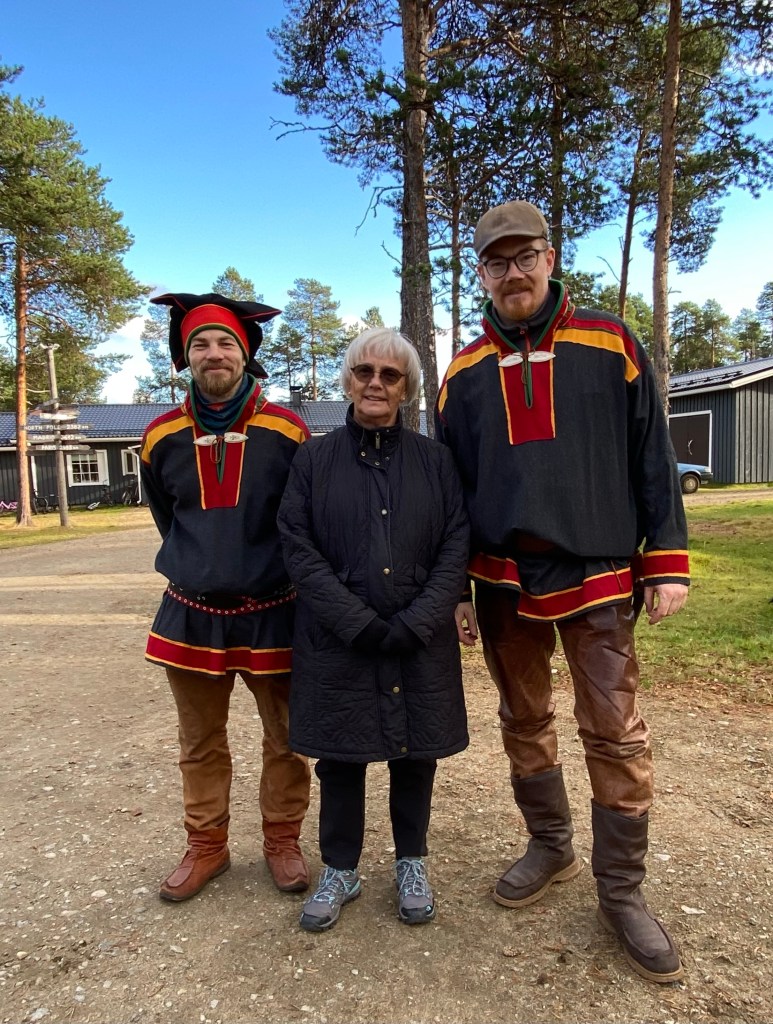
We had a nice visit with reindeer farmers Hanna and Jani. They have 4 children that are 7 years old to 20 years old. The children are learning the Sami language in school. Hanna and Jani are learning the Language with them, trying to keep the culture and language alive.
This is Jani and his employee dressed in traditional Sami clothingFeeding reindeer was fun. The deer’s ears are notched to identify who they belong to. These animals free range with deer owned by others and at round up time they are separated by ear notches. Jani holds a Sami flag. We are inside a traditional ‘iota’, like a Native American teepee but made of wood and traditionally covered with a sod/moss roof. We are enjoying coffee and tea and learning about Sami life.Rod is auditioning for a reindeer ranch hand job.Rod is such a deer, just ask Patty!End of the reindeer farm visit
Lapland is also called Samiland, it includes parts of Norway , Finland and Sweden. The Sami people are indigenous people of northern Scandinavia and their history dates back to prehistoric time. We got a great education with visits to a Sami reindeer farm and the Siida museum.
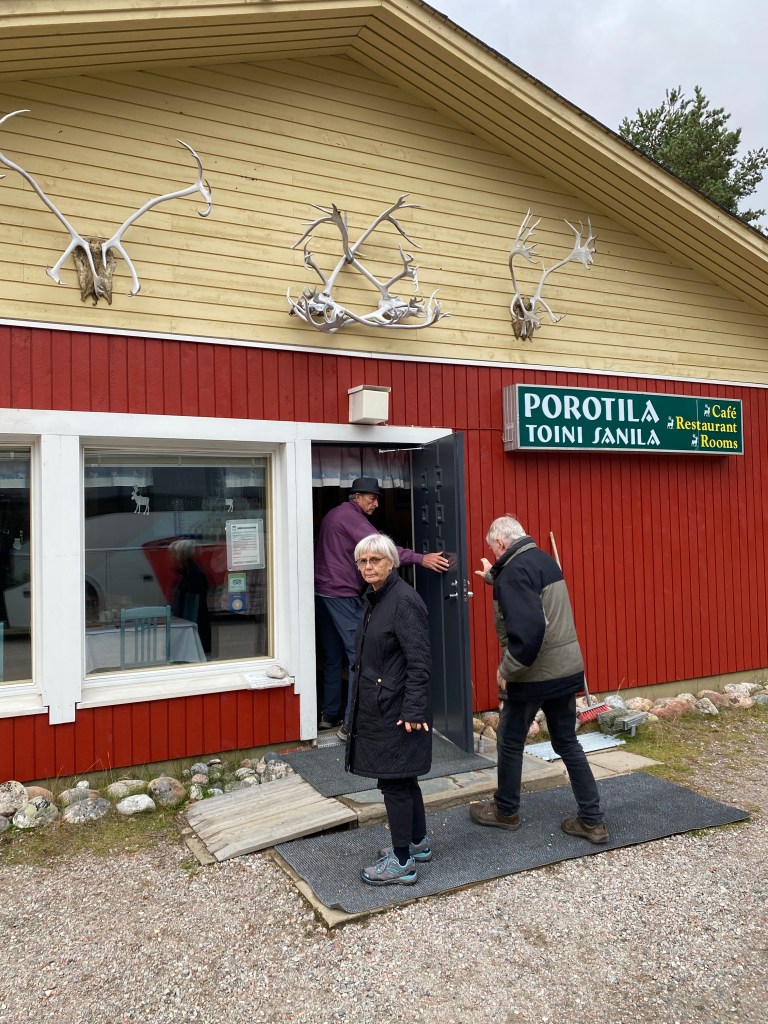
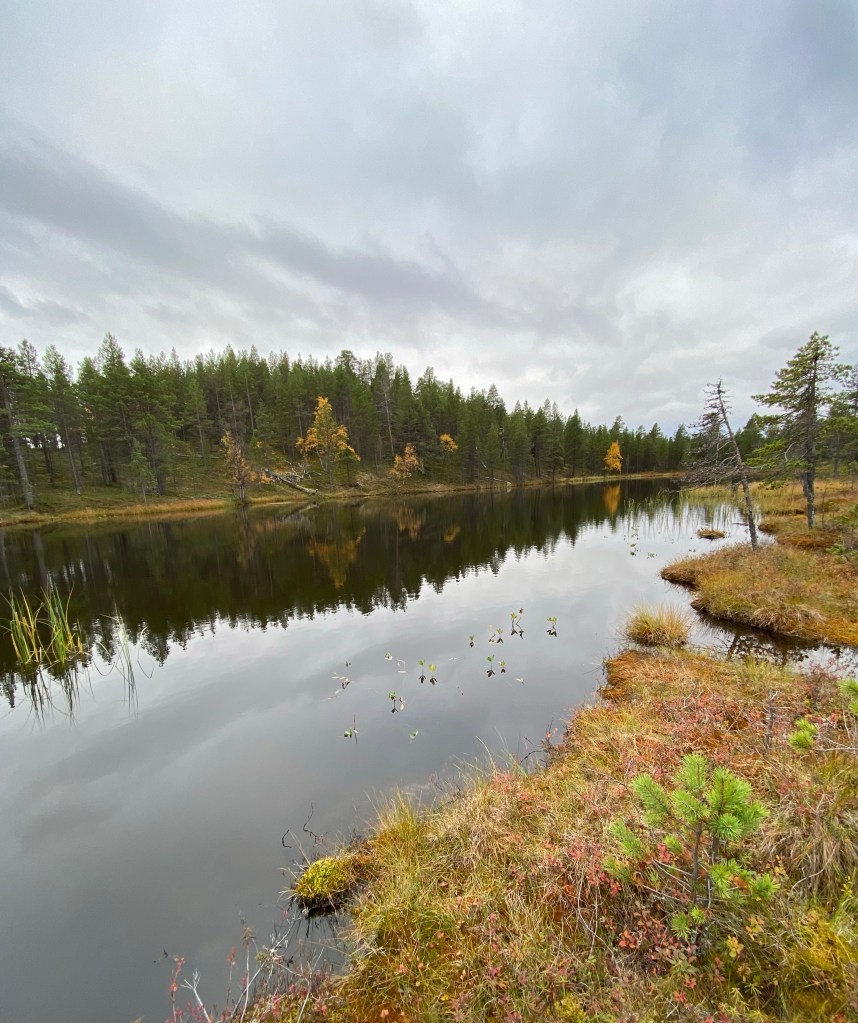
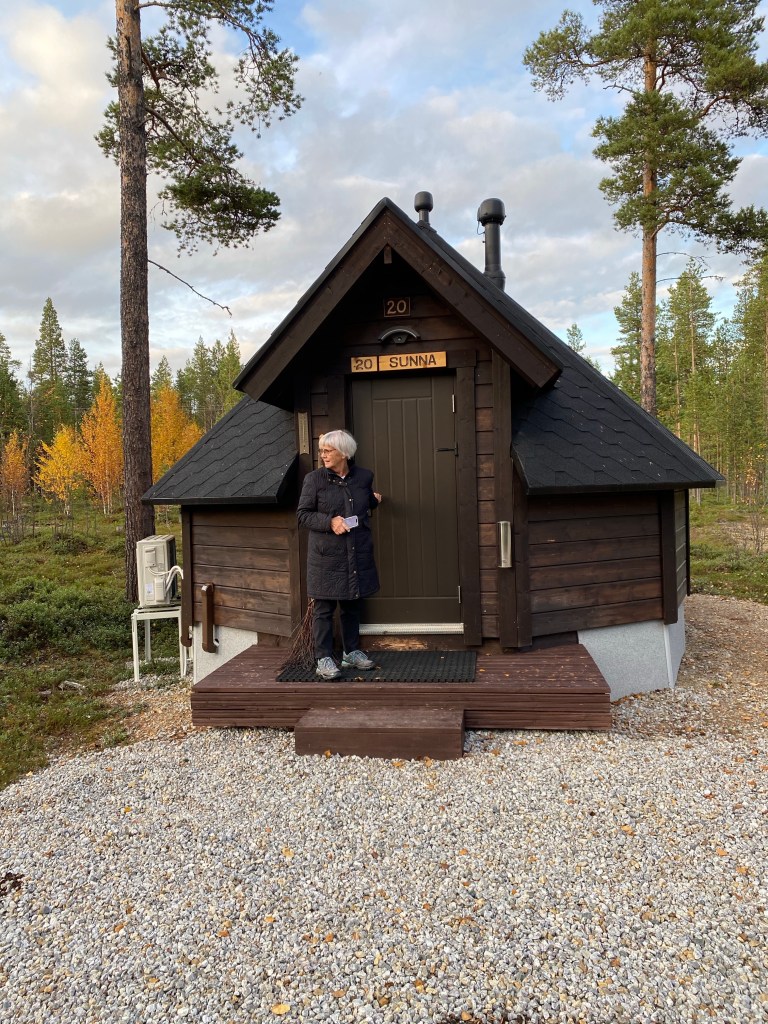
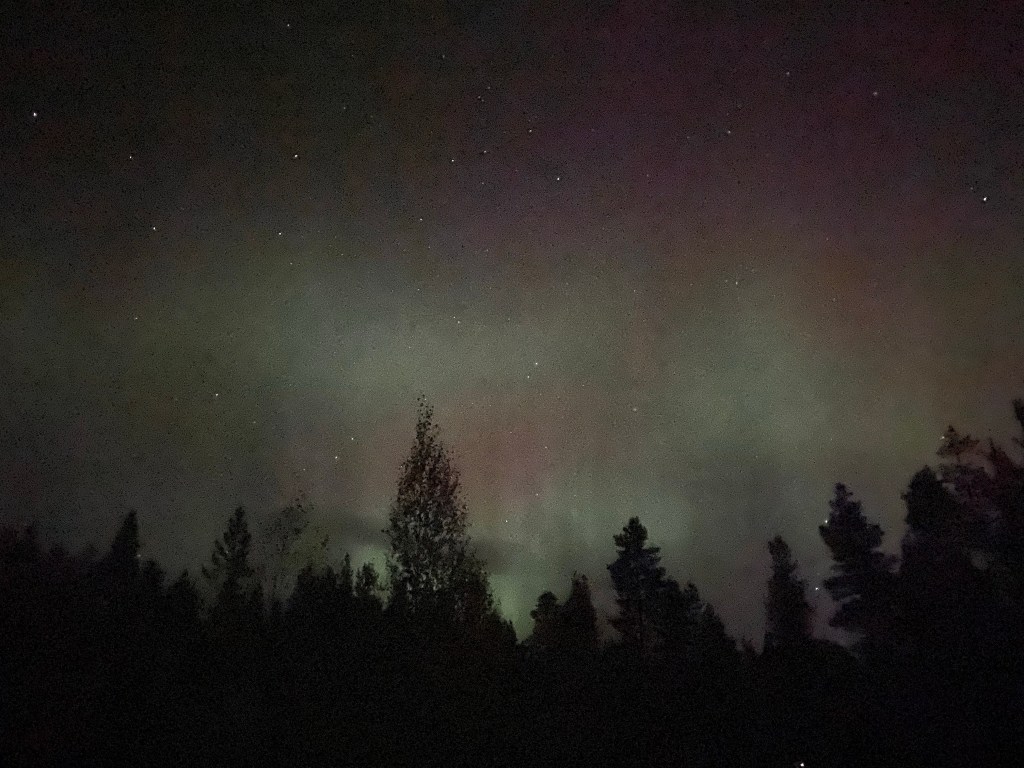
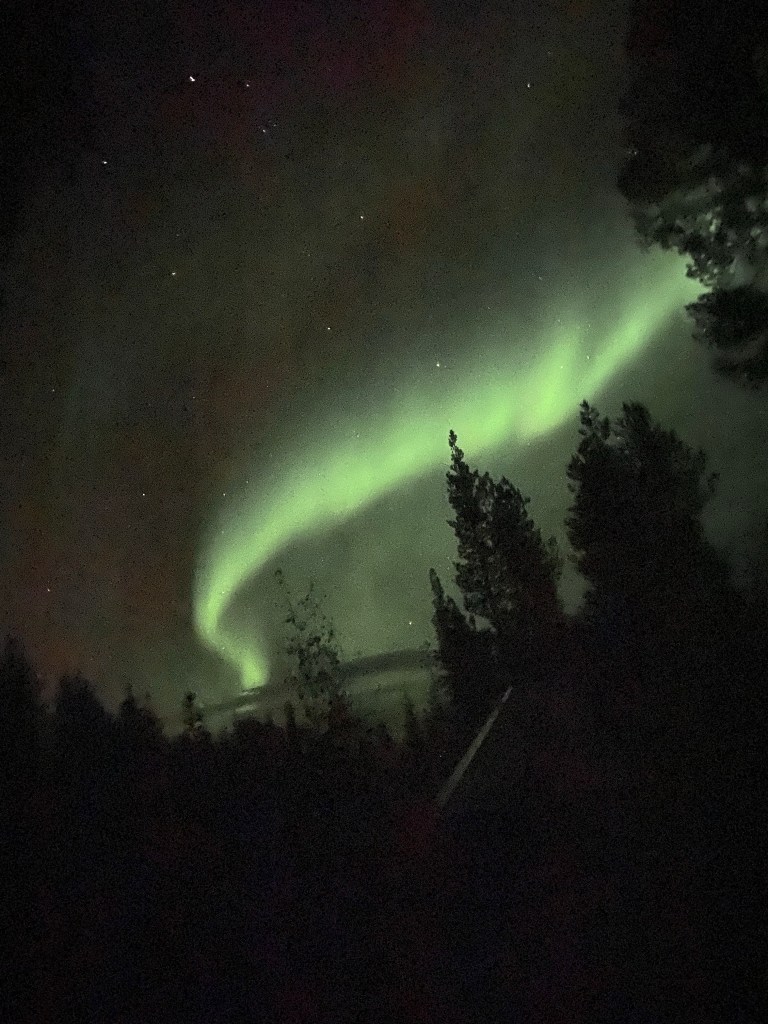
Reindeer on the road, our bus had to stop. There are no wild reindeer in Scandinavia, they are all owned by Sami people. Reindeer free roam for half of the year and then are rounded up and counted. The reindeer farmers have a limit to the size of their herd. Once the numbers increase that dictates how many can be sold and butchered. This keeps the population under control.We stopped for lunch at a campground that rents cabins and has a restaurant. It is a Sami family that owns and operates the rustic resort.This is a land of beautiful lakes, rivers, and forests.We stayed in cabins for two nights that had a glass ceiling. This is so we can hopefully see the Northern Lights.Inside of our cabin.This is a side view of our cabin, notice the glass roof on the right side.We saw the light!More lights, I could bore you with anymore pictures. The first night was the best. The lights started about 10pm and they were the best about 1:30am.Just one more for your enjoyment!
We get off the ship at Kirkenes and do a driving tour of the town. This was a strategic area for the nazis in World War Two. The area is rich in iron ore that was desperately needed for Germany to produce weapons. 100,000 Nazi troops occupied Kirkenes.
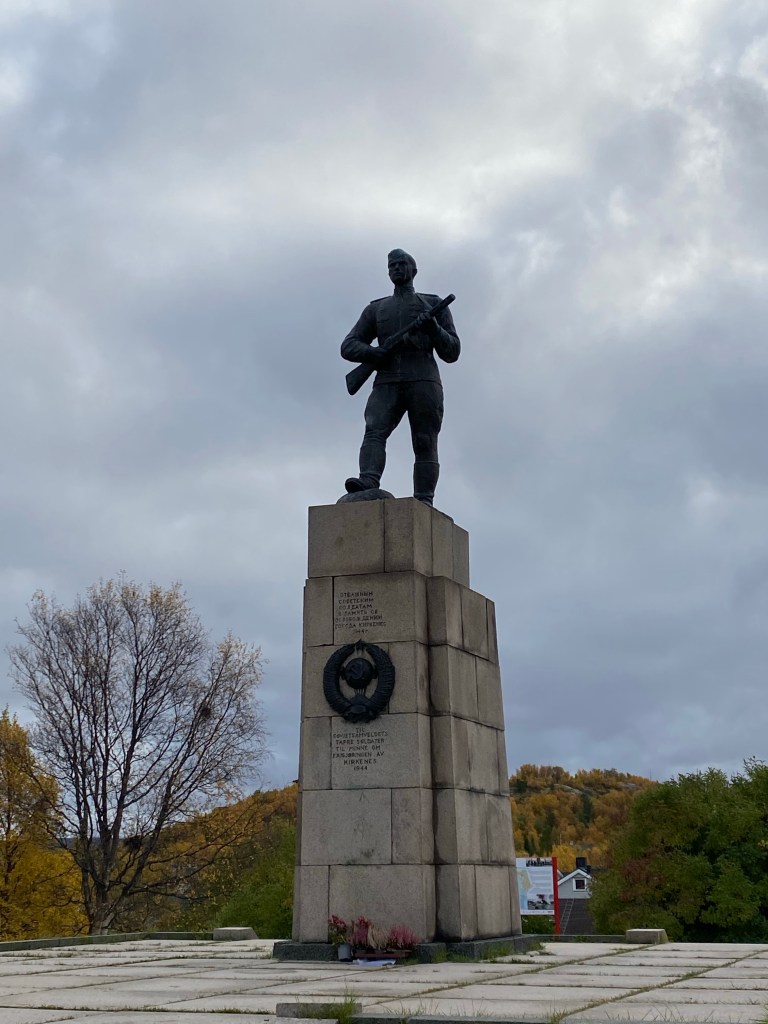
We arrive in Kirkenes, Norway. It is only 3 km from the Russian border. Until recently there was free movement and trade between the Russians and Norwegians that lived within approx 30 km. This was mutually beneficial as Norwegians could drive across the border and buy cheap gasoline and duty free cheap alcohol. The Russians were able to by groceries, appliances, and various home goods unavailable in Russia. The Ukraine conflict has basically closed the border for such activities.View of the harbor from a hill top in Kirkenes.Inside a tunnel that held up to 700 people during World War Two fighting. The Russians came to the rescue, driving out the Nazis. This was like making a deal with the devil!A statue honoring the Russian troops that defeated the nazis in Kirkenes.Late September and still some beautiful flowers as the cool weather begins.
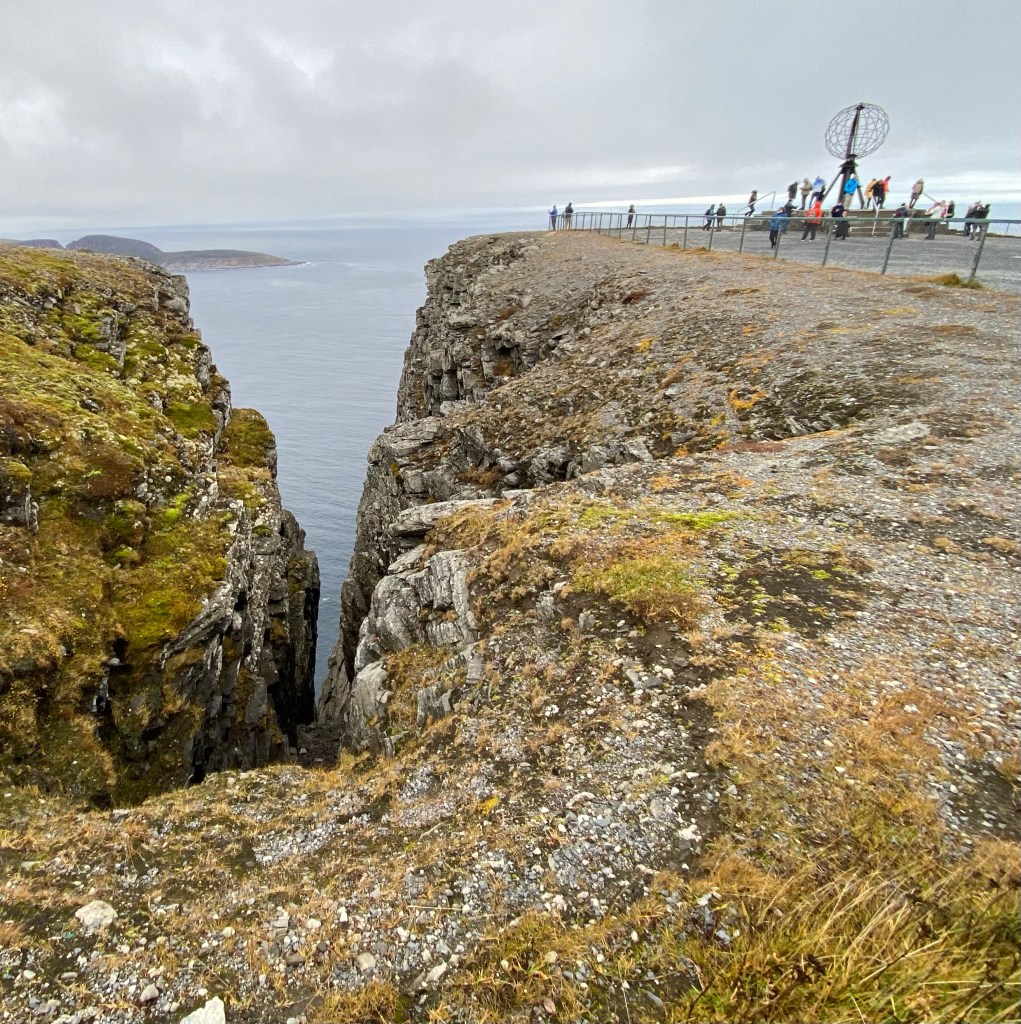
The northern most point of not just Norway but all of Europe. The cape is 71 degrees north latitude, 5 degrees north of the arctic circle.
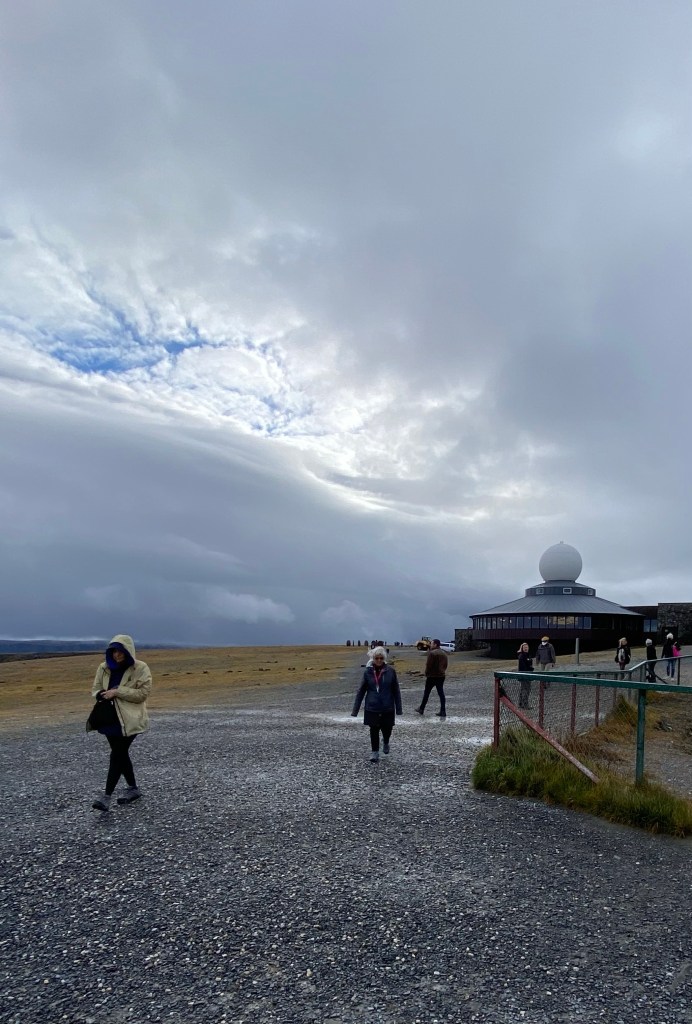
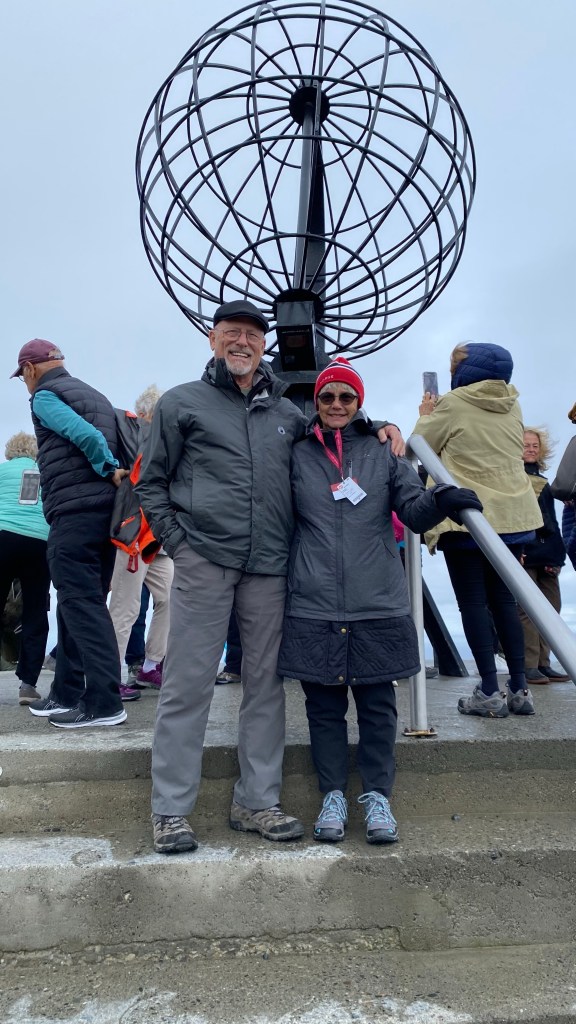
Walking to the edge of the cape, the visitor center is in the background. It was a cool(45 degrees) and windy day.At the monument near the cliff of the cape. As close to the top of the world that we will ever get.A view of the arctic sea from 1,000 feet above the shore on the North Cape.A couple of trolls in the visitor center.
The largest city in northern Norway, 50,000 inhabitants. Home to the northern most university in Europe, “The Arctic University of Norway”, 13,000 students. It was the starting point for man explorers, including Ronald Amundsen’s adventures to the North Pole and South Pole in the early 1900s.
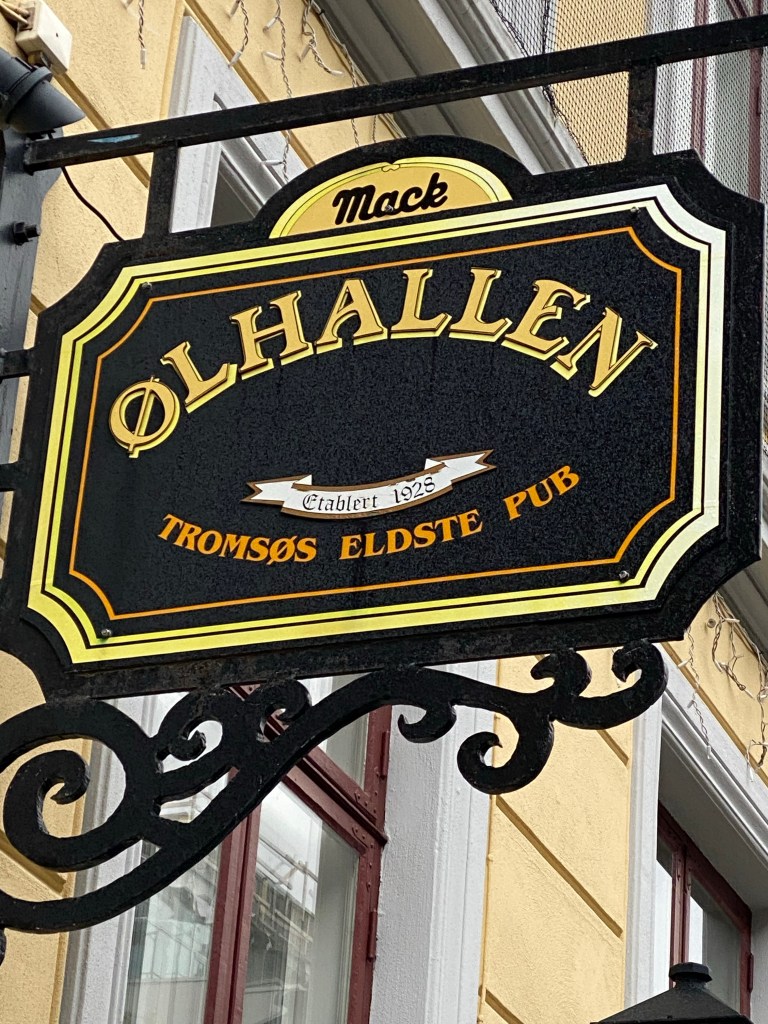
Oldest pub in Tromso, operated by the Mack brewery. Mack brewery is the worlds furthest north brewery.
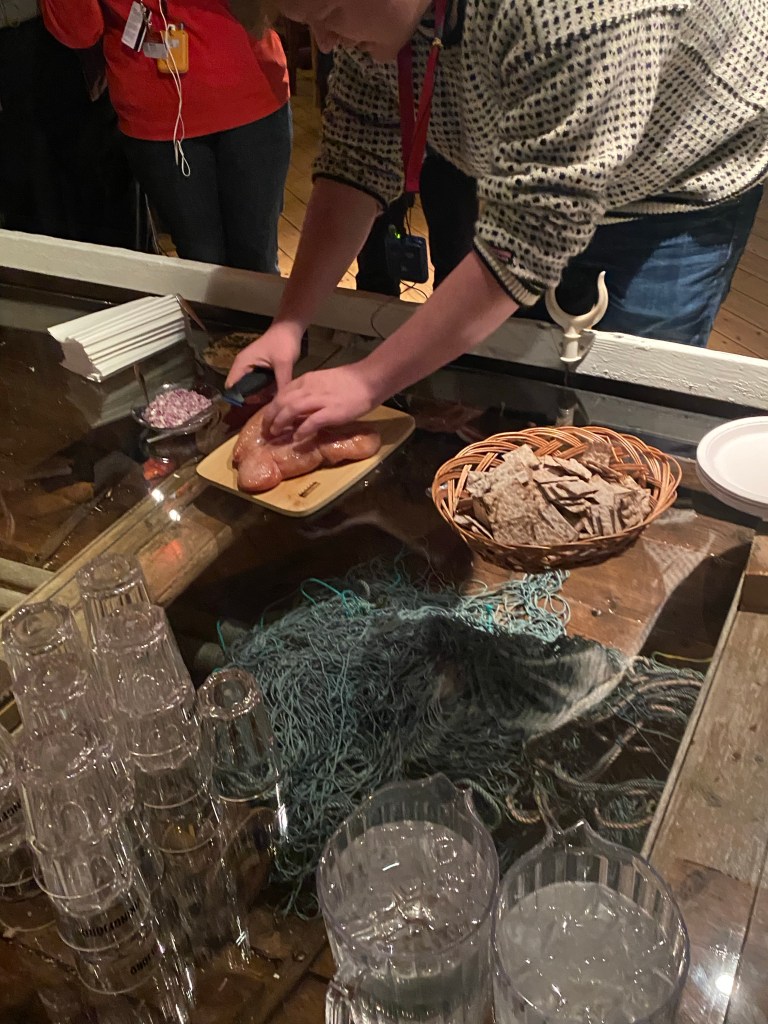
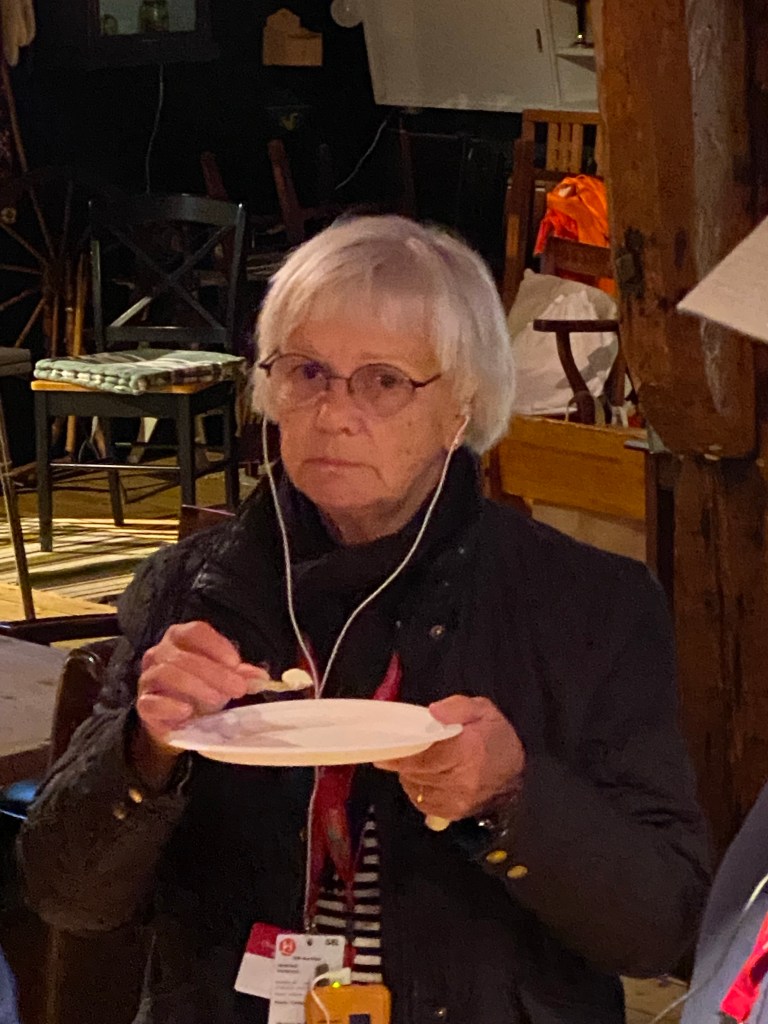
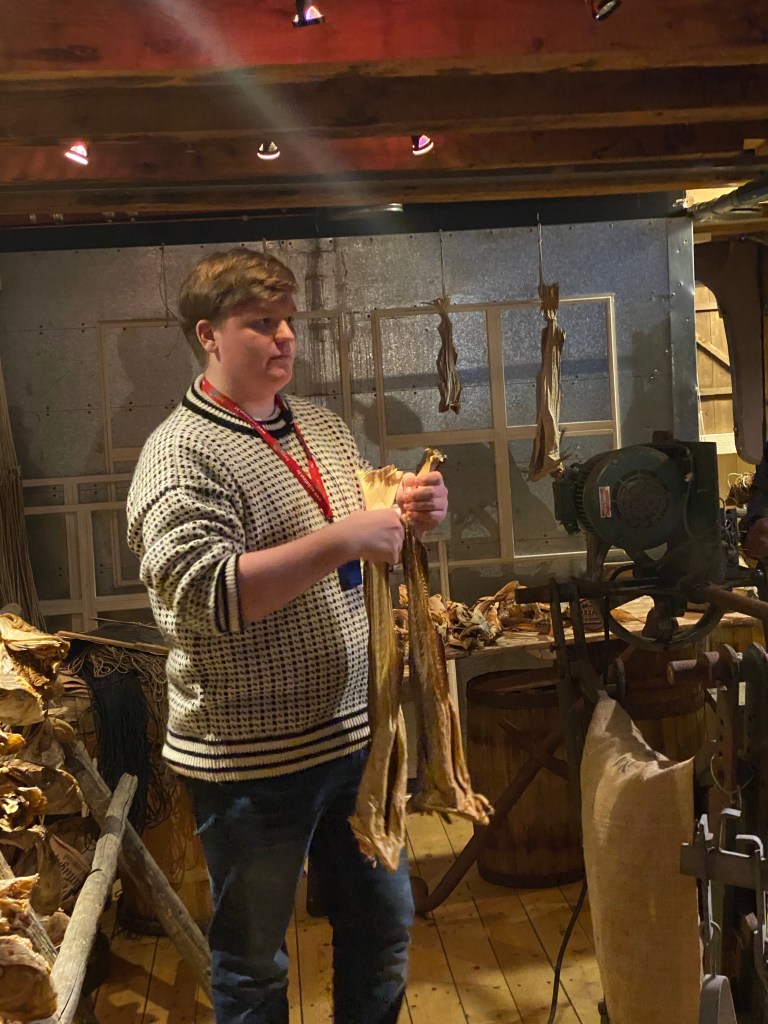
We got a great presentation about cod fishing in Norway. The fishery is apparently thriving as years ago Norway instituted a quota system for protecting the resource. We are at Full Steam, a restaurant and pub that has a museum attached in the back. We had a presentation about the history of cod fishing and how they used to dry the fish to preserve it for years. You could reconstitute it and a make a high protein paste. This allowed explorers to go on voyages of several years and have a source of protein available during their trip. We also got to see a cod liver and the where the eggs/ roe come from.Even Patty sampled the cod caviar ( cod roe). She used lots of sour cream, very little roe! I thought the roe was better than sturgeon caviar, it did not have a strong fishy taste.We also sampled fresh, not processed cod liver oil. It was not very fishy tasting.The young man giving the presentation is 17 years old and about to start his second year in vocational school to be an electrician. He gave a very good presentation. He said he is interested in history, especially the history of the fishing industry. He is holding dried cod. There is still a market for these dried fish in Asia and Spain! Dried cod is what they use in lutefisk. This young man said that many Norwegians will still eat this at Christmas. I can remember my mom talking about having lutefisk when she was a child. It is processed using lye. Mom, who enjoyed all seafood said lutefisk was terrible. I have never tried it.
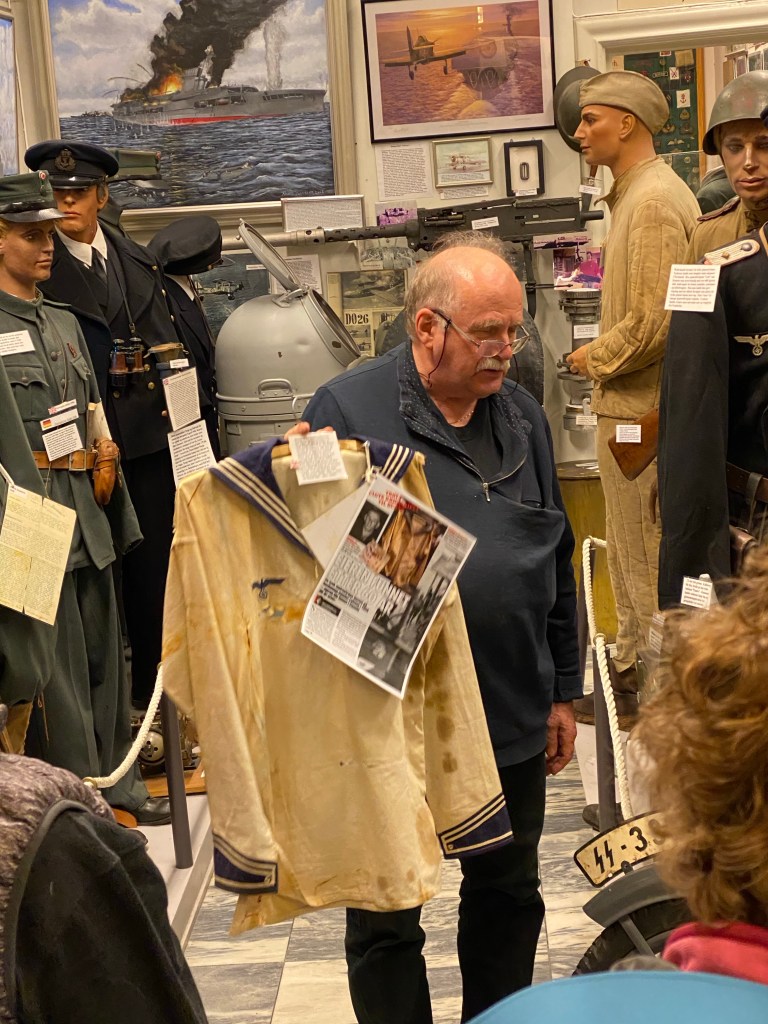
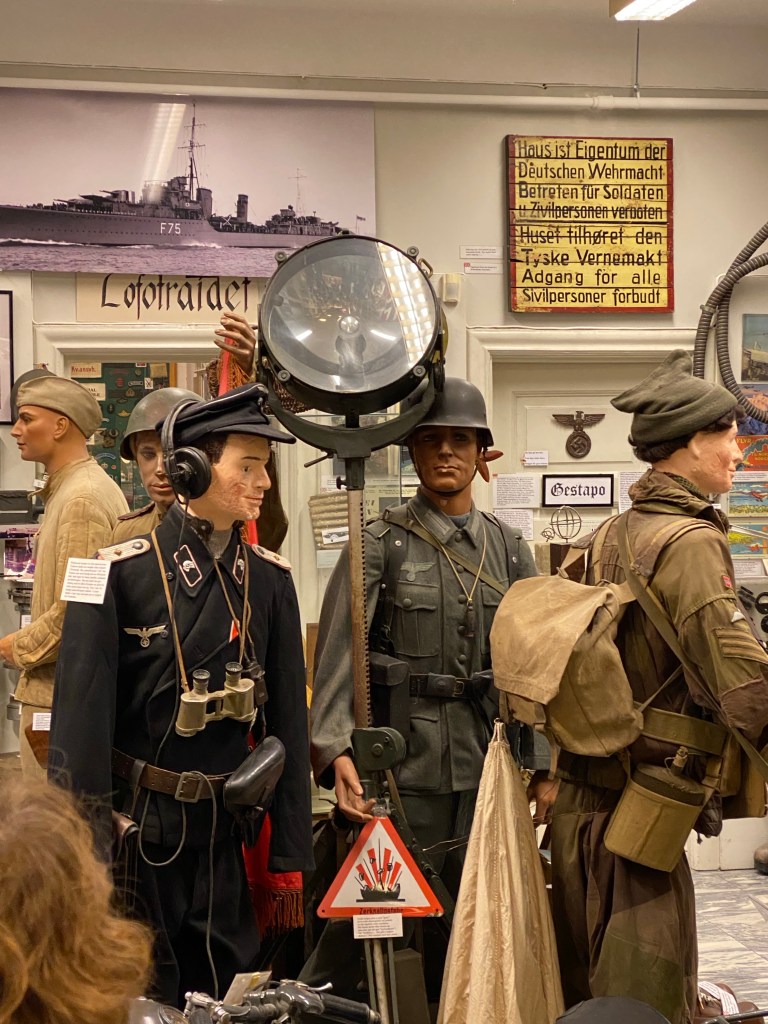
A cod fishing village with a small but very unique and sobering private World War Two museum. It is mainly a collection of artifacts from Norway’s involvement in World War Two.
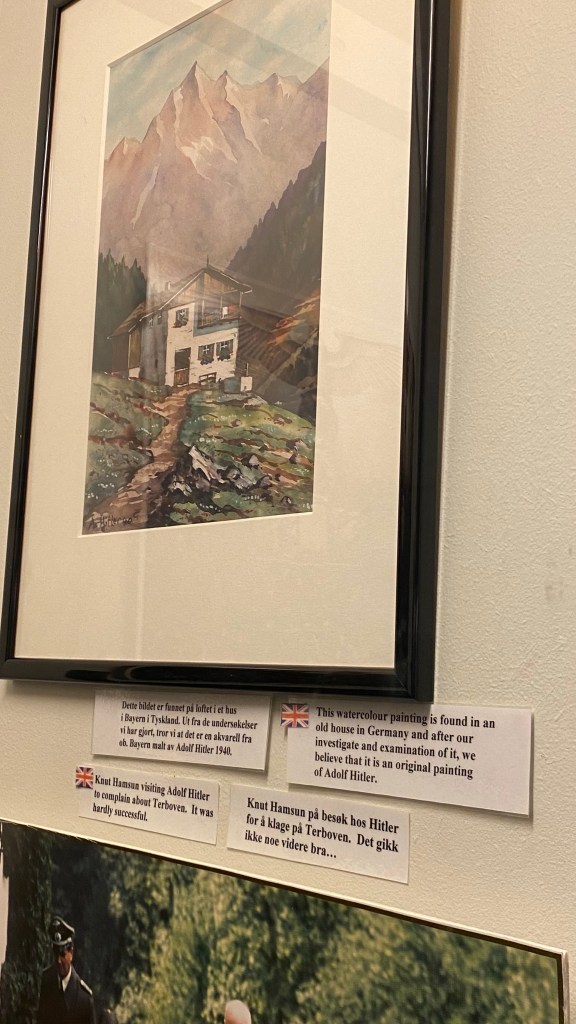
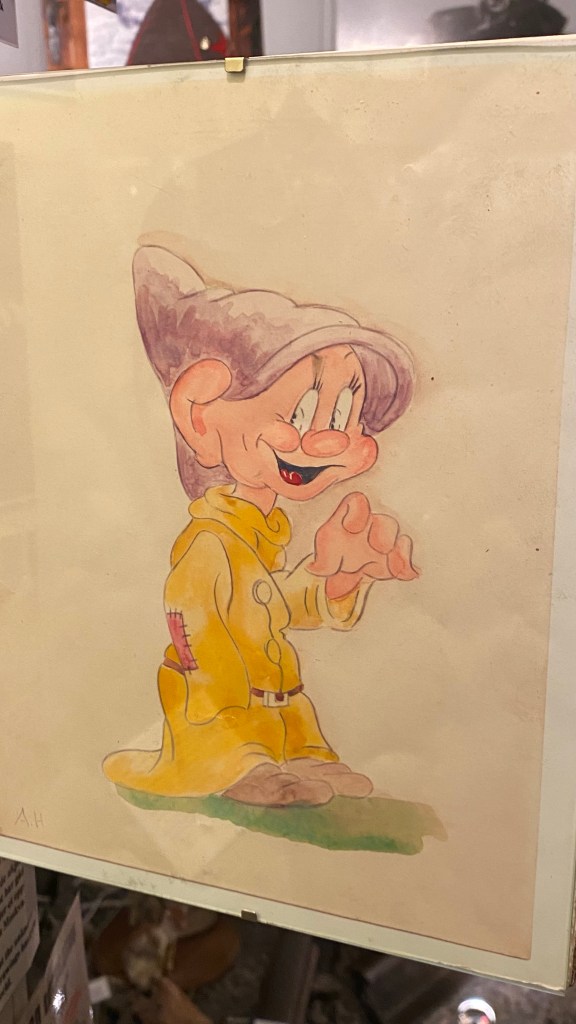
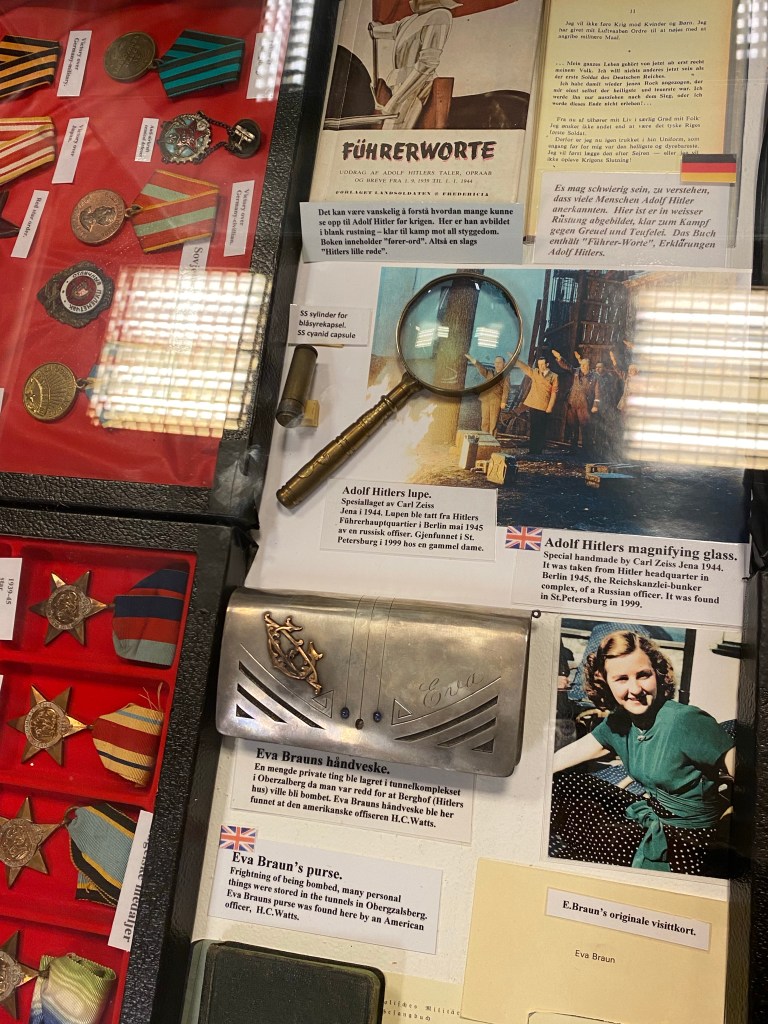
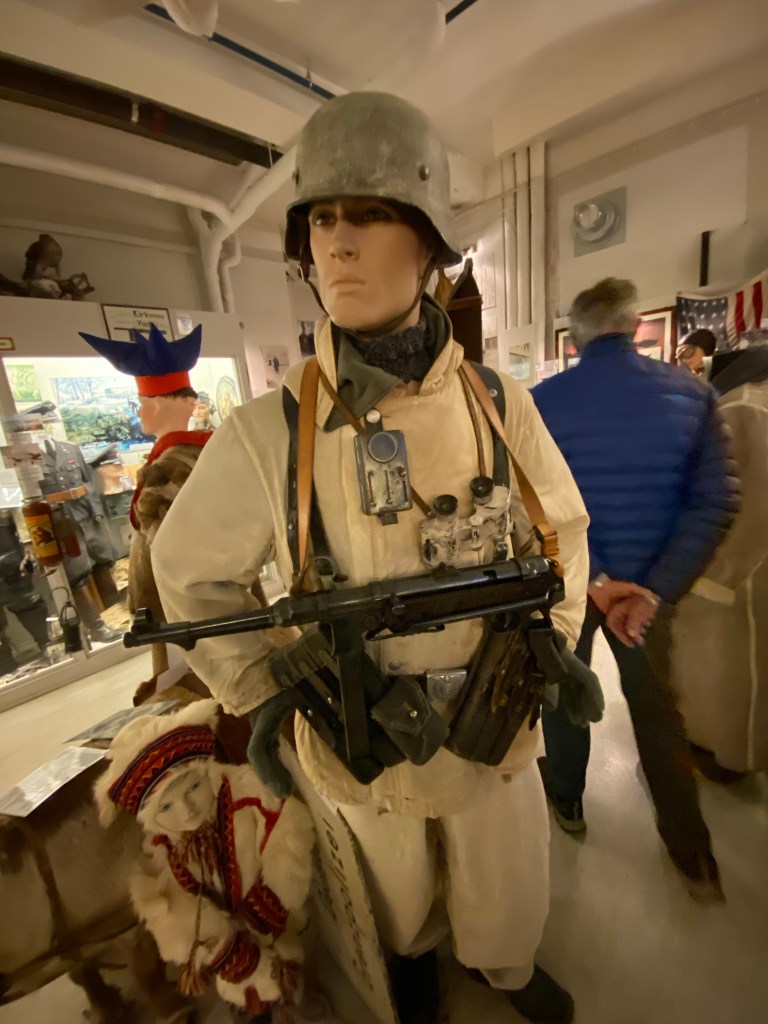
The owner of this fantastic and impactful collection, Mr William Hakvag. He is holding a sailor’s uniform that was found on the ocean floor many years after the war.He had many mannequins dressed in authentic nazi and Norwegian uniforms and many pieces of equipment, including weapons, radios and personal affects.He has several cockpit instrument panels. This is from a Messerschmitt 109, one of germanys best fighter planes.This is a piece he got from Germany. It was found in an old home and upon inspection and taking it apart to reframe, several interesting things were discovered. It Had A H signed in the corner and 4 other paintings were under it. They were paintings of 4 of Disney’s “7 dwarfs”. These were thought to have been done by Adolph Hitler. Hitler was an artist in his younger days and an admirer of Walt Disney!Note the A H in the lower left cornerHitler’s magnifying glass and Eva Braun’s purseThis is a recreation of the Gestapo headquarters commanders office in Svolvaer. It gave me goose bumps!Chilling reminders of a madman’s plan to change the world. The owner now has an agreement to donate his collection to the local city museum and they promise to keep the museum intact and on display as a reminder of a terrible war in hopes that the world never repeats this event
Gateway to the arctic, located just north of the arctic circle. It’s also home to the worlds strongest whirlpool, maelstrom Saltstraumen. It’s only awe inspiring at the extreme of the tide changes. We didn’t time our visit very well and the whirlpool was barely noticeable at slack tide.
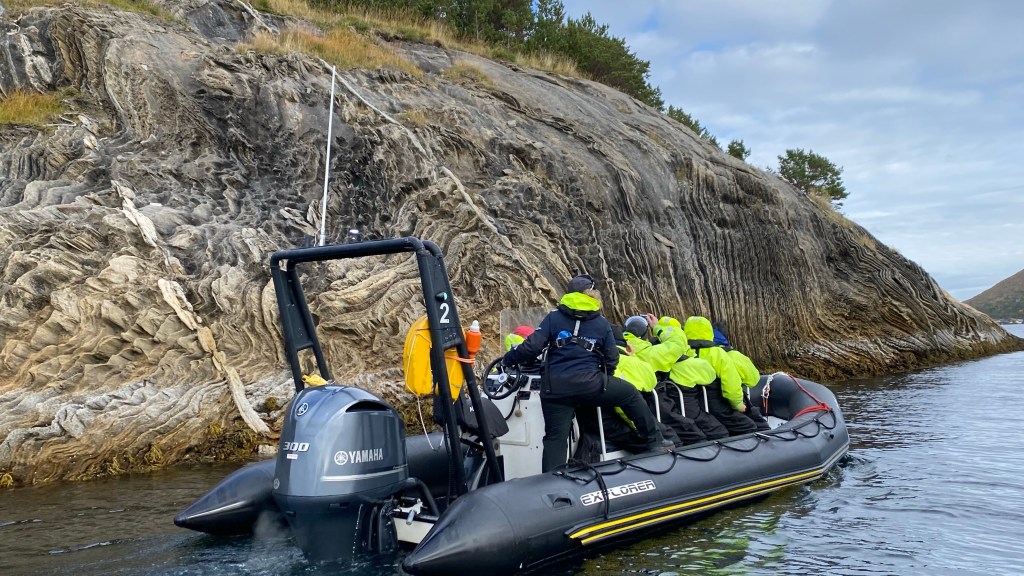
Patty is getting suited up with anti exposure suit, Gloves, goggles and flotation harness. The water is cold and so is the wind as we go fast on the RIB boat(rigid inflatable boat) .Suited up and ready for action!12 of us on a boat ready to go!A fast ride in search of whirlpools. Whirlpools weren’t very good but the guide was entertaining and knowledgeable about the geology and the fishery business.300 horsepower outboard makes for a fun, fast and exciting ride. The rock formations were cool to look at and talk about.This is where the whirl pool is located……. When it’s halfway to high tide or halfway to low tide is when we should be here but our ships schedule dictated when we could go on the ride. It was fun because the guide made it fun.We saw a sea eagle, similar to our bald eagle. It has a 7 foot wingspan.
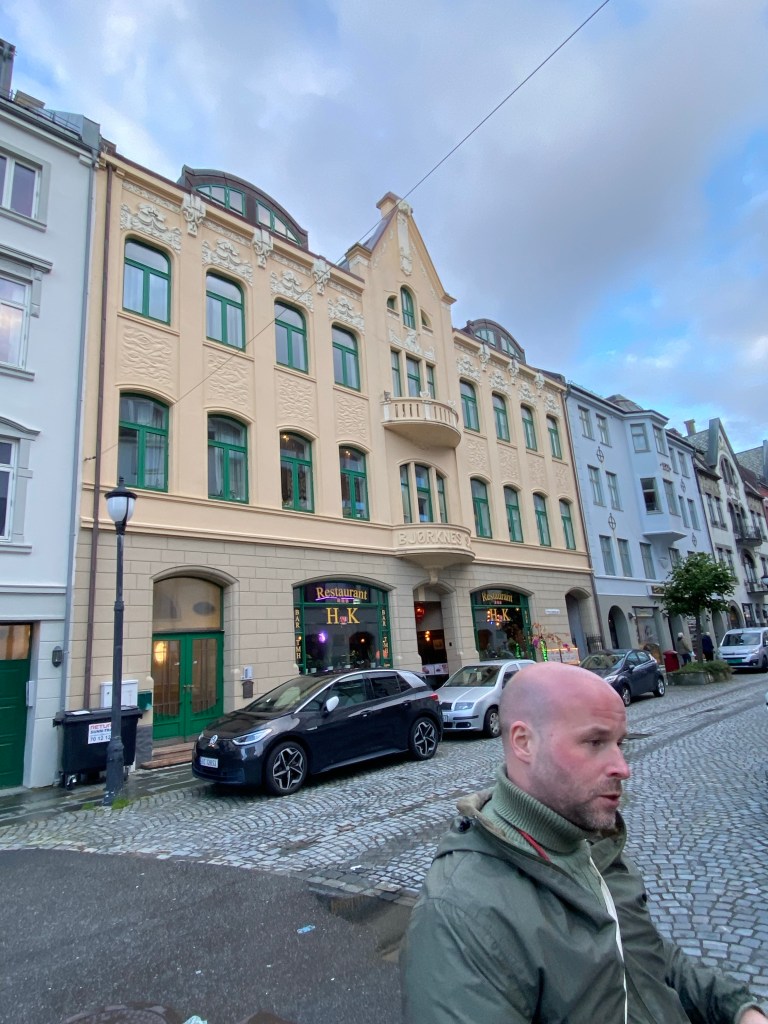
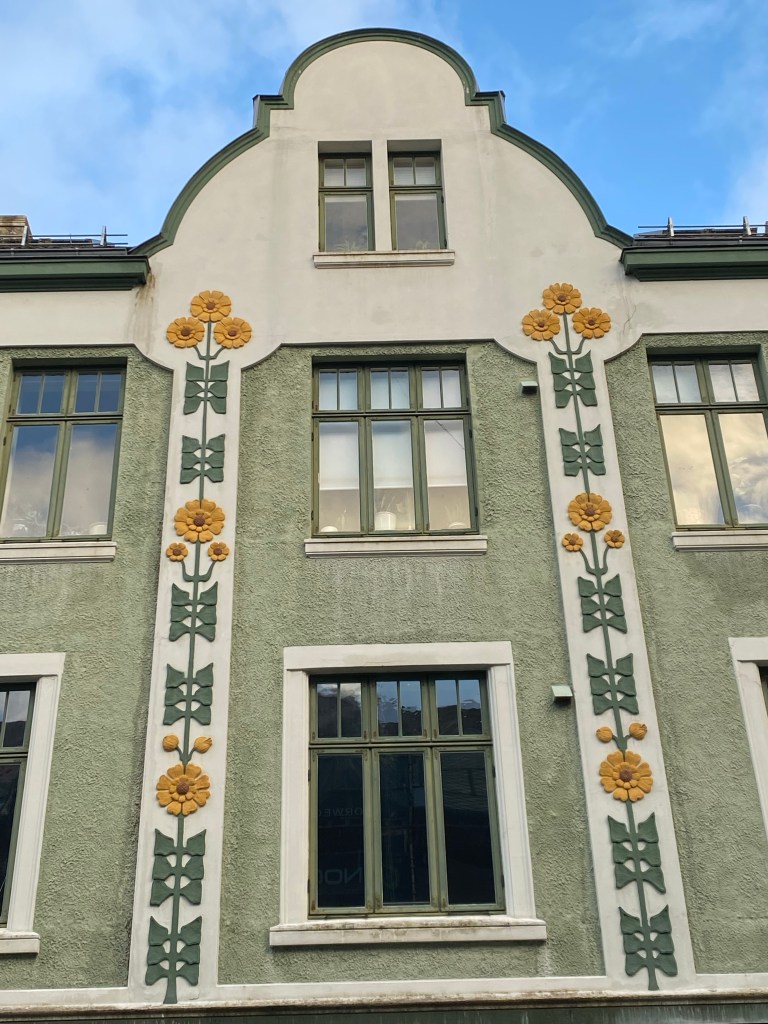
This was a three hour stop and a nice walk around with our trip leader. Most of the city burned down in 1904 and only one person died trying to save some property in her house. Kaiser Wilhelm of Germany liked the city so much that he sent several ships with supplies and carpenters to build temporary housing. He also invested in rebuilding the city and Wilhelm liked the Art Nouveau architecture and since he donated money and craftsman he had the town rebuilt in that style.
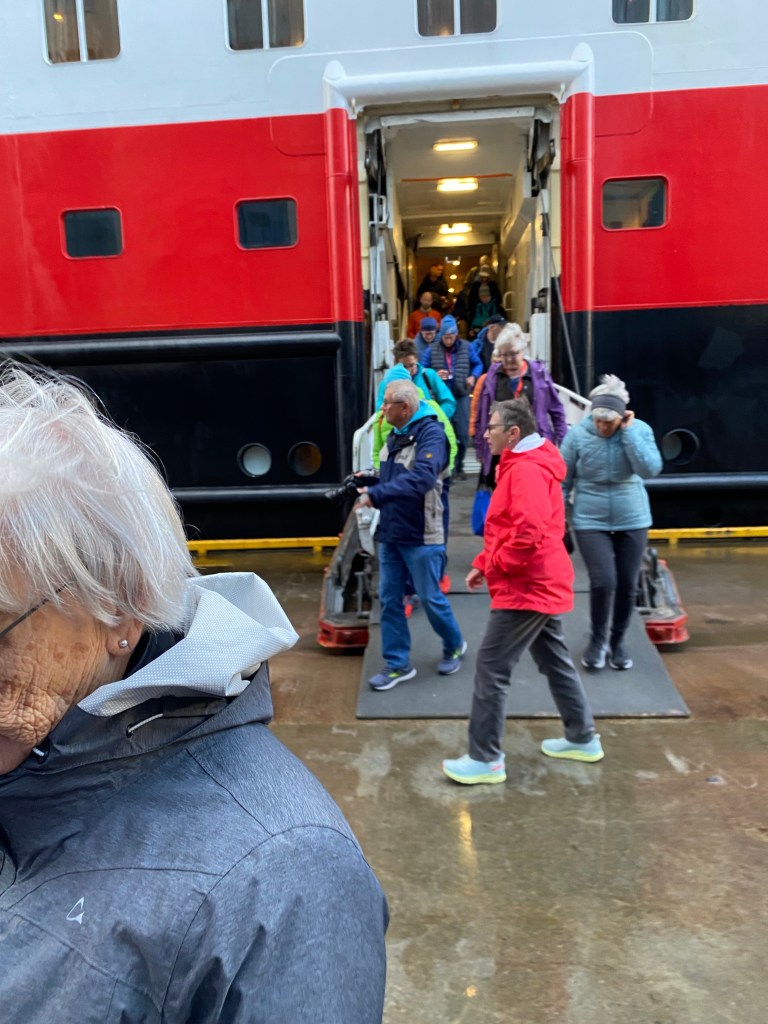
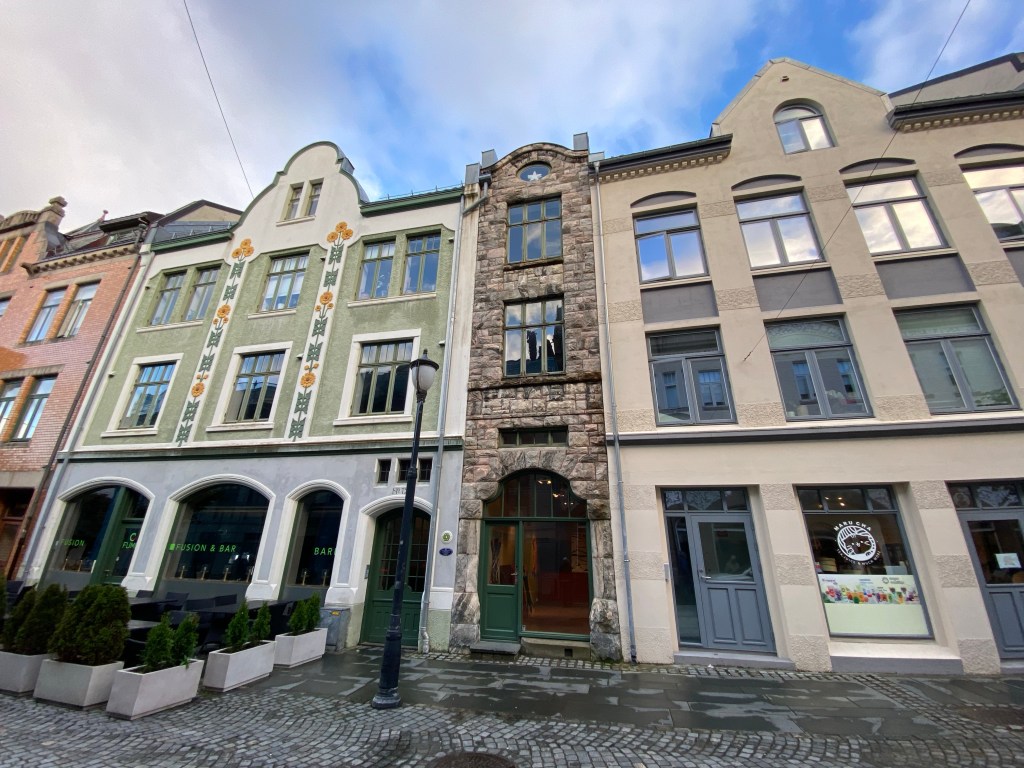
Getting on and off the ship is quick and easyPatty, in her Norwegian hat, pays close attention to Daniel, our trip leader.Art nouveau is less garish, more subtle than the Art Deco of the 1920’s that we have seen in Miami, Florida. I learned something today….. I thought art deco and art nouveau were one and the same.Art nouveau …..many details, relief sculptures, curves and colorsThey used every available space to erect buildings. That is a separate skinny house between larger buildings!We’ve seen this in other Norwegian cities. The cites have repurposed old phone booths into small libraries. Great idea! In Alesund they are quite nice and well stocked.




















 Rod and Patty’s Blog